
Spherical Plain Bearings Wear Limits: Wholesale Supplier for Bulk Orders
- Опубликовано:
- Рубрика: Installation & Maintenance
- Автор: Process Equipment Company
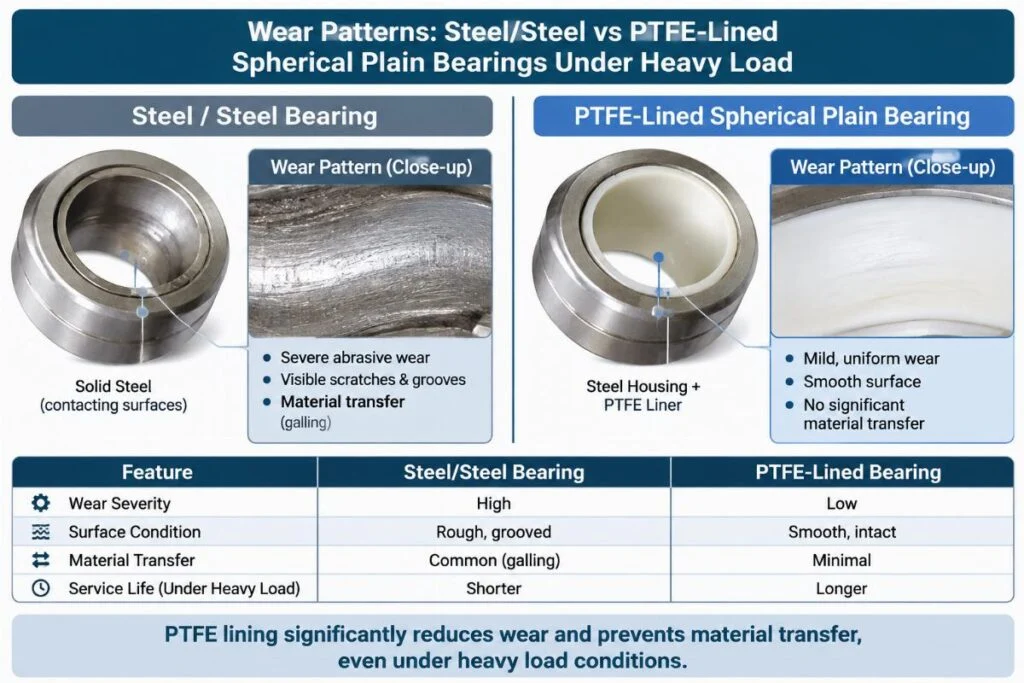
Wear limits for spherical plain bearings are dynamic thresholds driven by sliding surfaces, loads, and lubrication rather than fixed specs. Learn to calculate wear rates, identify failure precursors like contamination, and establish maintenance protocols to prevent unplanned downtime in harsh mining and steel environments.
Wear limits are not static numbers.
The wear limits for spherical plain bearings are dynamic thresholds determined by the sliding surface combination, actual load conditions, and lubrication quality rather than fixed manufacturer specifications. In harsh mining and steel environments, theoretical limits often fail to predict real-world performance because humidity, contamination, and misalignment accelerate degradation beyond standard calculations.
I still recall the heavy silence of a crusher line in Indonesia during the rainy season. We had installed what seemed like robust steel/steel spherical plain bearings, trusting the standard datasheets. Within weeks, the bearings seized. The shafts were scored, and the downtime cost far more than the components themselves. That failure was not due to poor manufacturing but a misunderstanding of how environmental factors interact with sliding surfaces. Since then, my approach to technical selection has shifted from reading catalogs to observing field conditions. I have seen maintenance-free bearings outperform traditional steel combinations in high-temperature dry zones, extending lifecycle significantly. Conversely, I have witnessed improper clearance in excavator booms cause rapid edge wear despite adequate lubrication. These experiences highlight that understanding wear limits requires a nuanced view of the operating environment.
To navigate these complexities, distributors and MRO operators must look beyond basic part numbers. This guide breaks down the methodology for calculating wear rates, identifying failure precursors, and establishing effective maintenance protocols. As a global supplier handling bulk orders across multiple regions, we see these issues repeatedly. The goal is to provide clarity on how to manage inventory and technical support effectively.
What Defines the Wear Limits of Spherical Plain Bearings?
Sliding surface combinations dictate the baseline wear resistance.
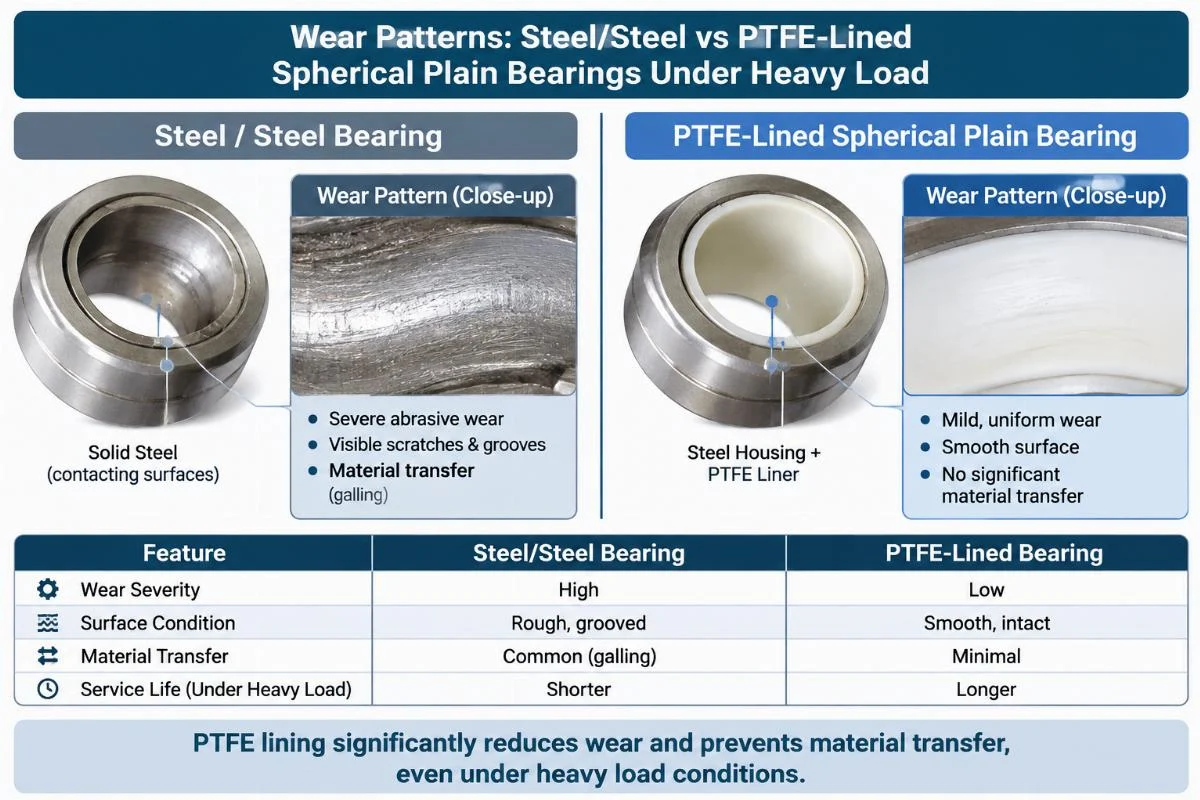
The fundamental limit of any spherical plain bearing is defined by the materials in contact. Steel/steel combinations rely on hardening and lubrication to prevent adhesive wear. They are suitable for high-load, low-speed applications but are vulnerable to corrosion and abrasive particles. In contrast, steel/PTFE or maintenance-free composite linings offer lower friction coefficients and better resistance to contamination.
When selecting bearings for bulk orders, it is crucial to match the sliding pair to the environment. For instance, in wet mining conditions, steel/steel bearings require frequent relubrication to flush out contaminants. If the lubrication interval is missed, water ingress leads to rust and increased friction, causing the wear limit to be reached prematurely. On the other hand, PTFE-lined bearings can operate with minimal lubrication, making them ideal for hard-to-reach joints in construction machinery. However, they have lower load-carrying capacity compared to hardened steel pairs.
| Sliding Combination | Load Capacity | Contamination Resistance | Lubrication Requirement | Typical Application |
|---|---|---|---|---|
| Steel/Steel (Hardened) | High | Low | High (Frequent) | Heavy crushers, press joints |
| Steel/PTFE | Medium | High | Low (Initial/Maintenance-free) | Excavator buckets, agricultural links |
| Steel/Bronze | Medium-High | Medium | Medium | General industrial pivots |
| Maintenance-Free Composite | Medium | High | None/Low | Wind turbine pitch bearings, steel mill casters |
A European wind farm operator once reported premature failure in pitch bearings. The investigation revealed that while the load was within limits, the sealed maintenance-free design trapped moisture due to a compromised seal. The wear limit was reached not through mechanical abrasion but through chemical degradation of the lining. This case underscores that the "limit" is a function of the entire system, not just the bearing material.
How to Calculate Wear Rates Under Heavy Loads?
Wear rate calculation requires integrating load, speed, and material specific factors.
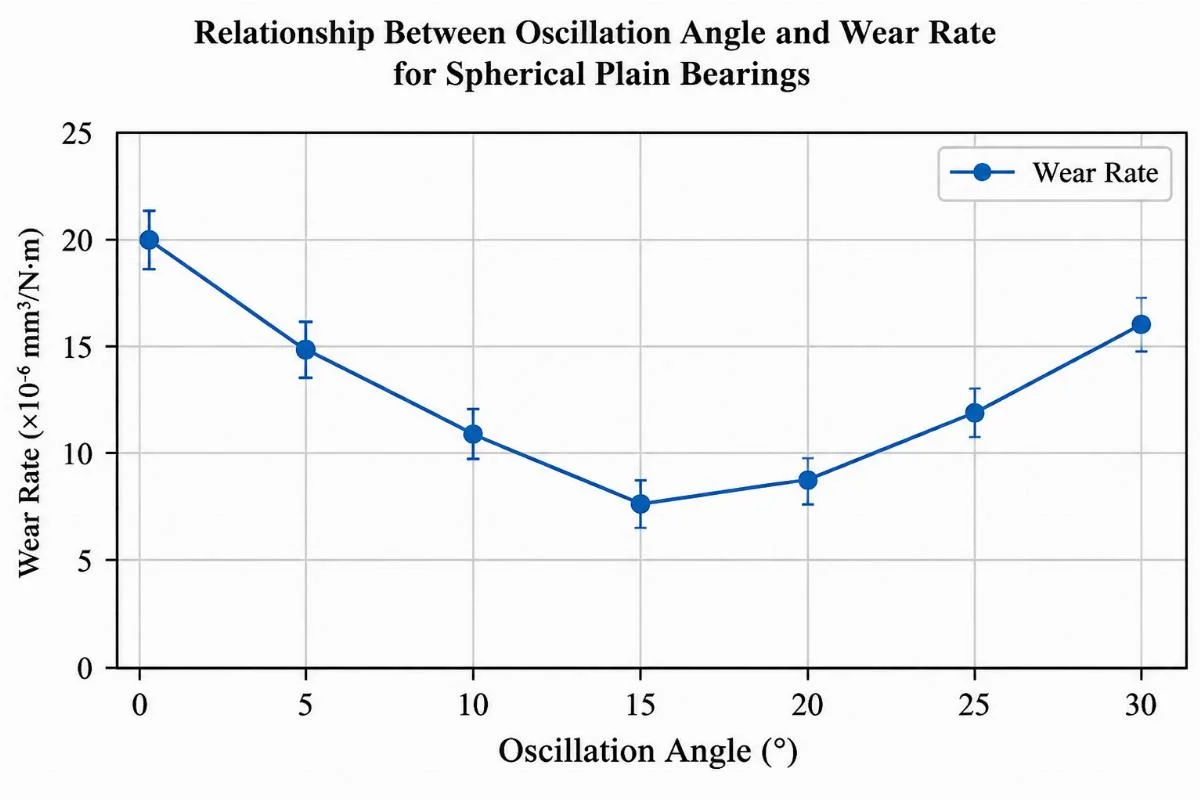
Calculating the expected service life involves more than just checking the dynamic load rating. The wear rate is influenced by the specific sliding speed, the mean pressure, and the material-specific wear factor. For oscillating movements, which are common in joint bearings, the wear pattern is uneven, leading to localized stress concentrations.
The general approach involves determining the equivalent dynamic load and the oscillation angle. A smaller oscillation angle means the same area of the bearing surface is subjected to repeated stress, accelerating wear. Therefore, bearings in applications with small angular movements require higher safety margins or more frequent inspection.
- Determine the Mean Pressure: Calculate the load divided by the projected area of the sliding surface. Ensure this value does not exceed the material’s permissible static load limit.
- Assess Sliding Speed: Compute the average sliding velocity based on the oscillation frequency and amplitude. High speeds generate heat, which can degrade lubricants or soften polymer linings.
- Apply Material Factor: Use the specific wear factor provided by the manufacturer for the chosen sliding combination. This factor accounts for the hardness and roughness of the surfaces.
- Adjust for Environment: Apply correction factors for temperature, contamination, and lubrication quality. In dirty environments, the effective wear rate can increase substantially.
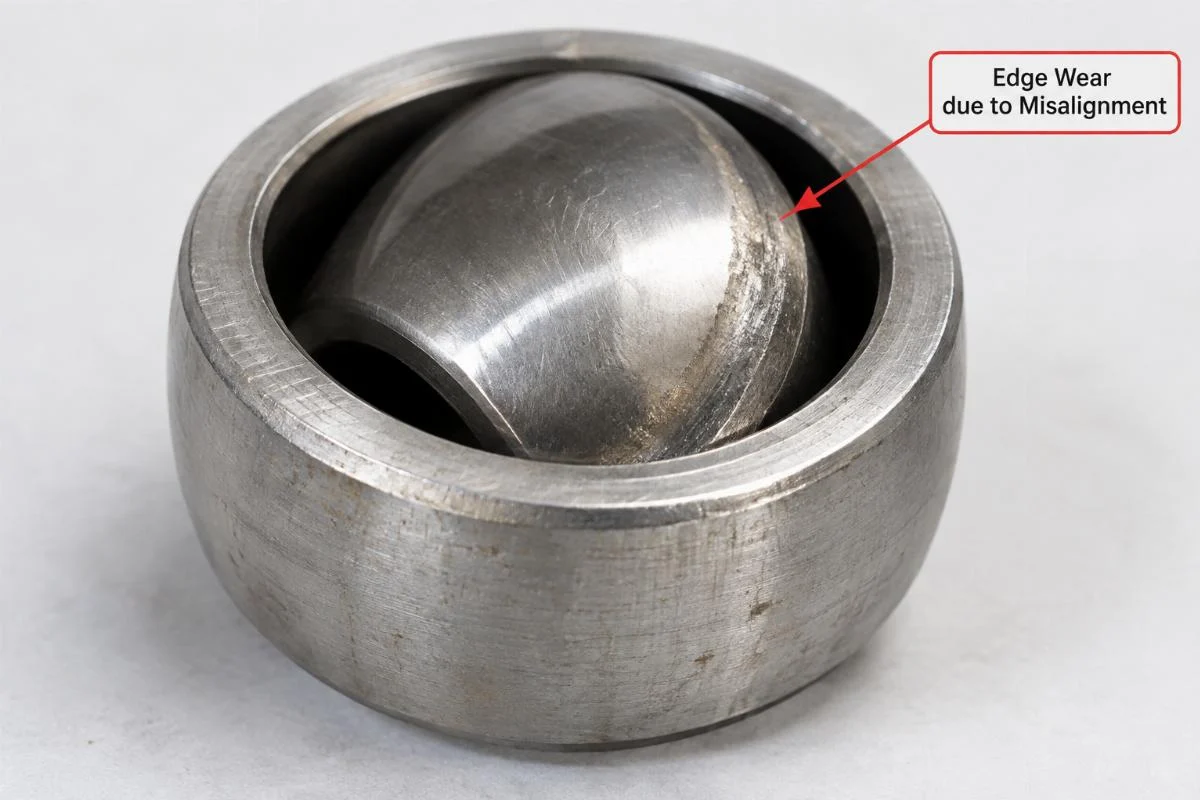
A common mistake is ignoring the effect of misalignment. Even slight misalignment can cause edge loading, where the stress is concentrated on the rim of the bearing. This leads to rapid wear that defies standard calculations. In one instance, a mining client experienced repeated failures in crusher toggle plates. The root cause was not excessive load but structural flexing that caused edge loading. Switching to a bearing with a larger internal clearance and better self-aligning capability resolved the issue.
Why Do Bearings Fail Before Reaching Theoretical Limits?
Field factors often override theoretical design parameters.
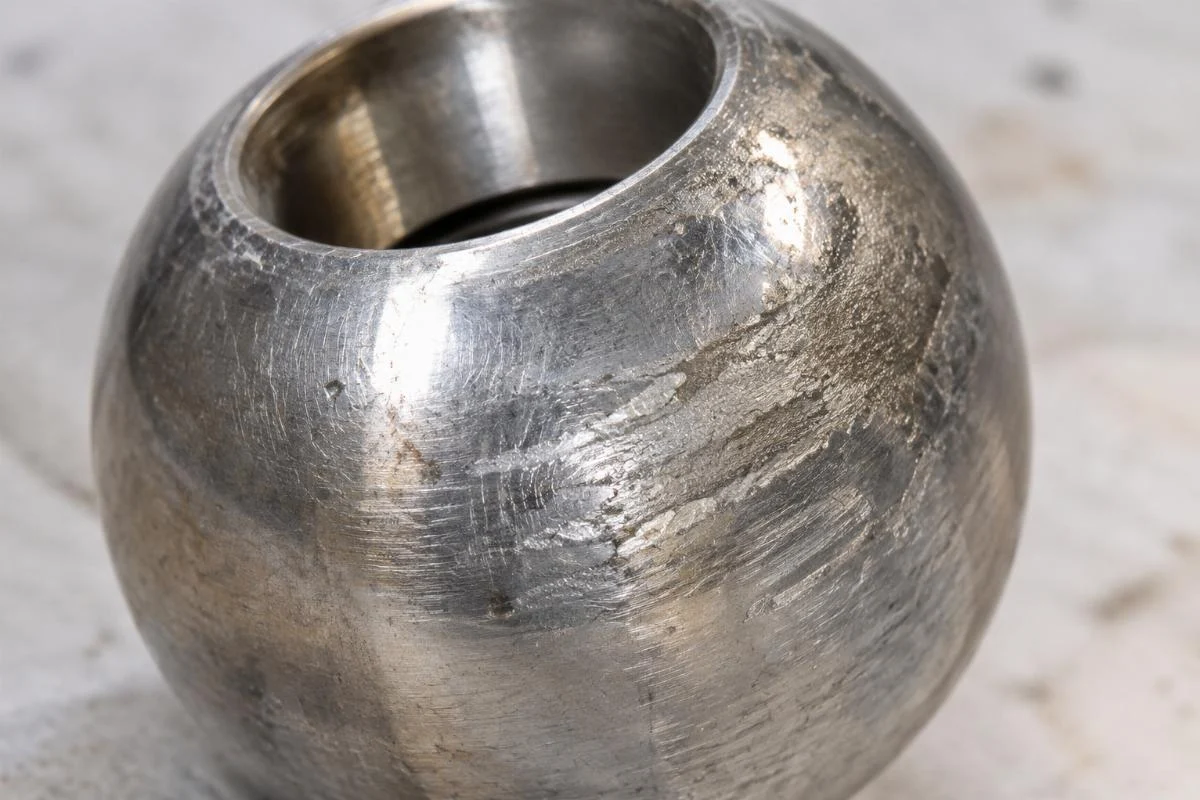
Theoretical limits assume ideal conditions: perfect alignment, clean lubrication, and steady loads. Reality is rarely so kind. Contamination is the primary enemy of spherical plain bearings. In open mining joints, dust and grit act as abrasives, grinding away the sliding surface. Thicker grease is not always the solution; it can trap abrasive particles if not purged correctly.
Misalignment is another critical factor. Structural deflections in heavy machinery can cause the bearing to operate outside its designed angular range. This leads to edge wear and eventual seizure. Additionally, poor lubrication practices, such as using incompatible greases or insufficient relubrication volumes, can starve the bearing of protection.
Consider a steel mill caster application. The high temperatures and dry environment caused standard grease to carbonize, losing its lubricating properties. The bearings failed well before their calculated life. Switching to a high-temperature synthetic grease and increasing the relubrication frequency extended the service life noticeably. This highlights the importance of adapting maintenance strategies to the specific thermal and chemical environment.
Another overlooked factor is storage and handling. Bearings stored in humid conditions without proper protection can develop surface corrosion before installation. This initial damage creates rough spots that accelerate wear once the bearing is in service. Proper packaging and climate-controlled storage are essential for maintaining the integrity of spare parts inventory.
How to Monitor and Maintain Wear in Harsh Environments?
Proactive monitoring prevents unplanned downtime.
Effective maintenance relies on regular inspection and timely intervention. Visual inspection can reveal early signs of wear, such as discoloration, leakage, or unusual noise. Measuring the internal clearance is a more precise method. An increase in clearance beyond the manufacturer’s recommended limit indicates significant wear and the need for replacement.
Relubrication is critical for steel/steel bearings. The volume and frequency should be based on operating hours, load, and environmental conditions. In dusty environments, purging old grease helps remove contaminants. For maintenance-free bearings, monitoring focuses on external signs of damage and periodic checks for smooth movement.
- Establish Inspection Intervals: Base intervals on operating severity. Critical applications may require weekly checks, while less demanding roles can be inspected monthly.
- Measure Clearance: Use feeler gauges or dial indicators to measure radial and axial clearance. Compare readings with initial installation values.
- Monitor Temperature: Elevated temperatures can indicate friction due to lack of lubrication or overload. Thermal imaging can help identify hot spots.
- Analyze Lubricant: Periodic sampling of grease can reveal contamination levels and degradation. This data helps optimize relubrication schedules.
A Middle East steel plant implemented a condition-based maintenance program for their continuous caster. By tracking clearance trends and lubricant quality, they reduced unplanned stops significantly. The key was not just replacing worn parts but understanding the rate of degradation to schedule replacements during planned shutdowns. This approach minimizes disruption and optimizes spare parts usage.
For distributors and wholesalers, offering technical support alongside products adds significant value. Providing customers with access to failure analysis services and cross-brand technical selection can help them avoid costly mistakes. Having a diverse inventory of genuine brands allows for quick replacements when urgent needs arise, ensuring that operations keep running smoothly.
Conclusion
Wear limits are dynamic, not fixed.
Understanding the interplay between material, load, and environment is essential for maximizing the life of spherical plain bearings. By moving beyond static datasheets and adopting a proactive, condition-based approach, operators can prevent premature failures. For those managing bulk inventory, focusing on technical compatibility and reliable supply chains ensures that the right bearings are available when needed.
Материал подготовлен Process Equipment Company — поставщиком подшипников SKF для насосов, компрессоров и технологического оборудования. Заказ определяется полным обозначением SKF по исходной спецификации оборудования.
Читайте также
Материалы об идентификации подшипников и закупке для капитального ремонта насосов и компрессоров.
 22 сентября, 2026 · Installation & Maintenance SKF Pivot and Bushing Inspection Checklist for Sale Prevent costly downtime with a rigorous SKF pivot and bushing inspection checklist for heavy machinery. Verify dimensional tolerances, surface roughness, and lubrication protocols before… Читать статью
 22 сентября, 2026 · Installation & Maintenance Storing Precision & Linear Products Bearings Wholesale Supplier Prevent micro-rust and condensation damage by mastering Storing precision linear products in humidity below 60% with VCI packaging. Learn essential handling and cleaning protocols… Читать статью
 22 сентября, 2026 · Installation & Maintenance SKF Ball Screw Damage Field Photos: Wholesale Supplier SKF ball screw damage often stems from mounting errors rather than part quality. Field photos reveal root causes like misalignment and lubrication failure, enabling… Читать статью

Соберите подшипники для ремонта насоса и компрессора в один запрос
Process Equipment Company принимает одиночные позиции, полные ремонтные ведомости и подшипники вспомогательного оборудования. В ответ вы получаете письменное предложение по каждой позиции: обозначение, количество, цена и валюта, наличие, срок поставки.
- Модель насоса или компрессора, узел, комплектование, сепаратор и зазор
- Обозначение неполное — приложите чёткое фото маркировки
- Количество по позициям, страна и индекс доставки, требуемая дата поставки
Отправьте перечень на расчёт
Четыре поля — и запрос у менеджера.