
SKF Ball Screw Damage Field Photos: Wholesale Supplier
- Опубликовано:
- Рубрика: Installation & Maintenance
- Автор: Process Equipment Company

SKF ball screw damage often stems from mounting errors rather than part quality. Field photos reveal root causes like misalignment and lubrication failure, enabling accurate diagnosis. Proper analysis prevents recurring downtime and ensures replacements last their intended service life.
Most premature failures are not caused by part quality, but by microscopic mounting errors.
Field photos of SKF ball screw damage reveal root causes like misalignment and lubrication failures; proper diagnosis ensures accurate replacement and prevents recurring downtime. Identifying these visual markers allows operators to distinguish between natural wear and preventable installation errors, ensuring that the next replacement lasts its intended service life.
I still remember the dust. It wasn’t just concrete dust; it was fine, metallic powder coating every surface in a cement plant near Lagos. The client had called us in a panic because their production line had seized up again. They blamed the bearings. They blamed the supplier. They even blamed the humidity. But when I walked onto the floor and looked at the disassembled unit, the story was written clearly on the raceways. The SKF ball screw damage was not random. It was localized, severe, and perfectly symmetrical on one side. This was not a manufacturing defect. This was a mounting error that had been ignored during the previous installation. Spending years on installation sites across Nigeria and Ethiopia, I’ve seen how a single misaligned component can wreck a whole production line. That disaster taught me that wholesale supply isn’t just about shipping boxes—it’s about understanding field realities. When I look at damage photos now, I don’t just see worn parts; I see the exact moment improper lubrication or mounting errors took over.

Understanding these visual cues is critical for MRO operators and regional distributors who need to diagnose failures on-site. Without this knowledge, you are simply replacing parts until they fail again.
How to Identify Misalignment Scars on Raceways?
Edge loading patterns indicate mounting errors, not material fatigue.
When a ball screw is mounted with even a slight angular misalignment, the load does not distribute evenly across the ball tracks. Instead, the balls are forced against the edge of the raceway. This creates a distinct visual signature that is often mistaken for heavy usage. In reality, it is a sign of geometric incompatibility between the screw and the nut housing.
In the cement plant scenario I mentioned earlier, the rapid wear was due to this exact issue. The screws seized within weeks, grinding the raceways to dust. The photos we took showed deep, polished grooves on one side of the track, while the other side remained relatively untouched. This is known as edge loading. It generates excessive heat and stress, leading to premature failure regardless of the bearing’s quality rating.
To identify this in your own field photos, look for the following characteristics:
- Asymmetric Wear: The wear pattern is concentrated on one side of the raceway groove.
- Polished Edges: The edges of the track appear shiny and smoothed out, indicating constant friction against the ball complement.
- Absence of Pitting: Unlike lubrication failure, misalignment often presents as smooth wear rather than surface spalling in the early stages.
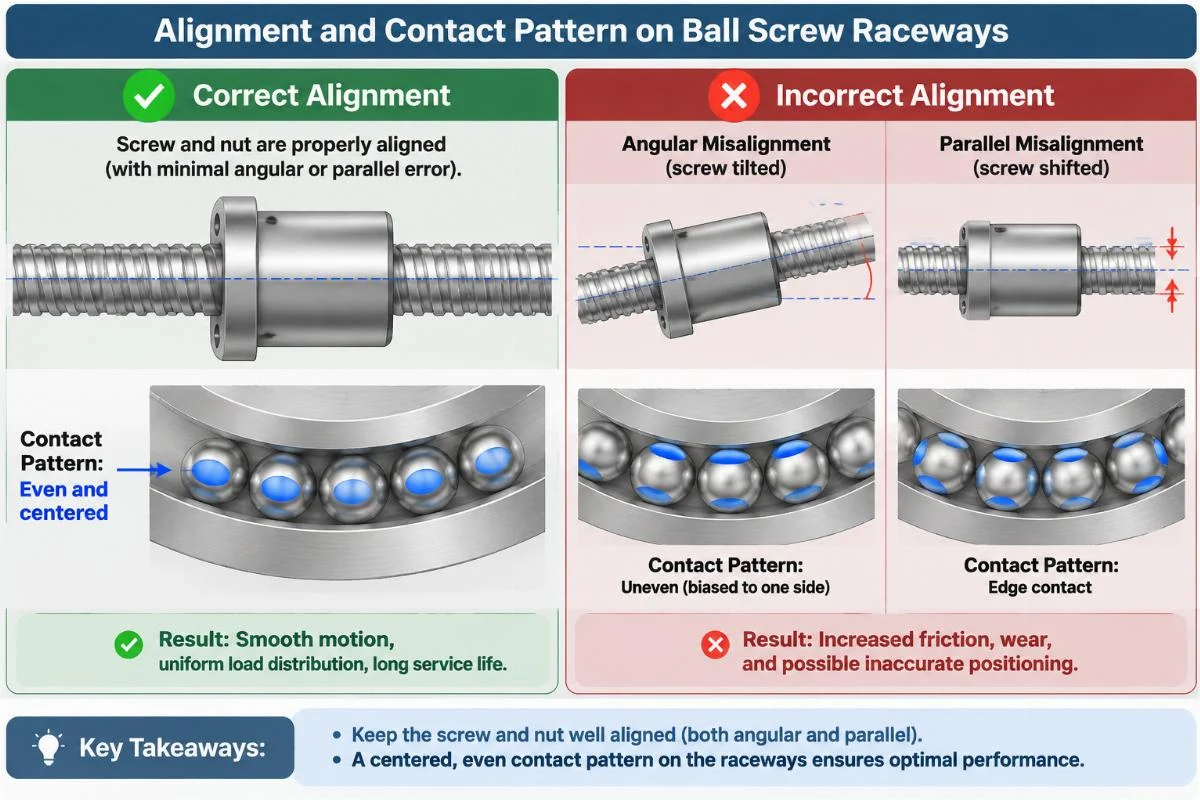
Correcting this requires more than just swapping the part. It demands a check of the mounting surfaces and the parallelism of the guide rails. If you replace the SKF ball screw without fixing the alignment, the new unit will suffer the same fate. This is why technical selection support is as important as the product itself. We often see distributors ship replacements without verifying if the root cause was addressed, leading to repeat claims and lost trust.
What Does Poor Lubrication Look Like in Photos?
Discoloration and spalling reveal lubrication breakdown before total seizure.
Lubrication is the lifeblood of any rolling element assembly. When it fails, the metal-to-metal contact generates intense heat. This heat changes the microstructure of the steel, leaving behind visual clues that are easy to spot if you know what to look for. In heavy machinery scenarios, inadequate lubrication often leads to surface spalling, which progresses from early-stage pitting to advanced flaking.
I recall a case with a mining operator where the maintenance team believed they were lubricating the equipment regularly. However, the grease being used was not compatible with the high temperatures generated by the application. The result was a thin, carbonized residue on the raceways. The SKF ball screw damage photos showed blue and brown discoloration bands. These are heat tints, indicating that the local temperature exceeded the tempering threshold of the steel.
Key indicators of lubrication failure include:
- Heat Tints: Blue, brown, or straw-colored discoloration on the raceways or balls.
- Spalling: Small chunks of metal breaking away from the surface, creating rough, crater-like pits.
- Dry Tracks: Visible areas where the grease film has completely disappeared, leaving the metal bare and oxidized.
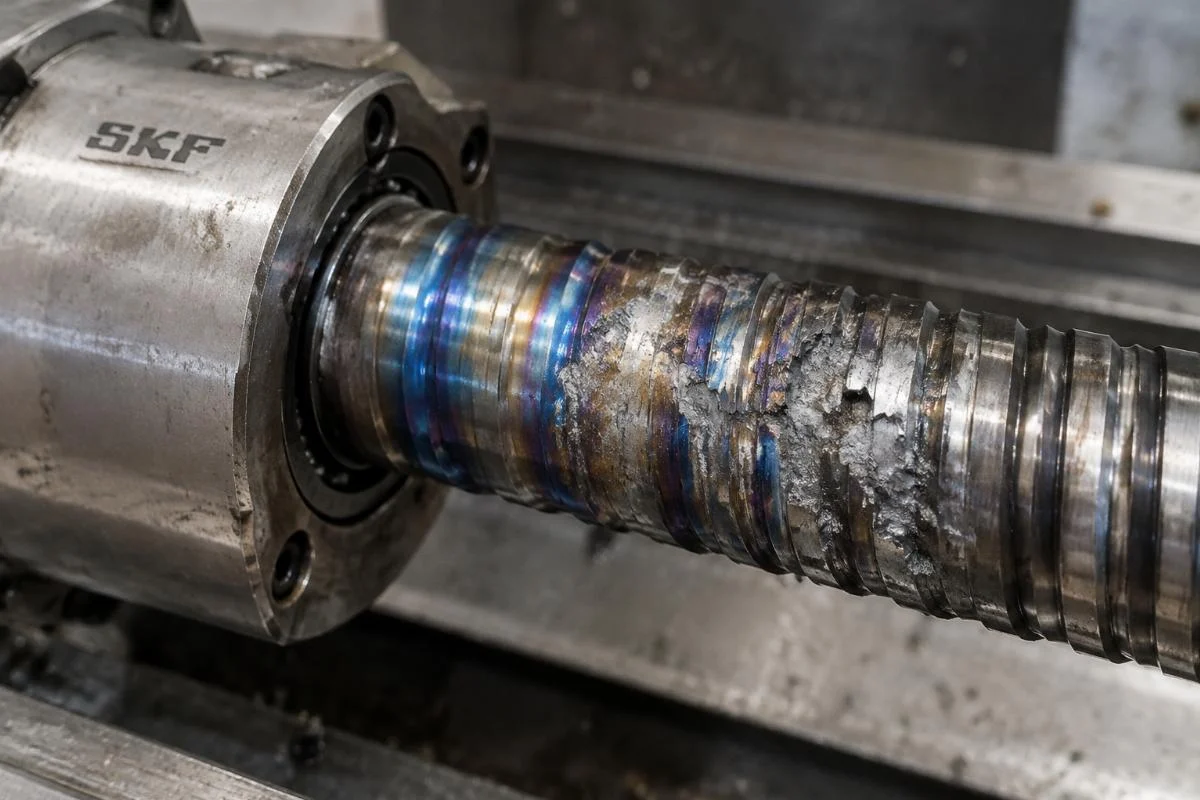
It is a common misconception that more grease is better. In reality, over-lubrication can cause churning and heat buildup, while under-lubrication leads to the damage described above. The key is the right type and amount. Most blame the part quality when they see this damage, but the true cause is often improper site lubrication practices. By analyzing these photos, you can advise your customers to review their lubrication schedules and grease specifications, preventing future failures.
How to Distinguish Normal Wear from Premature Failure?
Compare wear distribution against ISO damage standards to determine if replacement is urgent.
Not all wear is bad. Ball screws are designed to wear over time. The challenge lies in distinguishing between normal, gradual wear and premature failure caused by external factors. Normal wear typically presents as a uniform, smooth polishing of the raceway surface. It is gradual and predictable. Premature failure, on the other hand, is erratic, localized, and often accompanied by other damage modes like corrosion or indentation.
Using industry reliability reports and ISO standards for bearing damage classification, we can categorize the damage seen in field photos.
| Damage Mode | Visual Characteristic | Likely Cause | Action Required |
|---|---|---|---|
| Normal Wear | Uniform polishing, no pitting | Age, standard operation | Monitor, plan replacement |
| Misalignment | Asymmetric edge loading | Mounting error | Re-align, replace unit |
| Lubrication Failure | Heat tints, spalling | Wrong grease, insufficient qty | Change lubricant, clean system |
| Contamination | Dents, scratches, abrasive wear | Dust, debris ingress | Improve sealing, clean environment |
This table helps in making a quick assessment. For instance, if you see dents, it is likely contamination. If you see asymmetric wear, it is misalignment. If you see heat tints, it is lubrication. This distinction is vital for sourcing the right replacement. A customer with a contamination issue needs better seals, not just a new screw. A customer with misalignment needs installation tools, not just a new screw.
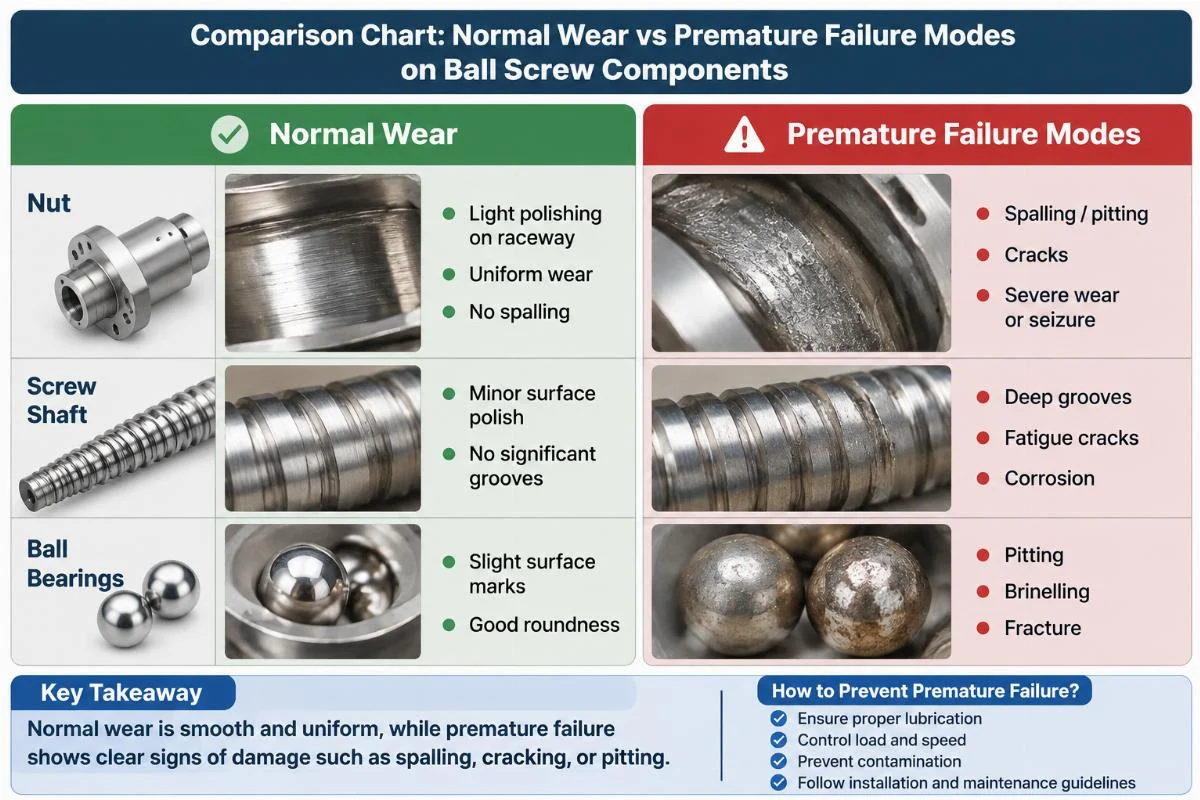
By providing this level of analysis, you move from being a simple parts supplier to a trusted technical partner. You help your customers avoid unnecessary downtime and costly repeat failures.
Why Do Replacements Fail Without Root Cause Analysis?
Ignoring alignment specs guarantees repeat seizures, rendering the new part useless.
The most frustrating aspect of MRO work is seeing the same failure happen twice. It usually happens because the root cause was never addressed. The broken part is removed, a new one is installed, and the machine is started. But if the underlying issue—whether it is misalignment, poor lubrication, or contamination—is still present, the new SKF ball screw will fail just as quickly as the old one.
This is why replacements fail without root cause analysis. It is not enough to match the part number. You must understand the application. In the assembly line scenario I mentioned, mounting errors caused edge loading. The client replaced the screw three times before calling us. Each time, they assumed it was a bad batch. It wasn’t. It was the mounting fixture. Once we corrected the fixture, the new screw lasted for years.

To prevent this, always ask your customers about the history of the failure. Ask for photos. Ask about the operating conditions. Use this information to provide not just a part, but a solution. This might mean recommending a different seal type, a specific grease, or even offering technical guidance on installation procedures.
Our role as a global full-range bearing supplier is to provide genuine SKF replacements with the technical selection support needed to fix the root cause. We stock genuine products from SKF and other premium brands, ensuring that when you do replace the part, it is of the highest quality. But quality alone is not enough. It must be applied correctly. By combining genuine parts with expert diagnosis, we help our clients minimize unplanned production downtime and maximize the return on their maintenance investments.
Conclusion
Diagnose the cause, not just the symptom, to ensure long-term reliability.
Field photos are powerful diagnostic tools. They reveal the hidden stories of misalignment, lubrication failure, and contamination. By learning to read these signs, you can prevent repeat failures and build stronger relationships with your customers. Remember, a replacement part is only as good as the installation that supports it. Ensure that every SKF ball screw damage case is analyzed thoroughly before ordering the next unit.
Материал подготовлен Process Equipment Company — поставщиком подшипников SKF для насосов, компрессоров и технологического оборудования. Заказ определяется полным обозначением SKF по исходной спецификации оборудования.
Подшипники SKF, упомянутые в статье
Позиции каталога, о которых идёт речь в материале. Откройте карточку, чтобы проверить обозначение и запросить цену.
 Роликоподшипники упорные SKF 29264 81148-M 29420 E/Vq096 упорковые роликоподшипники для смесителей Открыть карточку
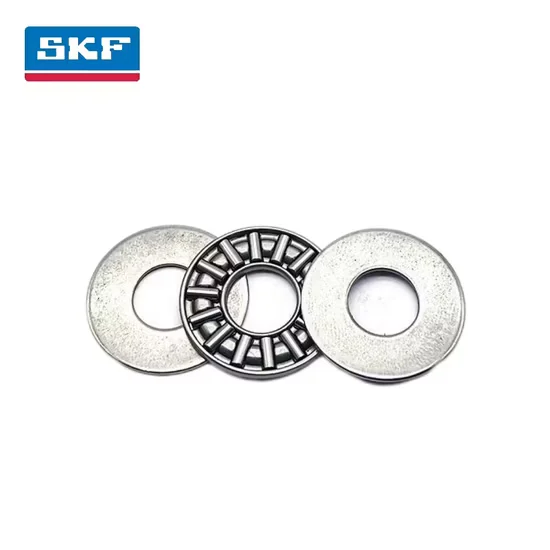 Подшипники шпинделей станков SKF 29330-E сферический роликовый упорный подшипник оригинал Открыть карточку
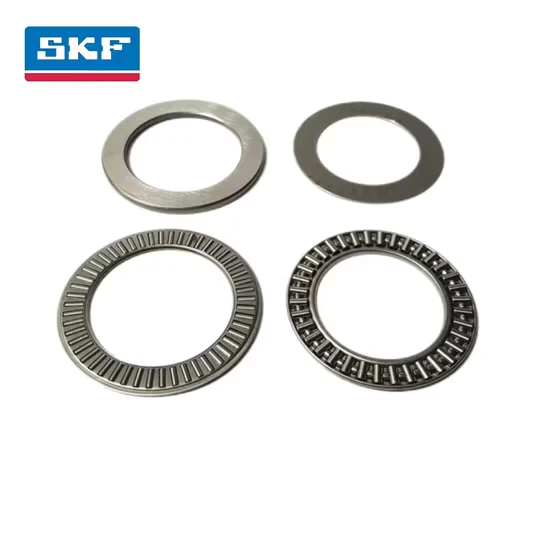 Роликоподшипники упорные SKF AXW 20 / 29348 E/VU029 / 81134 TN осевой подшипник оригинал Открыть карточку
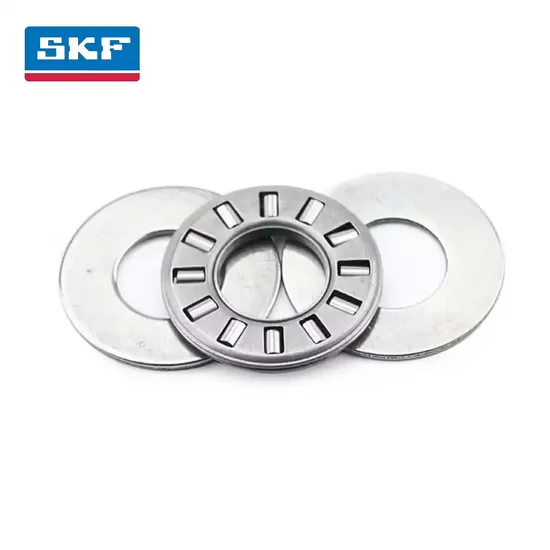 Роликоподшипники упорные SKF 29348 E оригинальный упорный сферический роликоподшипник Открыть карточку
Читайте также
Материалы об идентификации подшипников и закупке для капитального ремонта насосов и компрессоров.
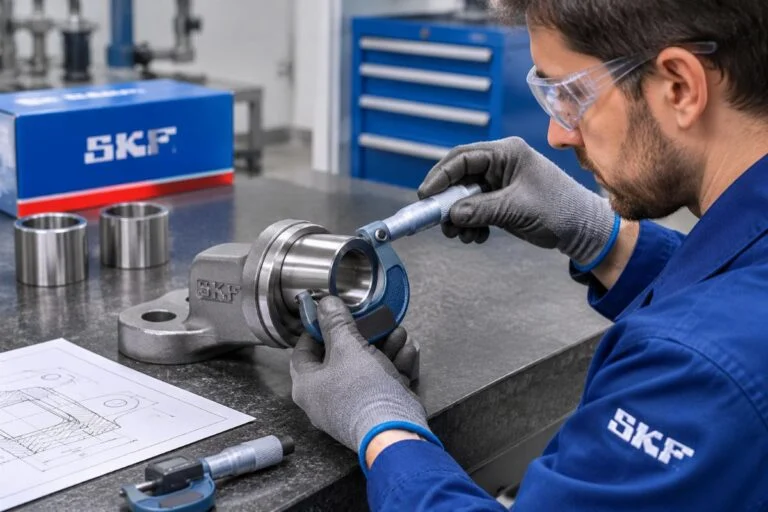 22 сентября, 2026 · Installation & Maintenance SKF Pivot and Bushing Inspection Checklist for Sale Prevent costly downtime with a rigorous SKF pivot and bushing inspection checklist for heavy machinery. Verify dimensional tolerances, surface roughness, and lubrication protocols before… Читать статью
 22 сентября, 2026 · Installation & Maintenance Storing Precision & Linear Products Bearings Wholesale Supplier Prevent micro-rust and condensation damage by mastering Storing precision linear products in humidity below 60% with VCI packaging. Learn essential handling and cleaning protocols… Читать статью
 22 сентября, 2026 · Installation & Maintenance Linear Guide Wear & Brinelling Fix: Genuine Bearing Supplier Linear guide brinelling and wear usually stem from installation errors, not material defects. Verify base flatness tolerances and select correct preload to prevent premature… Читать статью

Соберите подшипники для ремонта насоса и компрессора в один запрос
Process Equipment Company принимает одиночные позиции, полные ремонтные ведомости и подшипники вспомогательного оборудования. В ответ вы получаете письменное предложение по каждой позиции: обозначение, количество, цена и валюта, наличие, срок поставки.
- Модель насоса или компрессора, узел, комплектование, сепаратор и зазор
- Обозначение неполное — приложите чёткое фото маркировки
- Количество по позициям, страна и индекс доставки, требуемая дата поставки
Отправьте перечень на расчёт
Четыре поля — и запрос у менеджера.