
SKF vs Kaydon Thin Section Bearings: Genuine Wholesale Supplier for Bulk Orders
- Опубликовано:
- Рубрика: Brands & Alternatives
- Автор: Process Equipment Company

SKF vs Kaydon thin section bearings are not directly interchangeable despite identical dimensions. Differences in internal geometry and cage design cause premature failure in robotics. Verify groove curvature and clearance to avoid costly downtime when sourcing bulk orders for industrial automation.
Identical outer and inner diameters do not guarantee interchangeability.
SKF and Kaydon thin section bearings are not directly interchangeable by dimension alone due to significant differences in internal geometry, cage design, and groove curvature. Blind substitution often leads to premature failure in high-precision applications such as robotics and automation.
I still remember the heat radiating from a robotic joint assembly that had failed after less than five hundred hours of operation. The maintenance team had replaced a worn Kaydon unit with an SKF bearing of the exact same nominal dimensions, assuming the brands were functionally equivalent since Kaydon is now part of the SKF group. The result was catastrophic seizing. That incident on the dock at Qingdao Port taught me that thin section bearings are defined by their internal architecture, not just their boundary dimensions. When the cross-section is minimal, even microscopic variations in raceway curvature or cage friction coefficients dictate whether a bearing runs cool or burns out.
Understanding these nuances is critical for procurement specialists and engineers who manage bulk orders for industrial machinery. This guide dissects the technical divergences between these two product lines to prevent costly downtime.
Are SKF and Kaydon Thin Section Bearings Interchangeable?
No, they are not universally interchangeable despite sharing similar dimensional standards.
While both brands adhere to ABMA and ISO standards for boundary dimensions, their internal designs reflect different engineering philosophies optimized for specific load and speed conditions. The assumption that one can simply swap a Kaydon Reali-Slim bearing with an SKF thin section bearing of the same series number is a common procurement error.
The primary divergence lies in the contact angle and the number of balls. Kaydon bearings often utilize a specific gothic arch groove geometry that allows for higher rigidity in certain configurations, while SKF designs may prioritize lower friction through different ball complement strategies. In a recent consultation for a European automation OEM, we analyzed a specification sheet where the client requested a direct cross-reference. The proposed SKF alternative had a slightly different internal clearance class. Although the outer diameter and bore matched perfectly, the preload characteristics were incompatible with the existing housing tolerances.
| Feature | Kaydon Design Philosophy | SKF Design Philosophy | Interchangeability Risk |
|---|---|---|---|
| Groove Curvature | Optimized for high rigidity in specific series | Balanced for low friction and versatility | High if preload is critical |
| Cage Material | Varied based on series (nylon/steel) | Often optimized for high-speed stability | Moderate depending on RPM |
| Internal Clearance | Specific to Reali-Slim standards | Adheres to SKF internal groups | High if not verified |
| Seal Design | Integrated lip seals common | Multiple seal options available | Low if open type |
This table illustrates that while the physical envelope is identical, the functional envelope is not. For distributors stocking multi-brand inventories, treating these as identical SKUs without verifying the internal suffix codes is a recipe for returns.
How Do Cage and Groove Curvature Affect Performance?
Cage design and groove curvature directly determine rigidity, heat generation, and limiting speed.
In thin section applications, the margin for error is negligible. The cage acts as the separator for the rolling elements, and its material and design influence the bearing’s dynamic behavior. Nylon cages, often used for their lightweight properties and self-lubricating capabilities, have different thermal expansion rates compared to steel cages. If a replacement bearing uses a different cage material than the original, the change in thermal expansion can alter the internal clearance during operation, leading to increased friction.
Groove curvature is equally critical. The radius of the raceway groove relative to the ball diameter determines the contact area. A tighter curvature increases rigidity but may raise stress concentrations, while a looser curvature reduces stress but allows for more deflection under load. In the case of the failed robotic arm mentioned earlier, the substitute bearing had a groove profile that created excessive sliding friction rather than pure rolling motion at the operating speed. This generated heat that the thin cross-section could not dissipate quickly enough.
A Middle East steel plant operator once reported vibration issues in a conveyor system after switching brands. The new bearings had a different cage window design that altered the lubricant flow dynamics. While the load capacity appeared sufficient on paper, the lubrication starvation at high speeds caused premature wear. This highlights why technical selection support is vital when consolidating mixed-brand orders. We verify not just the size, but the operational parameters including speed limits and lubrication requirements before approving any cross-brand substitution.
What Are the Real Costs of Blind Substitution?
Premature failure in critical joints leads to disproportionate downtime and repair costs.
The cost of a bearing is trivial compared to the cost of the machine it supports. In automation and robotics, a single bearing failure can halt an entire production line. When a procurement team opts for a blind substitution to save on unit price or leverage existing stock, they risk invalidating the machine’s design life. The initial savings are often erased by the labor required for disassembly, the cost of expedited shipping for the correct part, and the lost production revenue.
Consider the case of a wind turbine component manufacturer. They sought to standardize their supply chain by replacing a specialized thin section bearing with a more readily available alternative. The substitute met the static load ratings but failed to meet the dynamic fatigue life requirements due to differences in material cleanliness and heat treatment processes. The failure occurred during field testing, requiring a complete redesign of the hub assembly. This incident resulted in a mid-six-figure loss, far exceeding the potential savings from bulk purchasing the alternative brand.
For distributors serving MRO clients, this risk is amplified. End-users often request equivalents based on outdated cross-reference lists that do not account for recent design updates. Without rigorous technical verification, supplying a non-equivalent part can damage long-term client relationships. Our approach involves reviewing the application工况 (operating conditions) and installation tolerances to ensure that any proposed alternative meets or exceeds the original performance specifications. This prevents the "false economy" of cheap substitutions that fail prematurely.
How to Select the Right Thin Section Bearing?
Selection must be driven by application conditions, speed, and installation tolerances, not just dimensions.
Choosing the correct thin section bearing requires a holistic view of the application. Engineers and procurement specialists must look beyond the basic boundary dimensions. Key factors include the required rigidity, the operating speed, the nature of the load (radial, axial, or moment), and the environmental conditions.
- Verify Internal Clearance: Determine the required internal clearance class based on the fit between the bearing and the shaft/housing. Interference fits reduce internal clearance, which can lead to overheating if not accounted for.
- Assess Cage Compatibility: Check if the operating temperature and speed are compatible with the cage material. For high-speed applications, steel or brass cages may be preferable to nylon.
- Evaluate Lubrication Requirements: Ensure the bearing’s seal design and grease compatibility match the maintenance schedule. Some thin section bearings are sealed for life, while others require periodic relubrication.
- Confirm Load Ratings: Calculate the equivalent dynamic load and compare it with the bearing’s rated capacity. Do not rely solely on static load ratings for rotating applications.
A Southeast Asian machinery distributor recently partnered with us to streamline their inventory for a large automotive project. Instead of simply matching part numbers, we conducted a detailed analysis of the robotic welding cells. We identified that the original specifications called for a specific preload level to minimize backlash. By selecting a bearing with the correct internal geometry and verifying the installation tolerances, we ensured seamless integration. This technical selection support prevented potential quality issues and established a reliable supply chain for the client.
Conclusion
Dimensional match does not equal functional equivalence in thin section bearings.
Blindly substituting SKF for Kaydon or vice versa ignores critical differences in internal geometry that dictate performance and longevity. Successful procurement requires verifying cage design, groove curvature, and internal clearance against specific application needs. Technical diligence prevents costly failures and ensures operational reliability.
Материал подготовлен Process Equipment Company — поставщиком подшипников SKF для насосов, компрессоров и технологического оборудования. Заказ определяется полным обозначением SKF по исходной спецификации оборудования.
Подшипники SKF, упомянутые в статье
Позиции каталога, о которых идёт речь в материале. Откройте карточку, чтобы проверить обозначение и запросить цену.
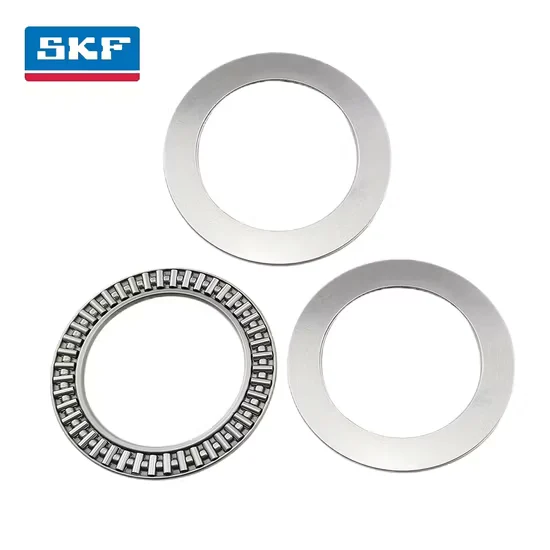 Роликоподшипники упорные SKF 29264 81148-M 29420 E/Vq096 упорковые роликоподшипники для смесителей Открыть карточку
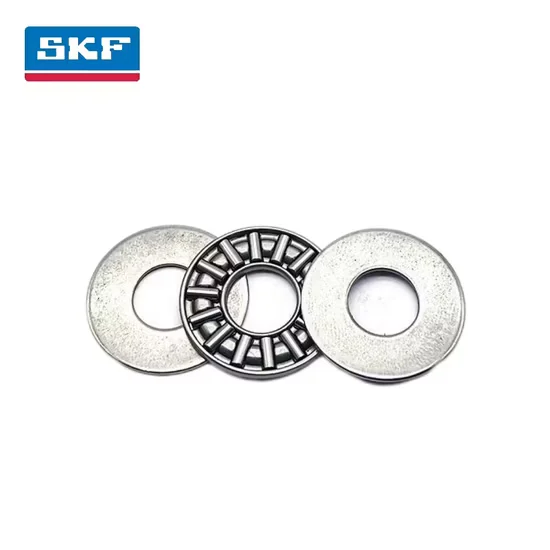 Подшипники шпинделей станков SKF 29330-E сферический роликовый упорный подшипник оригинал Открыть карточку
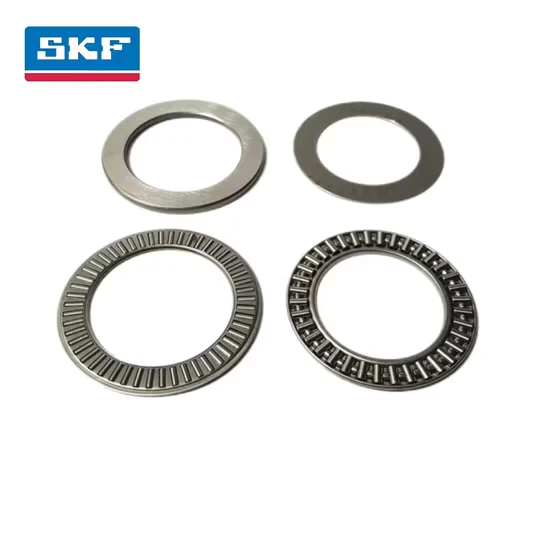 Роликоподшипники упорные SKF AXW 20 / 29348 E/VU029 / 81134 TN осевой подшипник оригинал Открыть карточку
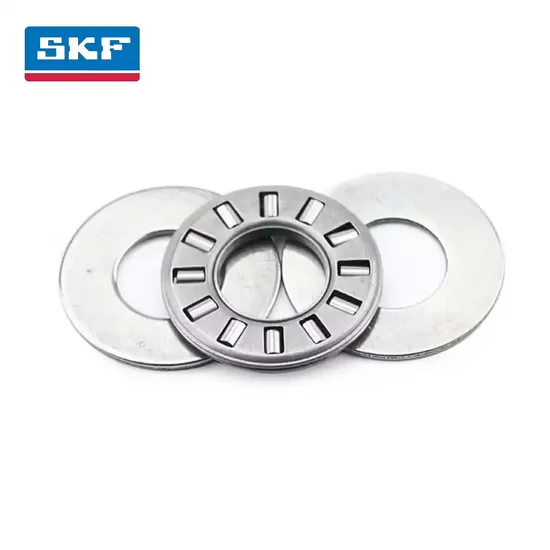 Роликоподшипники упорные SKF 29348 E оригинальный упорный сферический роликоподшипник Открыть карточку
Читайте также
Материалы об идентификации подшипников и закупке для капитального ремонта насосов и компрессоров.
 22 сентября, 2026 · Brands & Alternatives SKF Specialty Product Lines: Genuine Wholesale Supplier for Bulk Orders Secure genuine SKF specialty product lines with strict traceability verification to prevent costly customs delays and production downtime. Align HS codes precisely and validate… Читать статью
 22 сентября, 2026 · Brands & Alternatives Maintenance-Free vs Greased Plain Bearings Wholesale Supplier Selecting between Maintenance-Free vs Greased Plain Bearings depends on site dust levels and relubrication feasibility rather than a blanket preference. Greased spherical plain bearings… Читать статью
 22 сентября, 2026 · Brands & Alternatives Linear Guides vs Linear Bushings: Wholesale Supplier for Bulk Orders Choosing between Linear Guides vs Linear Bushings prevents costly downtime in harsh mining and cement environments. While guides offer precision, bushings tolerate dust ingress… Читать статью

Соберите подшипники для ремонта насоса и компрессора в один запрос
Process Equipment Company принимает одиночные позиции, полные ремонтные ведомости и подшипники вспомогательного оборудования. В ответ вы получаете письменное предложение по каждой позиции: обозначение, количество, цена и валюта, наличие, срок поставки.
- Модель насоса или компрессора, узел, комплектование, сепаратор и зазор
- Обозначение неполное — приложите чёткое фото маркировки
- Количество по позициям, страна и индекс доставки, требуемая дата поставки
Отправьте перечень на расчёт
Четыре поля — и запрос у менеджера.