
SKF Specialty Product Lines: Genuine Wholesale Supplier for Bulk Orders
- Опубликовано:
- Рубрика: Brands & Alternatives
- Автор: Process Equipment Company

Secure genuine SKF specialty product lines with strict traceability verification to prevent costly customs delays and production downtime. Align HS codes precisely and validate batch-specific documentation for smooth clearance in Latin America and the Middle East. Source reliable mixed-brand containers with full authenticity guarantees.
Cheap bearings do not save money; they cost you the entire production line.
Sourcing SKF specialty product lines requires strict traceability verification and proper HS code alignment to ensure smooth customs clearance and reliable performance in harsh environments. Without batch-specific documentation and accurate commercial invoices, even genuine bearings face seizure or indefinite delays at border control points, particularly in regions with rigorous import protocols like Latin America and the Middle East.
I still remember the silence on the other end of the phone when a mining client in Brazil realized their crusher was down. The shipment had arrived at Santos Port, but it wasn’t moving. The issue was not the quality of the steel or the precision of the rollers. It was a mismatch between the HS codes on the commercial invoice and the specific model numbers in the packing list, compounded by missing origin certificates for the specialized spherical roller bearings. That delay lasted weeks. The cost was not just in demurrage fees, but in lost ore throughput that dwarfed the value of the bearings themselves. This is why I treat paperwork with the same rigor as metallurgy.
The lesson here is simple: authenticity is not just about the product. It is about the paper trail that proves it. When you are consolidating mixed-brand containers, every single unit must be defensible.
What Are SKF Specialty Product Lines and Why Do They Matter?
Standard bearings fail because they are not designed for your extreme conditions.
Most buyers assume all bearings from a major brand are interchangeable. This is a dangerous misconception. SKF specialty product lines are engineered with unique metallurgy and internal geometries to withstand specific stressors that standard deep-groove ball bearings cannot handle. These include extreme temperatures, heavy shock loads, corrosive environments, and high-speed applications where standard lubricants would break down.
For instance, a standard bearing might use conventional chrome steel. A specialty line designed for high-temperature applications, such as those found in steel mills or cement plants, often incorporates specialized heat treatments and stabilizers to prevent dimensional changes under thermal stress.
| Application Environment | Standard Bearing Performance | Specialty Line Performance |
|---|---|---|
| High Temperature | Risk of dimensional instability and lubricant failure | Stabilized structure with extended service life |
| Heavy Shock Load | Premature fatigue and spalling | Reinforced cage design and optimized internal clearance |
| Corrosive/Wet Conditions | Rapid rusting and surface degradation | Enhanced sealing and corrosion-resistant coatings |
| Misalignment | Edge loading and early failure | Self-aligning capabilities to accommodate shaft deflection |
A European wind farm operator once switched to specialty-grade main shaft bearings after experiencing repeated failures with standard units. The initial cost was higher, but the service life extended significantly, reducing the need for costly crane rentals and downtime during maintenance windows. The key is matching the bearing specification to the actual operating environment, not just the shaft diameter.
When sourcing these components, you are not just buying a ring of steel. You are buying an engineered solution. Ensuring you receive the correct specialty line requires verifying part numbers against technical datasheets, not just catalog images.
How to Verify Genuine SKF Specialty Bearings Before Shipping?
If you cannot trace it, do not buy it.
Counterfeit bearings are a pervasive issue in the global market. They often look identical to the naked eye but lack the precise tolerances and material purity required for heavy industry. Verifying genuine SKF specialty product lines involves a multi-layered approach that goes beyond checking the logo on the box.
First, inspect the packaging. Genuine products come in high-quality, branded packaging with clear printing. Look for the holographic label, which is a primary security feature. However, counterfeiters have become sophisticated, so the hologram alone is not sufficient. You must verify the unique identification code on the label through the manufacturer’s official verification system.
Second, demand batch-specific traceability documents. A reliable supplier will provide test reports or certificates of conformity that link the specific batch number on the bearing to its production data. This document should include details such as the date of manufacture, the production facility, and quality control checks. If a supplier hesitates to provide this level of detail, it is a major red flag.
I once reviewed a shipment destined for a Middle Eastern steel plant. The boxes looked perfect, but the batch numbers on the bearings did not match the certificates provided. Upon closer inspection, the font on the laser etching was slightly off. We halted the shipment. Later analysis confirmed they were high-quality counterfeits that would have failed within months under the plant’s heavy load.
Verification is not a one-time check. It is a continuous process of demanding transparency. Your supplier should be able to walk you through the origin of every unit in your mixed-brand container.
Why Do Customs Holds Happen and How to Prevent Them?
Your HS code is more important than your price negotiation.
Customs holds are rarely random. They are usually the result of discrepancies between the physical goods and the documentation. For SKF specialty product lines, the complexity increases because different types of bearings fall under different HS codes. A deep-groove ball bearing has a different code than a tapered roller bearing or a spherical roller bearing.
In many jurisdictions, especially in Latin America and Southeast Asia, customs officers are trained to look for mismatches. If your commercial invoice lists a generic HS code for "ball bearings" but the packing list contains specialized spherical roller bearings, the shipment will be flagged. This triggers a manual inspection, which can take days or weeks. During this time, your goods sit in a bonded warehouse, accruing storage fees.
To prevent this, align your paperwork with exact part numbers before shipment. Do not use vague descriptions. Instead of "bearings," use "Spherical Roller Bearings, Part Number XYZ." Ensure the HS code on the invoice matches the specific type of bearing being shipped. If you are consolidating a mixed-brand container, each brand and type should be clearly itemized with its corresponding HS code.
A distributor in Chile once faced a month-long delay because their supplier used a single HS code for a container containing five different types of bearings. The customs authority required a complete re-declaration of each item. By pre-verifying the HS codes for each SKU in the mix, we eliminated this risk for subsequent shipments. The key is precision in documentation.
Smooth clearance is not luck. It is the result of meticulous preparation. Your supplier must understand the regulatory requirements of your destination country and prepare the documents accordingly.
How to Source Mixed-Brand Containers with SKF Specialty Lines?
Consolidation is only efficient if every part is documented.
Many industrial buyers need to source multiple brands to meet diverse equipment requirements. Mixing SKF specialty product lines with other premium brands like FAG, NSK, or TIMKEN in a single container can reduce shipping costs and simplify logistics. However, this approach introduces complexity in terms of quality control and documentation.
The primary challenge is ensuring that every brand in the mix meets the same standard of authenticity and traceability. A reliable supplier acts as a gatekeeper, verifying each unit before it enters the consolidation warehouse. This means checking holographic seals, verifying batch numbers, and ensuring that all necessary certificates are collected for every brand.
Furthermore, the supplier must manage the inventory carefully to prevent mixing of similar-looking parts from different brands. Proper labeling and segregation in the warehouse are essential. When the container is packed, the packing list must reflect the exact contents, with clear separation between brands and types.
I worked with a mining operation in Africa that needed emergency spares for crushers, conveyors, and pumps. They required SKF spherical rollers, FAG cylindrical rollers, and NSK deep-groove bearings. By consolidating these into one shipment with full traceability for each brand, they reduced their lead time and shipping costs. The key was having a single point of contact who could guarantee the authenticity of every item in the box.
Sourcing mixed-brand containers is not just about buying cheaper shipping. It is about leveraging a supply chain partner who can manage the complexity of multiple standards and documentation requirements seamlessly.
Conclusion
Authenticity and compliance are non-negotiable for industrial reliability.
Sourcing SKF specialty product lines is a strategic decision that impacts your operational uptime and legal compliance. By prioritizing traceability, verifying documentation, and aligning HS codes, you protect your business from costly delays and counterfeit risks. Whether you are buying a single unit for emergency repair or consolidating a full container for distribution, the principles remain the same: verify every step, demand transparency, and partner with suppliers who understand the weight of their paperwork.
Материал подготовлен Process Equipment Company — поставщиком подшипников SKF для насосов, компрессоров и технологического оборудования. Заказ определяется полным обозначением SKF по исходной спецификации оборудования.
Подшипники SKF, упомянутые в статье
Позиции каталога, о которых идёт речь в материале. Откройте карточку, чтобы проверить обозначение и запросить цену.
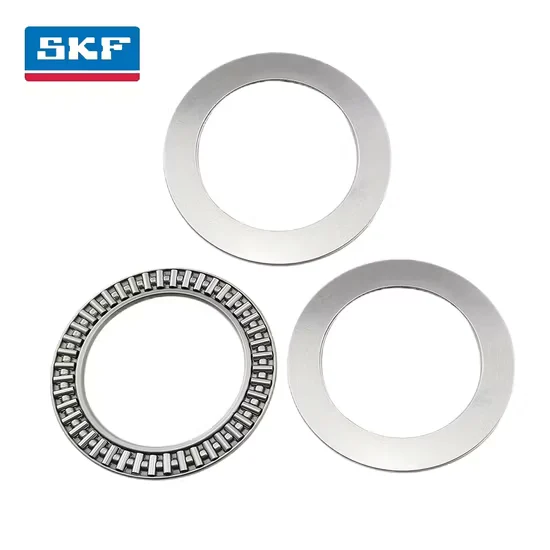 Роликоподшипники упорные SKF 29264 81148-M 29420 E/Vq096 упорковые роликоподшипники для смесителей Открыть карточку
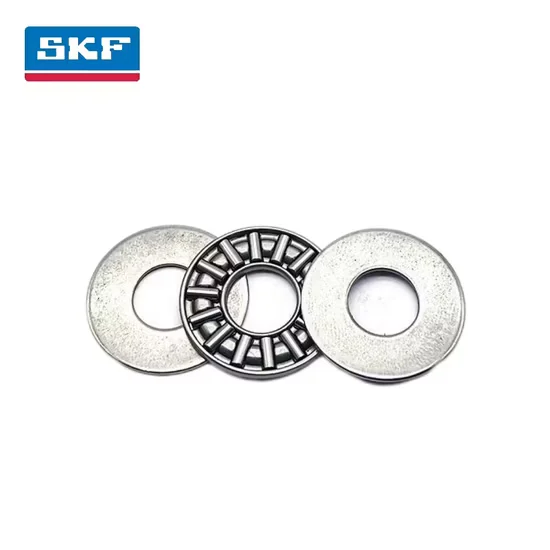 Подшипники шпинделей станков SKF 29330-E сферический роликовый упорный подшипник оригинал Открыть карточку
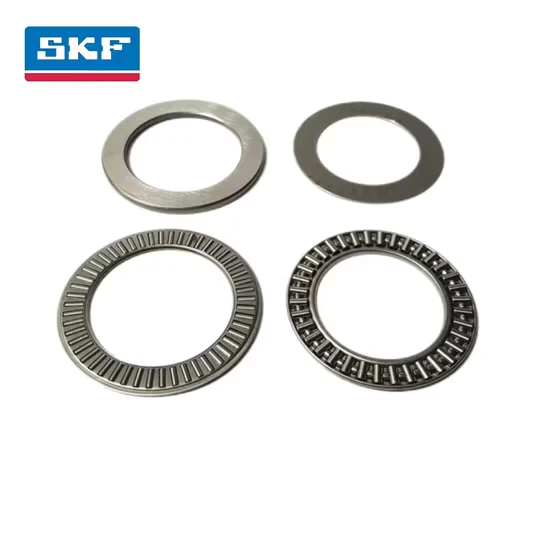 Роликоподшипники упорные SKF AXW 20 / 29348 E/VU029 / 81134 TN осевой подшипник оригинал Открыть карточку
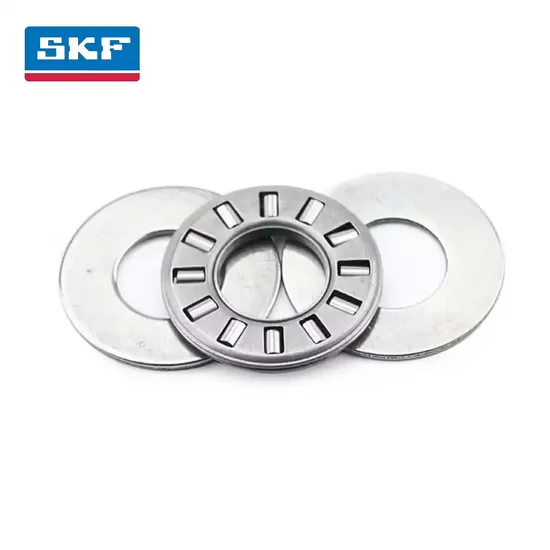 Роликоподшипники упорные SKF 29348 E оригинальный упорный сферический роликоподшипник Открыть карточку
Читайте также
Материалы об идентификации подшипников и закупке для капитального ремонта насосов и компрессоров.
 22 сентября, 2026 · Brands & Alternatives Maintenance-Free vs Greased Plain Bearings Wholesale Supplier Selecting between Maintenance-Free vs Greased Plain Bearings depends on site dust levels and relubrication feasibility rather than a blanket preference. Greased spherical plain bearings… Читать статью
 22 сентября, 2026 · Brands & Alternatives Linear Guides vs Linear Bushings: Wholesale Supplier for Bulk Orders Choosing between Linear Guides vs Linear Bushings prevents costly downtime in harsh mining and cement environments. While guides offer precision, bushings tolerate dust ingress… Читать статью
 22 сентября, 2026 · Brands & Alternatives Roller Screws vs Hydraulic Cylinders: Wholesale Supplier Choosing between roller screws vs hydraulic cylinders dictates specific support bearing requirements to prevent premature system failure. Learn how angular contact and spherical bearings… Читать статью

Соберите подшипники для ремонта насоса и компрессора в один запрос
Process Equipment Company принимает одиночные позиции, полные ремонтные ведомости и подшипники вспомогательного оборудования. В ответ вы получаете письменное предложение по каждой позиции: обозначение, количество, цена и валюта, наличие, срок поставки.
- Модель насоса или компрессора, узел, комплектование, сепаратор и зазор
- Обозначение неполное — приложите чёткое фото маркировки
- Количество по позициям, страна и индекс доставки, требуемая дата поставки
Отправьте перечень на расчёт
Четыре поля — и запрос у менеджера.