
SKF vs Bosch Rexroth Ball Rail Systems: Wholesale Supplier for Bulk Orders
- Опубликовано:
- Рубрика: Brands & Alternatives
- Автор: Process Equipment Company

Ensure reliable SKF vs Bosch Rexroth ball rail substitution by matching preload classes and verifying flange hole distances, not just nominal sizes. Prevent high-speed vibration and mounting stress with precise dimensional checks. Optimize total cost of ownership through strategic mixed-brand sourcing and global spot inventory availability.
Matching preload classes and verifying flange hole distances matters more than comparing basic load ratings when mixing brands.
Direct interchangeability between SKF and Bosch Rexroth ball rail systems is not guaranteed by nominal size alone. Successful substitution requires a detailed comparison of mounting dimensions, carriage structural design, and preload compatibility to prevent high-speed vibration and premature wear. Buyers must prioritize dimensional verification over catalog specifications to ensure operational stability.
I learned this the hard way in a Dongguan machine tool assembly workshop. We assumed that pairing top-tier SKF bearings with Bosch Rexroth rails would yield optimal performance. The equipment ran smoothly at low speeds but developed severe vibration during high-speed machining. Disassembly revealed no visible damage to the rolling elements, but the mismatch in preload class and internal clearance created resonance under dynamic loads. Later, while handling bulk inquiries from Middle East distributors, I nearly quoted based on nominal dimensions alone. A closer look at the technical datasheets showed subtle but critical differences in flange hole spacing and carriage height tolerances. These hidden structural variances mean that bulk procurement decisions cannot rely solely on parameter tables.
What are the core structural differences between SKF and Bosch Rexroth ball rails?
Carriage design and sealing mechanisms differ significantly between the two brands, affecting load distribution and contamination resistance.
While both manufacturers produce high-precision linear motion components, their engineering approaches to carriage geometry and seal integration vary. SKF often emphasizes modular sealing solutions that can be retrofitted or replaced independently, whereas Bosch Rexroth frequently integrates seals into the carriage body design for compactness. This structural difference impacts how each system handles debris ingress and lubrication retention in harsh industrial environments.
| Feature | SKF Ball Rail Systems | Bosch Rexroth Ball Rail Systems |
|---|---|---|
| Carriage Body Design | Modular with optional seal brackets | Integrated seal grooves in standard carriages |
| Sealing Type | Detachable end seals and side wipers | Fixed integrated seals with optional additional wipers |
| Lubrication Access | Standardized nipple positions | Brand-specific lubrication port configurations |
| Material Treatment | Controlled nitrogen infusion for raceways | Proprietary surface hardening processes |
A European automation integrator once reported increased maintenance frequency after switching to a mixed-brand setup without accounting for these structural differences. The detachable seals on the SKF-compatible carriages allowed for easier cleaning but required more frequent inspection compared to the integrated seals of the Rexroth units. Understanding these design philosophies helps buyers select the right system for their specific maintenance capabilities and environmental conditions.
How do mounting dimensions and tolerances compare for direct replacement?
Flange hole distances and alignment tolerances often deviate between brands, preventing bolt-for-bolt substitution.
Nominal size codes such as "size 20" or "size 30" do not guarantee identical mounting footprints. Even minor discrepancies in flange hole spacing or counterbore depths can cause alignment stress, leading to binding or accelerated wear. Distributors attempting brand substitution must verify every mounting dimension against the original equipment manufacturer’s drawings.
| Dimension Parameter | Verification Requirement | Risk of Mismatch |
|---|---|---|
| Flange Hole Spacing | Exact millimeter match required | High risk of mounting stress |
| Counterbore Depth | Must match bolt head height | Potential interference with carriage movement |
| Rail Width Tolerance | Within ISO standard limits | Misalignment causing uneven load distribution |
| Mounting Surface Flatness | Critical for both brands | Premature fatigue failure if ignored |
A distributor in Southeast Asia faced significant retrofitting delays when a client attempted to replace worn Rexroth rails with SKF equivalents. The flange hole distances differed by a fraction of a millimeter, which seemed negligible but prevented proper bolt installation. By conducting precise dimension checks before shipment, we helped the client avoid costly on-site modifications. This experience underscores the necessity of cross-referencing detailed dimensional drawings rather than relying on nominal size categories.
Why do preload and clearance matching matter in mixed-brand setups?
Mismatched preload classes cause high-speed instability and vibration, even if static load ratings appear sufficient.
Preload determines the internal clearance between the ball bearings and the raceways. Too little preload results in play and vibration, while excessive preload generates heat and reduces service life. When mixing brands, it is crucial to match the preload class rather than just the dynamic load rating. A high-precision grade does not automatically compensate for incorrect preload selection.
| Preload Class | Application Suitability | Vibration Risk if Mismatched |
|---|---|---|
| Light Preload | High-speed, low-load applications | High risk of resonance at high RPM |
| Medium Preload | General purpose machine tools | Moderate risk if stiffness requirements are high |
| Heavy Preload | High-rigidity, heavy-load scenarios | Low vibration risk but higher heat generation |
In one case, an OEM optimizing costs for a new machine tool line mixed brands based on axis load requirements. They selected a lighter preload class for non-critical axes to save costs but maintained heavy preload on the main spindle axis. This strategic matching reduced overall costs without sacrificing precision where it mattered most. However, had they simply swapped brands without adjusting preload, the high-speed axes would have suffered from noticeable vibration.
How to calculate the total cost of ownership for both systems?
Total cost depends on maintenance cycles, spot availability, and lifecycle performance rather than initial purchase price.
Evaluating SKF vs Bosch Rexroth ball rail systems requires looking beyond the unit price. Factors such as lubrication intervals, seal replacement ease, and global spare parts availability influence long-term operational costs. A system with a higher upfront cost may offer lower total ownership costs if it requires less frequent maintenance and has better supply chain reliability.
| Cost Factor | Impact on Total Ownership | Mitigation Strategy |
|---|---|---|
| Initial Purchase Price | Low impact on long-term costs | Compare against lifecycle performance |
| Maintenance Frequency | High impact on downtime costs | Select systems with robust sealing |
| Spare Parts Availability | Critical for emergency repairs | Choose brands with global distribution networks |
| Lifecycle Durability | Determines replacement intervals | Verify load ratings against actual operating conditions |
A mining operator in Africa reduced unplanned downtime by standardizing on a single brand for critical applications while using a mixed-brand strategy for less critical supports. This approach balanced cost efficiency with reliability. By leveraging global spot inventory and cross-brand equivalent consultation, they ensured that spare parts were always available, minimizing production interruptions. This strategic sourcing model highlights the importance of considering supply chain resilience in total cost calculations.
Conclusion
Precision matching of mounting dimensions and preload classes prevents operational failures in mixed-brand linear systems.
Selecting between SKF and Bosch Rexroth ball rail systems requires a holistic view of structural compatibility and lifecycle costs. Buyers should prioritize dimensional verification and preload matching over simple load rating comparisons to ensure reliable performance. Strategic sourcing that considers maintenance needs and supply chain availability optimizes both uptime and total cost of ownership.
Материал подготовлен Process Equipment Company — поставщиком подшипников SKF для насосов, компрессоров и технологического оборудования. Заказ определяется полным обозначением SKF по исходной спецификации оборудования.
Подшипники SKF, упомянутые в статье
Позиции каталога, о которых идёт речь в материале. Откройте карточку, чтобы проверить обозначение и запросить цену.
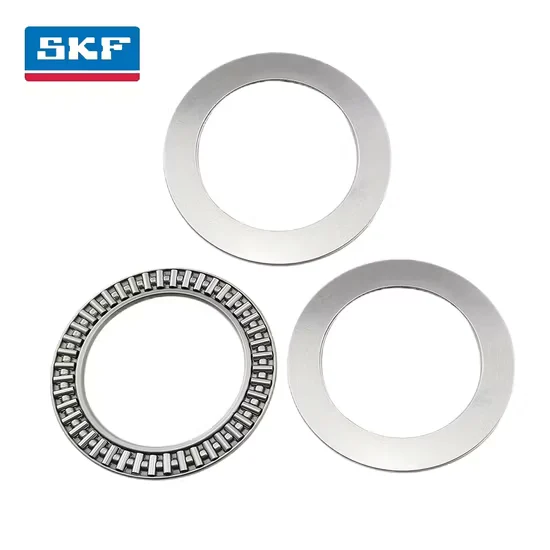 Роликоподшипники упорные SKF 29264 81148-M 29420 E/Vq096 упорковые роликоподшипники для смесителей Открыть карточку
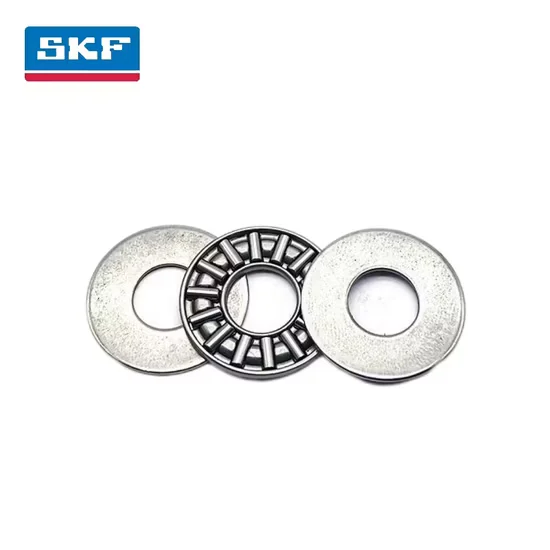 Подшипники шпинделей станков SKF 29330-E сферический роликовый упорный подшипник оригинал Открыть карточку
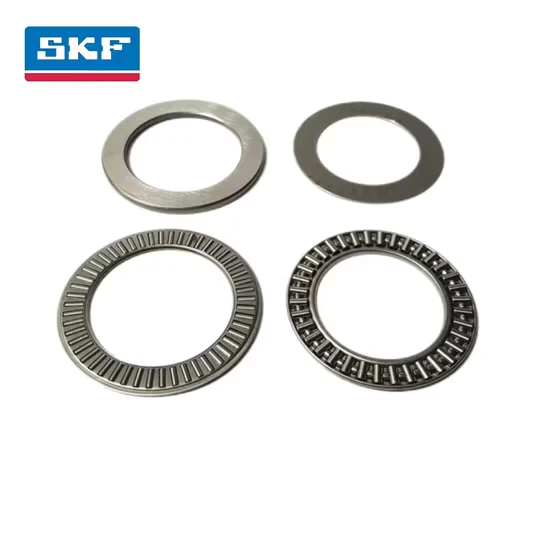 Роликоподшипники упорные SKF AXW 20 / 29348 E/VU029 / 81134 TN осевой подшипник оригинал Открыть карточку
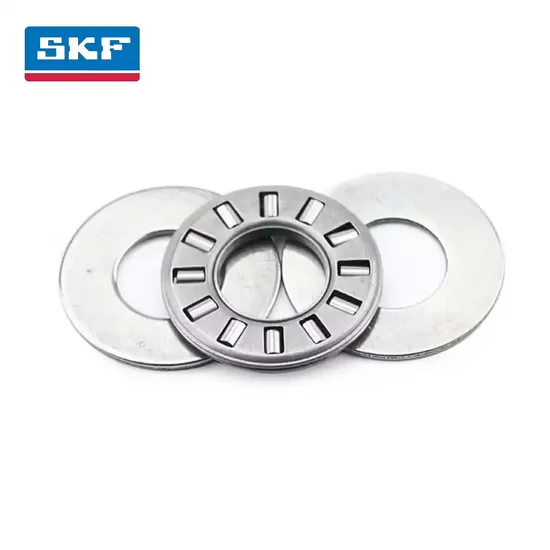 Роликоподшипники упорные SKF 29348 E оригинальный упорный сферический роликоподшипник Открыть карточку
Читайте также
Материалы об идентификации подшипников и закупке для капитального ремонта насосов и компрессоров.
 22 сентября, 2026 · Brands & Alternatives SKF Specialty Product Lines: Genuine Wholesale Supplier for Bulk Orders Secure genuine SKF specialty product lines with strict traceability verification to prevent costly customs delays and production downtime. Align HS codes precisely and validate… Читать статью
 22 сентября, 2026 · Brands & Alternatives Maintenance-Free vs Greased Plain Bearings Wholesale Supplier Selecting between Maintenance-Free vs Greased Plain Bearings depends on site dust levels and relubrication feasibility rather than a blanket preference. Greased spherical plain bearings… Читать статью
 22 сентября, 2026 · Brands & Alternatives Linear Guides vs Linear Bushings: Wholesale Supplier for Bulk Orders Choosing between Linear Guides vs Linear Bushings prevents costly downtime in harsh mining and cement environments. While guides offer precision, bushings tolerate dust ingress… Читать статью

Соберите подшипники для ремонта насоса и компрессора в один запрос
Process Equipment Company принимает одиночные позиции, полные ремонтные ведомости и подшипники вспомогательного оборудования. В ответ вы получаете письменное предложение по каждой позиции: обозначение, количество, цена и валюта, наличие, срок поставки.
- Модель насоса или компрессора, узел, комплектование, сепаратор и зазор
- Обозначение неполное — приложите чёткое фото маркировки
- Количество по позициям, страна и индекс доставки, требуемая дата поставки
Отправьте перечень на расчёт
Четыре поля — и запрос у менеджера.