
SKF Linear Guides Lead Times: Wholesale Supplier for Bulk Orders
- Опубликовано:
- Рубрика: Procurement & Trade FAQs
- Автор: Process Equipment Company

Stop guessing SKF linear guides lead time and risking costly production halts. Spot inventory ships in days while factory orders take months, making speed critical for urgent MRO replacements. Learn to calculate true delivery costs and mix sourcing strategies to protect your supply chain resilience.
Factory orders are not always cheaper.
SKF linear guides from spot inventory ship within days, while factory orders require months of production and transit time. For urgent MRO replacements or tight automation project deadlines, relying solely on factory lead times risks costly production halts that far exceed the initial price difference of spot stock.
I still remember the silence in a Dongguan automation plant. It was not the peaceful quiet of a well-oiled machine, but the heavy, expensive silence of a stopped production line. A batch of SKF linear guides was missing. I had booked them as a standard factory order, assuming the usual sea freight timeline would align with the client’s assembly schedule. I was wrong. The gap between the manufacturer’s production slot and the vessel’s departure date created a bottleneck that no amount of expedited paperwork could fix. We eventually sourced genuine units from local spot inventory and shipped them via air consolidation. The freight cost wiped out half a year’s profit margin on that single order, but it saved the client’s contract. That day taught me that lead time is not just a logistics metric; it is a financial variable.
Understanding this distinction is critical for industrial buyers. Whether you are stocking for resale or managing an OEM build, knowing when to buy spot and when to book futures defines your supply chain resilience.
What is the actual lead time gap between SKF spot stock and factory orders?
Spot inventory ships in days; factory orders take months.
The confusion often starts with the term "lead time." Many buyers assume it refers only to production. In reality, total lead time includes processing, production, quality inspection, packaging, customs clearance, and transit. For SKF linear guides, the difference between spot and factory is structural.
Spot stock refers to units already manufactured, inspected, and held in regional distribution centers or authorized wholesaler warehouses. These items are ready for immediate dispatch. Once an order is confirmed, the primary delay is administrative—preparing export documents and booking cargo space. For standard series like the LGEM or LGBS, spot availability is high in major logistics hubs.
Factory orders, conversely, begin at zero. The manufacturer must schedule production, source raw materials, machine the components, assemble, and test. This process alone can take weeks. Add to this the time for inland transport to the port, customs export procedures, and ocean freight transit, which varies by destination. For non-standard sizes or custom pre-loaded units, the wait extends further.
| Feature | Spot Inventory | Factory Order |
|---|---|---|
| Availability | Immediate | Scheduled production |
| Processing Time | Days | Weeks to months |
| Transit Mode | Air or Sea (flexible) | Primarily Sea |
| Customization | Limited to stock specs | Full customization available |
| MOQ Flexibility | Low (single units possible) | High (batch requirements) |
A European wind farm operator once faced a turbine gearbox repair crisis. They needed specific high-load linear guides for the pitch control mechanism. A factory order would have meant waiting three months, leaving the turbine idle during peak wind season. By sourcing from a wholesaler with verified spot stock, they received the parts in less than a week. The premium paid for speed was negligible compared to the revenue lost from downtime.
How to calculate the true cost of delayed linear guide delivery?
Downtime and expedited freight outweigh initial price differences.
Most procurement teams focus on the unit price. A factory order might offer a discount compared to spot stock. However, this view ignores the hidden costs of delay. When a production line stops, the cost per hour includes idle labor, missed delivery penalties, and potential contract breaches.
Consider the formula: Total Cost = Unit Price + Freight + (Downtime Hours × Hourly Loss Rate).
In many industrial scenarios, the hourly loss rate is substantial. If a factory order saves ten percent on the unit price but delays delivery by six weeks, the risk of downtime increases exponentially. If that delay forces an emergency air freight shipment later, the savings vanish. Air freight costs for heavy industrial components can be several times higher than sea freight.
I recall a case involving a Middle East steel mill. They opted for a factory order to save on upfront costs for a conveyor system upgrade. Midway through production, a design change required a different preload specification. The factory order could not be adjusted easily, and canceling it incurred penalties. They had to buy spot stock for the immediate need while waiting for the original order to arrive, resulting in double inventory holding costs and administrative waste.
To avoid this, buyers should assess the criticality of the application. For non-critical, long-lead projects, factory orders make sense. For MRO (Maintenance, Repair, and Operations) or just-in-time manufacturing, spot stock provides insurance against uncertainty.
What is the best strategy for mixing spot and futures in bulk orders?
Combining partial spot with futures minimizes supply chain risks.
Relying entirely on one sourcing method is risky. A balanced approach leverages the strengths of both. For large OEM projects, a mixed strategy is often optimal.
Start by analyzing the bill of materials. Identify the long-lead, custom, or highly specialized components that must come from the factory. These items define the project’s critical path. Book these early. Then, identify the standard, high-volume components that are commonly stocked. Purchase a portion of these from spot inventory to cover the initial assembly phase or early production runs.
This hybrid model offers several advantages:
- Immediate Progress: You can begin assembly or testing with spot units while waiting for the bulk factory order.
- Risk Mitigation: If the factory order faces delays, you have buffer stock to keep operations running.
- Cash Flow Management: You avoid tying up capital in full inventory before it is needed.
A Southeast Asian automotive supplier used this method for a new assembly line. They bought thirty percent of their SKF linear guides from spot stock to set up the pilot run. This allowed them to validate the design and train staff. The remaining seventy percent was ordered as a factory batch for mass production. When a minor shipping delay hit the factory batch, the spot stock buffer kept the pilot phase on schedule, preventing a ripple effect on the entire launch timeline.
How to verify supplier claims on SKF linear guide lead times?
Requesting traceability docs and customs records ensures authenticity.
Not all suppliers who claim to have "spot stock" actually hold physical inventory. Some may be drop-shipping from other sources, which adds hidden delays. To verify lead time claims, buyers must look beyond verbal assurances.
First, request proof of stock. This can include recent warehouse photos with timestamped metadata, or a live video call showing the specific batch numbers. Genuine wholesalers will have these readily available.
Second, check traceability documentation. Authentic SKF products come with certificates of conformity and batch tracking numbers. Ask the supplier to provide sample documentation for previous shipments. Verify that the batch numbers match the manufacturer’s format.
Third, review shipping history. A reliable supplier will have a record of consistent exports. Request redacted copies of recent bills of lading or customs declaration forms. These documents prove that the supplier has physically moved goods recently and understands the export process.
I once encountered a trader who promised two-day delivery for a large batch of linear guides. When pressed for proof of stock, they could only provide generic catalog images. Upon further investigation, they had no physical inventory and were waiting for a factory shipment that was already delayed. By insisting on verifiable evidence, we avoided a significant project delay.
Conclusion
Lead time management is a strategic advantage, not just a logistical detail.
Understanding the gap between SKF linear guides spot stock and factory orders allows buyers to optimize costs and ensure continuity. By mixing sourcing strategies and verifying supplier claims, industrial purchasers can protect their operations from the high costs of downtime. The right balance of speed and economy keeps production moving.
Материал подготовлен Process Equipment Company — поставщиком подшипников SKF для насосов, компрессоров и технологического оборудования. Заказ определяется полным обозначением SKF по исходной спецификации оборудования.
Подшипники SKF, упомянутые в статье
Позиции каталога, о которых идёт речь в материале. Откройте карточку, чтобы проверить обозначение и запросить цену.
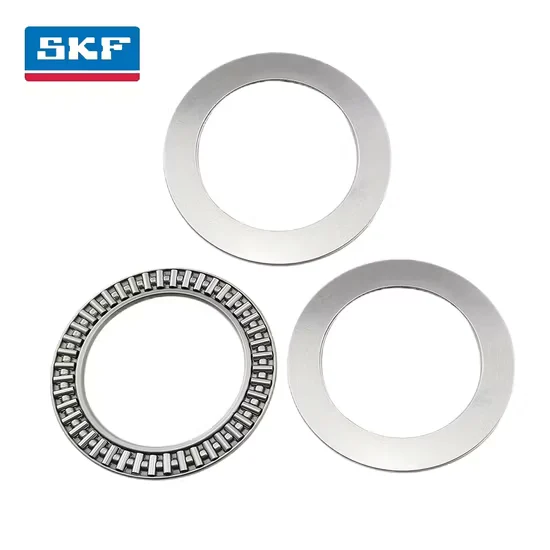 Роликоподшипники упорные SKF 29264 81148-M 29420 E/Vq096 упорковые роликоподшипники для смесителей Открыть карточку
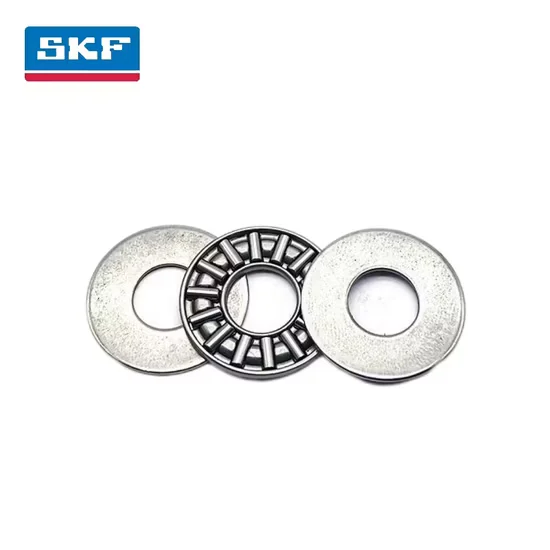 Подшипники шпинделей станков SKF 29330-E сферический роликовый упорный подшипник оригинал Открыть карточку
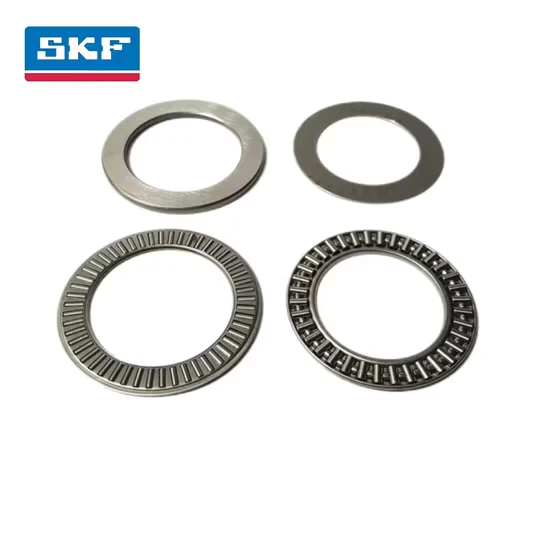 Роликоподшипники упорные SKF AXW 20 / 29348 E/VU029 / 81134 TN осевой подшипник оригинал Открыть карточку
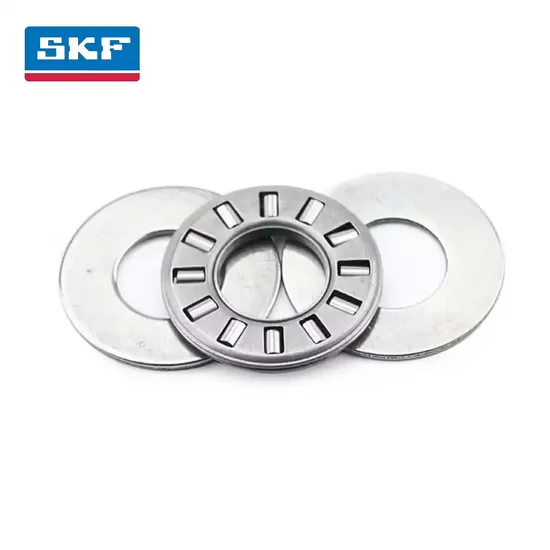 Роликоподшипники упорные SKF 29348 E оригинальный упорный сферический роликоподшипник Открыть карточку
Читайте также
Материалы об идентификации подшипников и закупке для капитального ремонта насосов и компрессоров.
 22 сентября, 2026 · Procurement & Trade FAQs Annual Supply Agreements for Global OEMs: Wholesale Supplier Optimize Annual Supply Agreements for Global OEMs by prioritizing document consistency and batch logistics over unit price. Prevent costly port delays from single character… Читать статью
 22 сентября, 2026 · Procurement & Trade FAQs Genuine Bearings Wholesale Supplier for Small Overseas Workshop Orders Overseas workshops can secure genuine bearings for small orders by leveraging flexible MOQ suppliers who offer mixed-brand consolidation. This approach bypasses OEM rejections and… Читать статью
 22 сентября, 2026 · Procurement & Trade FAQs Genuine SKF FAG NSK Bearings Wholesale Supplier for Global Industrial MRO Clients Master bearing export documentation to prevent customs seizures and costly delays for multi-brand shipments. Ensure smooth clearance with batch-isolated packing lists, original mill certificates,… Читать статью

Соберите подшипники для ремонта насоса и компрессора в один запрос
Process Equipment Company принимает одиночные позиции, полные ремонтные ведомости и подшипники вспомогательного оборудования. В ответ вы получаете письменное предложение по каждой позиции: обозначение, количество, цена и валюта, наличие, срок поставки.
- Модель насоса или компрессора, узел, комплектование, сепаратор и зазор
- Обозначение неполное — приложите чёткое фото маркировки
- Количество по позициям, страна и индекс доставки, требуемая дата поставки
Отправьте перечень на расчёт
Четыре поля — и запрос у менеджера.