
Rod Ends for Cylinder Maker Turkey: Wholesale Supplier & Bulk OEM Solutions
- Опубликовано:
- Рубрика: News & Cases
- Автор: Process Equipment Company
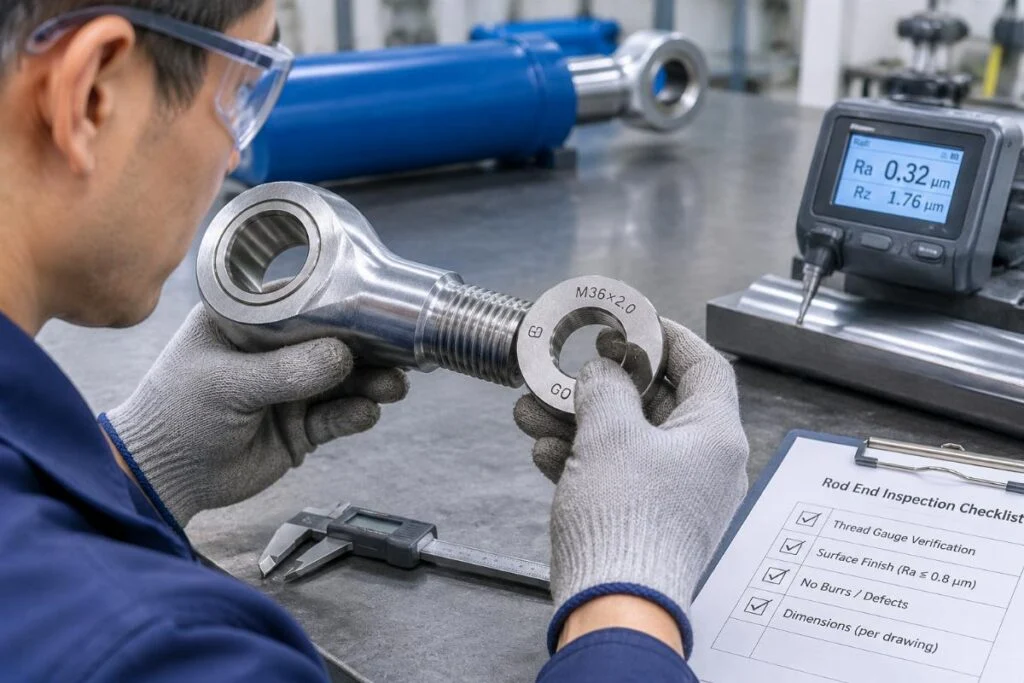
Sourcing rod ends for hydraulic cylinders demands strict verification of heat treatment hardness and thread tolerances to prevent costly assembly failures. Learn how auditing material certificates and flaw detection reports ensures batch consistency, helping OEMs avoid full-container returns and secure a reliable supply chain.
Low price is the most expensive mistake in hydraulic assembly.
Sourcing rod ends for hydraulic cylinders requires strict verification of heat treatment hardness and thread tolerances to prevent assembly failures and costly returns. Ignoring these technical parameters leads to seized joints, production bottlenecks, and full-container rejections that far outweigh any initial savings on unit cost.
I still remember the silence in the workshop when the shipment arrived in Istanbul. It was not the quiet of efficiency, but the heavy silence of a production line that had ground to a halt. Years ago, while working in quality control in Yantai, I handled a batch of rod end joint bearings destined for a Turkish hydraulic cylinder manufacturer. The paperwork looked perfect. The prices were competitive. But we had skipped the critical step of verifying the inner ring heat treatment hardness. When the client attempted to assemble the hydraulic cylinders, the joints seized immediately. The tolerance deviation was microscopic, but the consequence was macroscopic: a full container of goods was returned, resulting in a mid-six-figure loss. That experience reshaped my approach to sourcing. Now, when I review orders for rod ends for hydraulic cylinders, the first documents I request are not the proforma invoices, but the material certificates and flaw detection reports.

This case is not unique. Many industrial buyers assume that if the outer dimensions match, the part will fit. However, the internal metallurgy and precise thread engagement define whether a component survives the high-pressure environment of a hydraulic system or fails catastrophically. Below, I break down why these specific quality controls matter and how to secure a reliable supply chain for your OEM needs.
Why Did the First Shipment to Turkey Fail?
Ignoring inner ring heat treatment hardness led to seized hydraulic cylinders and full-container returns.
The primary reason for the failure in the Turkish case was not a visible defect, but an invisible one: insufficient hardness in the inner ring. Rod ends operate under significant oscillating loads and pressure. If the inner ring is too soft, it deforms under load, causing the ball to embed itself into the raceway. This creates excessive friction, leading to seizure during assembly or early failure in operation.
In the initial batch, the supplier had used a lower-grade steel or skipped the proper quenching process to cut costs. Without a rigorous hardness test, this deviation went unnoticed until the parts reached the customer’s assembly line. The result was not just a few defective units, but a systemic failure across the entire batch. The client faced severe rework delays, as every cylinder had to be disassembled and inspected. The cost of shipping the goods back, combined with the lost production time, dwarfed the savings from choosing the cheaper supplier.

To avoid this, buyers must demand proof of heat treatment. This is not about trusting the supplier’s word; it is about verifying the physical properties of the metal. A simple hardness test using a Rockwell tester can reveal whether the component meets the required HRC range. For rod ends for hydraulic cylinders, consistency in hardness ensures that the bearing can withstand the dynamic loads without deforming. When sourcing, insist on batch-level test reports rather than generic certificates. This level of scrutiny separates professional OEM suppliers from traders who merely move boxes.
How to Verify Rod End Quality Before Shipping?
Strictly auditing material certificates and flaw detection reports is the only way to ensure batch consistency.
Verbal promises are worthless in international trade. The only guarantee of quality is traceable documentation. Before any shipment of rod ends for hydraulic cylinders leaves the factory, two key documents must be reviewed: the Material Certificate and the Flaw Detection Report.
The Material Certificate confirms the chemical composition of the steel. It verifies that the alloy contains the correct percentages of carbon, chromium, and other elements necessary for strength and wear resistance. Without this, you cannot be sure that the material is suitable for high-load applications.
The Flaw Detection Report, often generated through magnetic particle inspection or ultrasonic testing, identifies internal cracks, voids, or inclusions that are not visible to the naked eye. These microscopic defects can act as stress concentrators, leading to premature fatigue failure. In the hydraulic industry, where safety and reliability are paramount, such flaws are unacceptable.
| Verification Step | Basic Supplier Approach | Professional OEM Standard |
|---|---|---|
| Material Certification | Generic mill certificate | Batch-specific chemical analysis |
| Hardness Testing | Random sample check | Full batch statistical sampling |
| Flaw Detection | Visual inspection only | Magnetic particle or ultrasonic testing |
| Traceability | Lot number only | Full heat treatment log traceability |
A US buyer once shared how implementing this audit process saved their project. They had been receiving rod ends that looked perfect but failed prematurely in field tests. By requiring detailed flaw detection reports, they identified a supplier who was skipping this critical step. Switching to a provider who offered full traceability eliminated the field failures entirely. For buyers seeking rod ends for hydraulic cylinders, this due diligence is non-negotiable. It transforms quality control from a reactive measure into a proactive safeguard.

What Happens When Thread Tolerances Deviate?
Even a slight deviation in mixed-batch procurement causes severe on-site assembly bottlenecks.
Thread tolerance is another area where minor deviations lead to major disruptions. Hydraulic cylinders require precise threading to ensure a secure connection between the rod end and the piston rod. If the thread pitch or diameter is even slightly off, the joint may not tighten properly, leading to loosening under vibration, or it may be impossible to assemble at all.
In mixed-batch procurement, where components are sourced from different manufacturers or production runs, tolerance stacking becomes a significant risk. One batch might have threads on the upper limit of the tolerance range, while another is on the lower limit. When these are combined in an assembly line, the inconsistency causes fitment issues. Workers spend hours trying to force parts together or reworking threads, leading to significant rework delays.
I have seen cases where a "minor" thread deviation caused a complete stoppage of a production line. The assembler could not torque the joint to the specified value because the threads were binding. This was not a design flaw, but a manufacturing inconsistency. For rod ends for hydraulic cylinders, strict adherence to international thread standards is essential. Using thread gauges to inspect incoming goods can catch these issues before they reach the assembly floor.

Buyers should specify the exact thread standard required (e.g., ISO metric or UNF) and request inspection reports that include thread gauge measurements. This ensures that every unit meets the precise dimensional requirements needed for seamless assembly. It also prevents the costly scenario of having to return entire shipments due to incompatibility.
How to Build a Reliable Rod End Supply Chain?
Partner with suppliers willing to provide full traceability and flexible MOQ for mixed-brand consolidation.
Building a reliable supply chain for rod ends for hydraulic cylinders is not just about finding a low price. It is about finding a partner who understands the technical requirements of your application and can provide the necessary documentation and flexibility.
Many distributors offer standard products, but few offer the level of traceability required by serious OEMs. A reliable supplier will provide genuine products with complete documentation, including material certificates and test reports. They will also offer flexible minimum order quantities (MOQ), allowing buyers to consolidate mixed brands and sizes in a single container. This is particularly useful for MRO clients and smaller OEMs who need a variety of components but do not want to manage multiple suppliers.
Furthermore, a professional supplier will have a deep inventory of mainstream international brands as well as reliable domestic lines. This allows them to offer cross-brand equivalent model consultation, helping buyers find the right specification for their needs. Whether you need high-precision bearings for special equipment or robust units for heavy machinery, a knowledgeable supplier can guide your selection.
Global shipping consolidation is another key advantage. By combining orders from different manufacturers, buyers can reduce shipping costs and simplify logistics. A supplier with experience in global trade will handle the complexities of customs documentation and inspection services, ensuring that your goods arrive on time and in compliance with local regulations.

When evaluating potential partners, look for those who are transparent about their sourcing and quality control processes. Ask for examples of how they have handled quality issues in the past. A supplier who is willing to share their inspection protocols and traceability systems is more likely to be a reliable long-term partner. For rod ends for hydraulic cylinders, this partnership approach ensures that you receive components that meet your exact specifications, reducing the risk of assembly failures and costly returns.
Conclusion
Quality verification is the cornerstone of profitable hydraulic component sourcing.
Sourcing rod ends for hydraulic cylinders demands more than just comparing prices. It requires a rigorous approach to quality control, focusing on heat treatment hardness, thread tolerances, and traceable documentation. By prioritizing these technical aspects, buyers can avoid the costly pitfalls of assembly failures and returns. Partnering with suppliers who offer transparency, flexibility, and technical expertise ensures a stable and efficient supply chain. This strategic approach not only protects your production line but also enhances the reliability of your final products in the market.
Материал подготовлен Process Equipment Company — поставщиком подшипников SKF для насосов, компрессоров и технологического оборудования. Заказ определяется полным обозначением SKF по исходной спецификации оборудования.
Читайте также
Материалы об идентификации подшипников и закупке для капитального ремонта насосов и компрессоров.
 22 сентября, 2026 · News & Cases Global Bearing Trade Flows 2026: Wholesale Supplier for Bulk & MRO Global Bearing Trade Flows 2026 are shifting toward consolidated mixed-brand sourcing to mitigate supply chain volatility. Buyers reduce hidden logistics costs and avoid customs… Читать статью
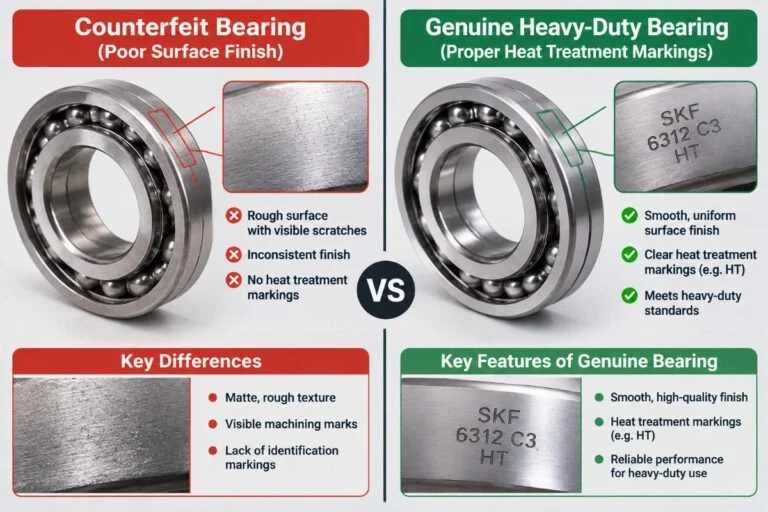 22 сентября, 2026 · News & Cases Construction Equipment Bearing Supplier: Genuine SKF, TIMKEN, NSK Wholesale for Heavy Machinery As Construction Equipment Demand 2026 surges, MRO operators prioritize genuine bearing traceability over theoretical micron specs to prevent costly downtime. Secure authentic SKF, NSK,… Читать статью
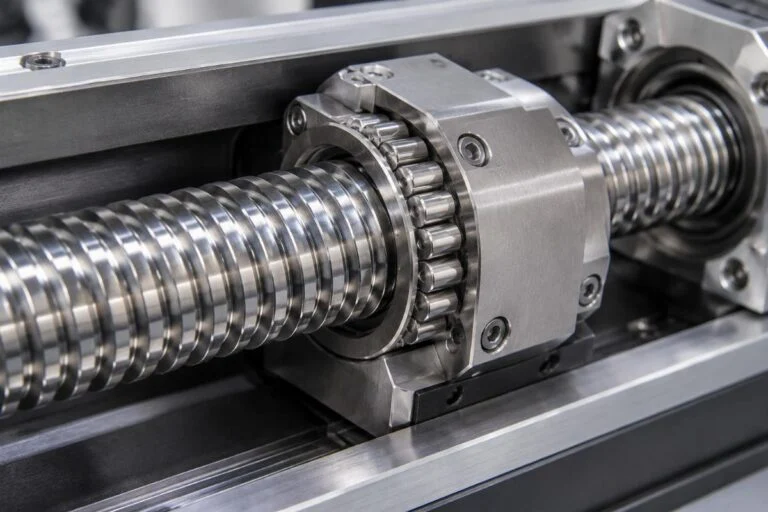 22 сентября, 2026 · News & Cases Roller Screw & Actuator Demand 2026: Wholesale Supplier Roller Screw and Actuator Demand 2026 shifts from standard heavy-duty units to high-precision models driven by terminal automation upgrades. Align procurement with end-user technical… Читать статью

Соберите подшипники для ремонта насоса и компрессора в один запрос
Process Equipment Company принимает одиночные позиции, полные ремонтные ведомости и подшипники вспомогательного оборудования. В ответ вы получаете письменное предложение по каждой позиции: обозначение, количество, цена и валюта, наличие, срок поставки.
- Модель насоса или компрессора, узел, комплектование, сепаратор и зазор
- Обозначение неполное — приложите чёткое фото маркировки
- Количество по позициям, страна и индекс доставки, требуемая дата поставки
Отправьте перечень на расчёт
Четыре поля — и запрос у менеджера.