
Global Bearing Trade Flows 2026: Wholesale Supplier for Bulk & MRO
- Опубликовано:
- Рубрика: News & Cases
- Автор: Process Equipment Company

Global Bearing Trade Flows 2026 are shifting toward consolidated mixed-brand sourcing to mitigate supply chain volatility. Buyers reduce hidden logistics costs and avoid customs delays through precise LCL packing and HS code classification. This strategy ensures faster clearance and continuous production for distributors and MRO operators.
The lowest unit price often hides the highest total landed cost.
In 2026, global bearing trade flows are shifting decisively toward consolidated mixed-brand sourcing to mitigate supply chain volatility and optimize logistics costs. Buyers who cling to single-brand reliance face disproportionate risks from geopolitical disruptions and port inefficiencies, while those adopting flexible consolidation strategies secure faster customs clearance and continuous production. This structural change redefines how regional distributors and MRO operators approach procurement, moving from simple transactional buying to strategic logistics management.

The transition is not merely about cost-saving; it is about resilience. As a practitioner who has navigated the complexities of international freight from the docks of Ningbo to the industrial hubs of Europe, I have seen how minor documentation errors or poor load planning can cascade into major financial losses. The modern buyer must understand that the physical movement of goods is as critical as the technical specifications of the components themselves.
How Are 2026 Bearing Trade Flows Reshaping Global Sourcing?
Geopolitical friction and logistics bottlenecks are forcing a move away from rigid single-source models.
For years, the standard operating procedure for many industrial buyers was to lock in long-term contracts with a single premium brand. This approach offered perceived safety through consistency. However, recent years have demonstrated that this rigidity is a vulnerability. When a specific manufacturing facility faces shutdowns due to energy constraints, labor disputes, or raw material shortages, the entire supply chain halts.
In 2026, we observe a marked increase in mixed-brand consolidation. Distributors in regions such as Southeast Asia and Latin America are no longer filling containers exclusively with one brand’s deep-groove ball bearings or spherical roller bearings. Instead, they are curating packages that include SKF, FAG, NSK, and reliable domestic Chinese lines like ZWZ or HRB within the same shipment. This diversification ensures that if one brand’s lead time extends, the others can maintain inventory levels for local resale.
I recall a period when a major European manufacturer faced unexpected delays. Clients who had diversified their sourcing with equivalent precision-grade alternatives from other reputable brands were able to keep their assembly lines running. Those who did not faced weeks of downtime. The key is not just having multiple suppliers, but integrating them into a cohesive logistics strategy.
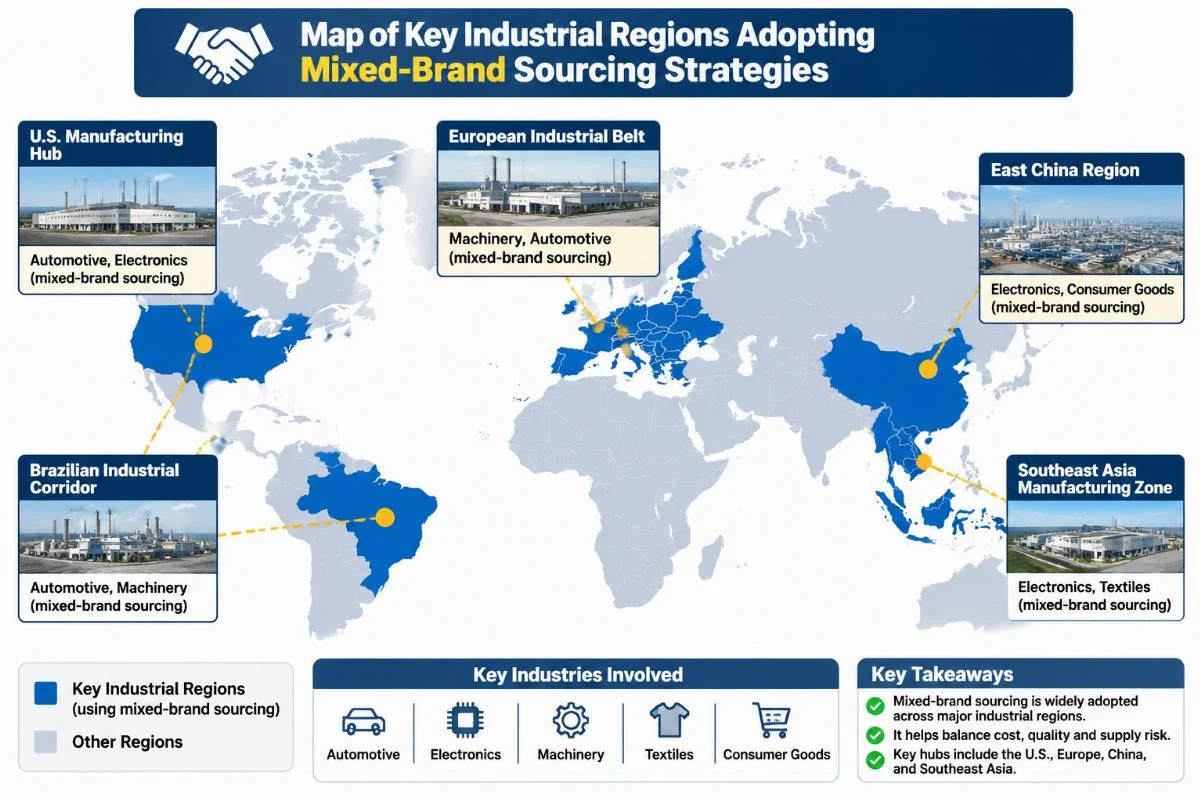
This shift requires a deeper understanding of compatibility. It is not enough to simply buy different brands; one must ensure that the dimensional tolerances and performance characteristics align with the application. For instance, substituting a P5 precision angular contact ball bearing with an equivalent from another top-tier manufacturer requires careful verification of internal clearance and preload settings. The global bearing trade flows now favor buyers who possess this technical agility, allowing them to navigate market fluctuations without compromising equipment reliability.
Why Do Mixed-Brand LCL Shipments Fail at Customs?
Poor weight distribution and inaccurate HS code classification cause severe port delays and hidden costs.
Less than Container Load (LCL) shipments are the lifeblood of small-to-medium distributors and urgent MRO orders. However, they are also the most prone to logistical failure if not managed with precision. A common misconception is that as long as the bearings are genuine, the packing details are secondary. This is dangerously incorrect.
When mixing heavy spherical roller bearings with lightweight precision instrument bearings in the same pallet or crate, the center of gravity shifts. If this is not accounted for in the stowage plan, the cargo can shift during transit, leading to damage. More critically, customs authorities scrutinize mixed-brand shipments closely. If the commercial invoice lists "bearings" under a single generic HS code without specifying the type and brand distinctions, inspectors may flag the shipment for detailed examination.
I once handled a consignment destined for Rotterdam where several tons of spherical roller bearings were mixed with precision angular contact units. To optimize space, we combined them into a single consolidated batch. However, we failed to separate the documentation for the different precision grades and brands clearly. Upon arrival, customs officials questioned the valuation discrepancy between the heavy-duty industrial units and the high-precision aerospace-grade components. The resulting inspection led to significant demurrage charges.

To avoid this, every mixed-brand LCL shipment must have a meticulously prepared packing list that correlates each item with its specific HS code and brand. Weight distribution must be calculated to ensure stability. Using a professional supplier who understands these nuances is not a luxury; it is a necessity for protecting margins. The cost of proper documentation and packing is negligible compared to the fines and storage fees incurred by a detained container.
How Can MRO Buyers Minimize Unplanned Downtime?
Leveraging massive spot inventory and cross-brand equivalents ensures rapid emergency replacements.
For MRO operators in mines, steel plants, and wind farms, unplanned downtime is the ultimate enemy. When a critical bearing fails, the priority is not finding the exact original brand part, which may have a lead time of several weeks, but finding a functional equivalent that can be installed immediately. This is where the concept of cross-brand equivalence becomes vital.
Many premium brands share similar dimensional standards and performance ratings. A cylindrical roller bearing from one major German brand may have a direct functional equivalent in a Japanese or Swedish line, provided the internal clearance and cage design are compatible. Maintaining a spot inventory of these cross-brand alternatives allows maintenance teams to react swiftly.
Consider a scenario at a cement plant in the Middle East. A main drive bearing failed unexpectedly. The original specified brand was out of stock globally. By utilizing a verified equivalent from another premium manufacturer available in local spot stock, the plant resumed operations within hours rather than weeks. The savings in lost production far outweighed any minor differences in unit cost.
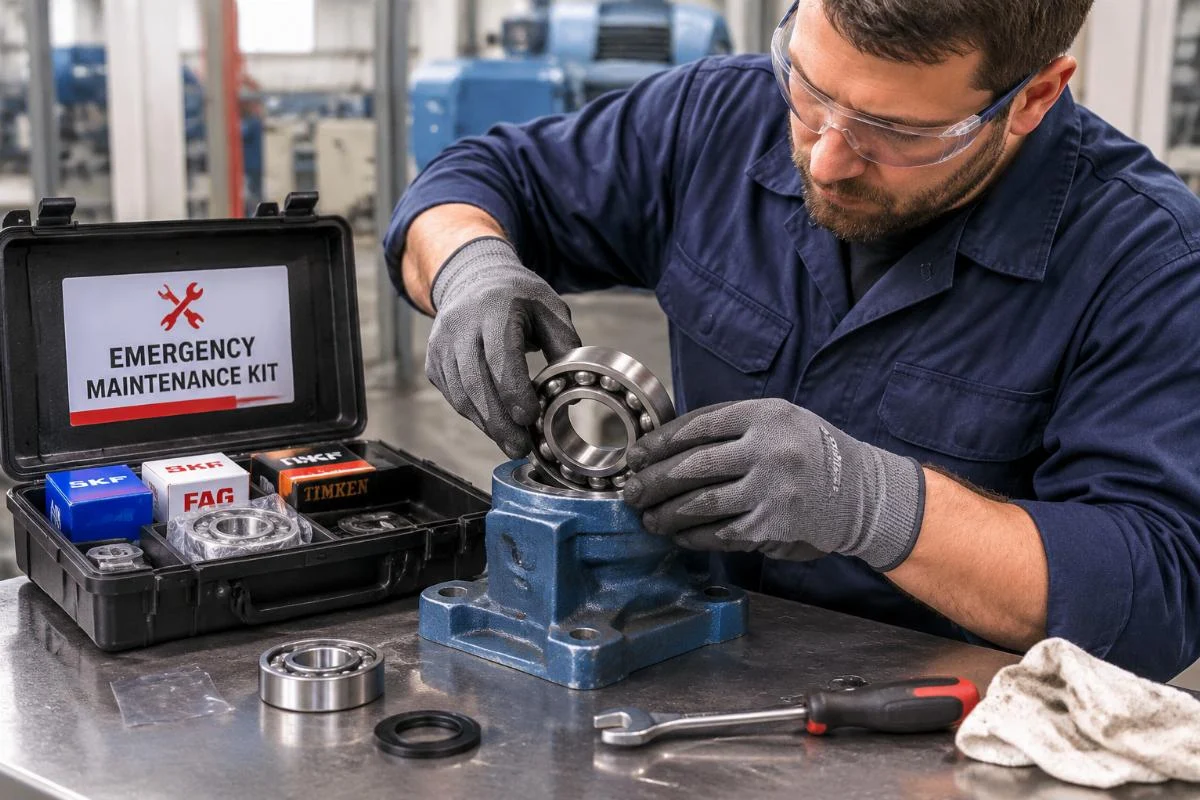
The key to success here is technical validation. It is not about guessing; it is about having access to detailed technical datasheets and expert consultation. A reliable supplier provides not just the part, but the assurance that the alternative meets the required load ratings and speed capabilities. This approach transforms MRO procurement from a reactive scramble into a proactive resilience strategy.
What Ensures Smooth Bulk Container Deliveries for OEMs?
Strict palletization standards and complete traceability documentation guarantee on-time production line resumption.
For OEMs producing heavy equipment such as excavators, crushers, or machine tools, bulk deliveries must integrate seamlessly into just-in-time manufacturing processes. Any delay or quality discrepancy can halt the entire assembly line. Therefore, the focus shifts from mere product availability to logistical precision and documentation integrity.
Bulk container loading requires rigorous palletization. Bearings must be secured to prevent movement during ocean transit, which can last for weeks. Each pallet must be labeled clearly with part numbers, batch codes, and brand information. More importantly, the accompanying documentation must provide full traceability. This includes material certificates, heat treatment records, and quality inspection reports for each batch.
I have observed that OEMs who demand comprehensive traceability docs experience fewer quality disputes upon receipt. When every bearing can be traced back to its production batch, any potential issue can be isolated quickly without rejecting the entire shipment. This level of transparency builds trust and ensures that the manufacturing process remains uninterrupted.

Furthermore, container utilization rates must be optimized without compromising safety. Overloading can lead to structural damage to the container or the cargo, while underloading wastes freight costs. Professional consolidation services calculate the optimal load plan, ensuring that heavy items are placed at the bottom and lighter, sensitive items are protected above. This attention to detail ensures that when the container arrives at the factory gate, it is ready for immediate unloading and integration into the production schedule.
Conclusion
Flexibility and precision define successful sourcing in 2026.
The landscape of global bearing trade flows has evolved from simple price-based transactions to complex logistics and risk management challenges. Buyers who embrace mixed-brand consolidation, prioritize accurate documentation, and leverage cross-brand technical expertise will thrive. Those who remain rigid in their sourcing strategies will find themselves vulnerable to disruptions and hidden costs. Success lies in viewing the supply chain as an integral part of the product value proposition.
Материал подготовлен Process Equipment Company — поставщиком подшипников SKF для насосов, компрессоров и технологического оборудования. Заказ определяется полным обозначением SKF по исходной спецификации оборудования.
Читайте также
Материалы об идентификации подшипников и закупке для капитального ремонта насосов и компрессоров.
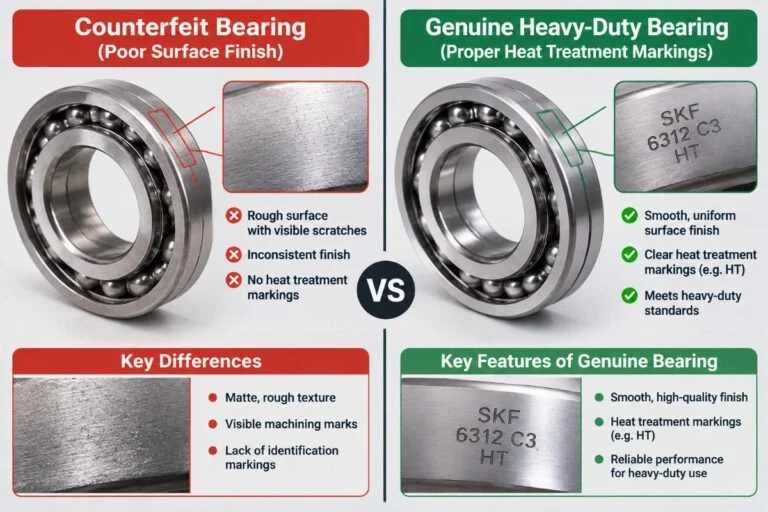 22 сентября, 2026 · News & Cases Construction Equipment Bearing Supplier: Genuine SKF, TIMKEN, NSK Wholesale for Heavy Machinery As Construction Equipment Demand 2026 surges, MRO operators prioritize genuine bearing traceability over theoretical micron specs to prevent costly downtime. Secure authentic SKF, NSK,… Читать статью
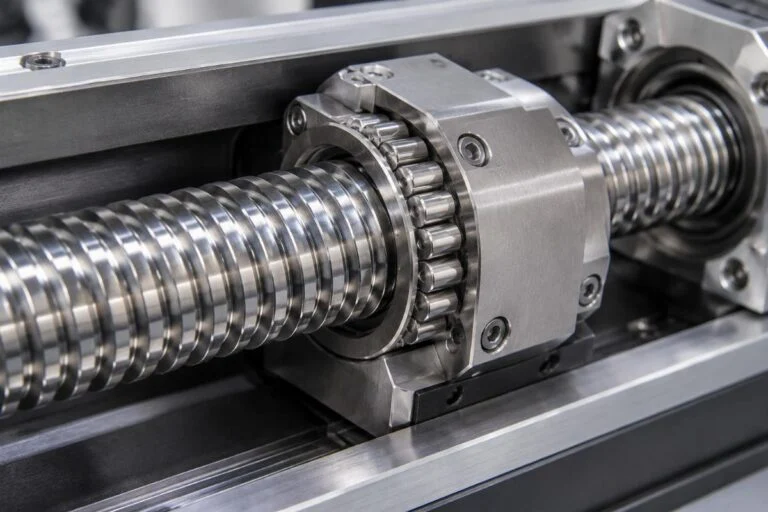 22 сентября, 2026 · News & Cases Roller Screw & Actuator Demand 2026: Wholesale Supplier Roller Screw and Actuator Demand 2026 shifts from standard heavy-duty units to high-precision models driven by terminal automation upgrades. Align procurement with end-user technical… Читать статью
 22 сентября, 2026 · News & Cases Medical Bed Actuators: Genuine Bearings Wholesale Supplier for Europe As a Medical Bed Actuators: Genuine Bearings Wholesale Supplier for Europe, we reveal that actuator noise stems from clearance deviations in counterfeit bearings, not… Читать статью

Соберите подшипники для ремонта насоса и компрессора в один запрос
Process Equipment Company принимает одиночные позиции, полные ремонтные ведомости и подшипники вспомогательного оборудования. В ответ вы получаете письменное предложение по каждой позиции: обозначение, количество, цена и валюта, наличие, срок поставки.
- Модель насоса или компрессора, узел, комплектование, сепаратор и зазор
- Обозначение неполное — приложите чёткое фото маркировки
- Количество по позициям, страна и индекс доставки, требуемая дата поставки
Отправьте перечень на расчёт
Четыре поля — и запрос у менеджера.