
Hydraulic Cylinder Bearing Supplier: Genuine SKF, FAG, NSK Wholesale
- Опубликовано:
- Рубрика: Procurement & Trade FAQs
- Автор: Process Equipment Company

Secure your supply chain with verified hydraulic cylinder bearing suppliers offering genuine SKF, FAG, and NSK products. Prevent catastrophic failure in extreme heat by selecting correct C3 or C4 clearance and ensuring full traceability. Optimize inventory costs through flexible mixed-container consolidation for global sourcing.
Price is not the primary cost driver in hydraulic cylinder maintenance; unverified sourcing is.
For global hydraulic cylinder bearing sourcing, the only viable strategy is to procure genuine, traceable bearings from verified suppliers who offer mixed-container consolidation for brands like SKF, FAG, and NSK. This approach ensures batch consistency, prevents catastrophic failure in heavy equipment cylinder bearings, and optimizes inventory costs through flexible MOQs.
I still remember the silence in a quarry near Riyadh. It was not peaceful. It was the sound of a primary crusher stopped dead because a spherical roller bearing inside its hydraulic cylinder had seized. The ambient temperature was fifty degrees Celsius. The bearing was a refurbishment, sold as "good as new." It lasted three days. The downtime cost far more than the entire production line’s monthly output. That incident shifted my focus from simple trading to rigorous verification. Now, when I advise clients on selecting a hydraulic cylinder bearing supplier, I do not start with price lists. I start with traceability protocols and clearance data.
The market is flooded with components that look correct but fail under load. To avoid this, buyers must prioritize suppliers who provide full documentation and support mixed-brand procurement. This ensures that every heavy equipment cylinder bearings unit meets the original equipment manufacturer’s specifications, regardless of whether it comes from Sweden, Germany, or Japan.
Why do hydraulic cylinders fail in extreme temperatures?
Refurbished bearings lack the thermal stability required for high-heat environments, leading to rapid seizure.
Hydraulic systems in mining and construction often operate in conditions that push materials to their limits. When a cylinder extends and retracts under heavy load, friction generates heat. In desert environments or steel mills, this internal heat combines with external ambient temperatures. A standard bearing might handle this, but a refurbished one will not. The re-grinding process often alters the surface integrity, and the lubricant used during refurbishment is rarely matched to the specific thermal profile of the application.
In my experience, the failure mode is almost always the same: the cage deforms, the rollers bind, and the assembly locks up. This is not a gradual wear issue; it is a sudden, catastrophic event.
Consider a case involving a fleet of excavators operating in a high-temperature region. The maintenance team opted for lower-cost, non-traceable replacements for the cylinder pins. Within weeks, multiple units reported stiffness in the boom movement. Upon disassembly, we found that the bearings had expanded beyond their designed clearance, causing metal-to-metal contact with the housing. The cost of replacing the cylinder barrels and rods exceeded the savings from the cheap bearings by a wide margin.
To prevent this, a reliable hydraulic cylinder bearing supplier must verify the thermal rating of each component. For high-temperature applications, this often means selecting bearings with specific clearance classes, such as C3 or C4, which allow for thermal expansion without binding.
Furthermore, the origin of the steel matters. Genuine bearings from brands like SKF, FAG, and NSK use vacuum-degassed steel with controlled inclusion levels. This purity ensures that the material does not develop micro-cracks under thermal cycling. Refurbished units cannot replicate this metallurgical consistency. When sourcing, ask for material certificates. If a supplier cannot provide them, the risk of premature failure is unacceptably high.
How can you verify the authenticity of heavy-duty hydraulic cylinder bearings?
Traceability documentation and anti-counterfeit features are mandatory, not optional.
The proliferation of counterfeit bearings is a significant risk for MRO buyers. A fake bearing may have the correct logo stamped on the outer ring, but the internal geometry and heat treatment are often substandard. Verifying authenticity requires a multi-step process that goes beyond visual inspection.
First, check the packaging. Genuine SKF, FAG, and NSK products come in sealed, branded packaging with holographic labels and unique serial numbers. These numbers can be verified through the manufacturer’s online portal.
Second, examine the bearing itself. Look for laser-etched markings rather than stamped ones, which are more common in counterfeits. The finish should be uniform, with no signs of re-polishing or grinding marks that indicate refurbishment.
Third, and most importantly, require a certificate of conformity from the supplier. This document should link the batch number of the bearings to the original manufacturing lot. A professional hydraulic cylinder bearing supplier will maintain this chain of custody from the factory floor to the shipping container.
A European distributor once shared a troubling experience. They received a shipment of what appeared to be genuine NSK bearings. The packaging looked correct, but the performance was poor. Upon closer inspection, they noticed that the laser etching was slightly misaligned. They contacted the manufacturer, who confirmed that the serial numbers did not exist in their database. The bearings were sophisticated fakes. Because the supplier could not provide traceability documents, the distributor had to scrap the entire batch and source replacements from a verified partner.
To avoid such losses, insist on suppliers who perform pre-shipment inspections. These inspections should include verifying the anti-counterfeit features and cross-referencing the batch numbers with the manufacturer’s records. This level of diligence is essential for maintaining the integrity of your supply chain.
Additionally, be wary of prices that seem too good to be true. Genuine bearings have a consistent global pricing structure due to raw material and manufacturing costs. Significant deviations usually indicate compromised quality. A trusted supplier will explain the pricing based on volume and logistics, not on dubious discounts.
What are the advantages of multi-brand consolidated sourcing?
Mixing SKF, FAG, and NSK in a single container optimizes inventory turnover and reduces lead times.
Many buyers believe they must stick to a single brand for consistency. While brand consistency is important for specific applications, rigid adherence to one manufacturer can lead to inventory inefficiencies. Different brands have different strengths. SKF may excel in certain spherical roller designs, while FAG might offer superior precision in cylindrical roller bearings, and NSK could be more cost-effective for deep groove ball bearings.
By working with a hydraulic cylinder bearing supplier who offers mixed-container consolidation, you can select the best component for each application without being locked into a single vendor’s catalog. This approach allows you to maintain a leaner inventory while ensuring you have the right part for every job.
For example, an OEM manufacturing agricultural machinery needed to source bearings for a new line of harvesters. They required spherical roller bearings for the main pivots and angular contact bearings for the gearboxes. By consolidating orders for SKF spherical rollers and FAG angular contact bearings in a single shipment, they reduced their total landed cost and simplified their logistics.
This strategy also mitigates risk. If one brand faces a production delay or raw material shortage, you can switch to an equivalent model from another brand without disrupting your entire supply chain. A versatile supplier will provide cross-reference data to ensure that the alternative bearing meets the same dimensional and load-carrying requirements.
Moreover, mixed sourcing allows for better negotiation leverage. Instead of committing to large volumes of a single SKU, you can distribute your spend across multiple brands and sizes. This flexibility is particularly valuable for MRO operations, where demand can be unpredictable.
When evaluating suppliers, ask about their ability to handle mixed SKUs. Can they consolidate small batches of different brands into a single container? Do they provide technical support to help you select the best brand for each application? These capabilities distinguish a strategic partner from a simple transactional vendor.
How to select the correct bearing clearance for desert conditions?
Matching internal clearance to operating temperature prevents seizure and extends service life.
In hot climates, standard clearance bearings (C0 or CN) are often insufficient. As the bearing heats up, the inner ring expands more than the outer ring due to the shaft’s heat conduction. If there is not enough initial clearance, this expansion eliminates the running gap, leading to preload and eventual failure.
Selecting the right clearance class is critical. For most hydraulic cylinder applications in moderate temperatures, C3 clearance is recommended. In extreme heat, such as in desert mining operations, C4 clearance may be necessary.
The choice depends on several factors: the operating temperature, the fit between the bearing and the shaft/housing, and the speed of rotation. A higher clearance allows for more thermal expansion but may increase vibration and noise at lower temperatures. Therefore, it is a balance between preventing seizure and maintaining smooth operation.
I recall a project in Central Asia where a cement plant experienced frequent hydraulic cylinder failures. The ambient temperature regularly exceeded forty-five degrees Celsius, and the cylinders operated under heavy load. The original design specified standard clearance bearings. After analyzing the failure patterns, we recommended switching to C3 clearance spherical roller bearings. The change required no modification to the housing or shaft, but it significantly reduced the incidence of seizure. The plant reported a noticeable extension in mean time between failures.
To make the right selection, you need accurate data on your operating conditions. Measure the temperature of the cylinder body during peak operation. Consider the duty cycle and the load profile. Then, consult with your hydraulic cylinder bearing supplier to determine the appropriate clearance class.
Do not guess. Using the wrong clearance can be as damaging as using a counterfeit bearing. A professional supplier will ask detailed questions about your application before recommending a specific product. They should be able to explain why a particular clearance class is suitable for your conditions and provide data to support their recommendation.
Conclusion
Sourcing genuine bearings is an investment in operational continuity, not just a purchase.
Reliable hydraulic cylinder performance depends on the integrity of its components. By prioritizing traceability, verifying authenticity, and leveraging multi-brand consolidation, buyers can mitigate the risks of counterfeit parts and supply chain disruptions. Selecting the correct clearance for the operating environment further ensures longevity and efficiency. Partner with a hydraulic cylinder bearing supplier who understands these technical nuances and provides the documentation and support needed to keep your equipment running.
Материал подготовлен Process Equipment Company — поставщиком подшипников SKF для насосов, компрессоров и технологического оборудования. Заказ определяется полным обозначением SKF по исходной спецификации оборудования.
Подшипники SKF, упомянутые в статье
Позиции каталога, о которых идёт речь в материале. Откройте карточку, чтобы проверить обозначение и запросить цену.
 Шарикоподшипники радиально-упорные SKF 3204-a-C3 Двухрядный радиально-упорный шарикоподшипник C3 Genuine Открыть карточку
 Роликоподшипники цилиндрические SKF N318 Ec M/C3 роликоподшипник C3 Genuine Открыть карточку
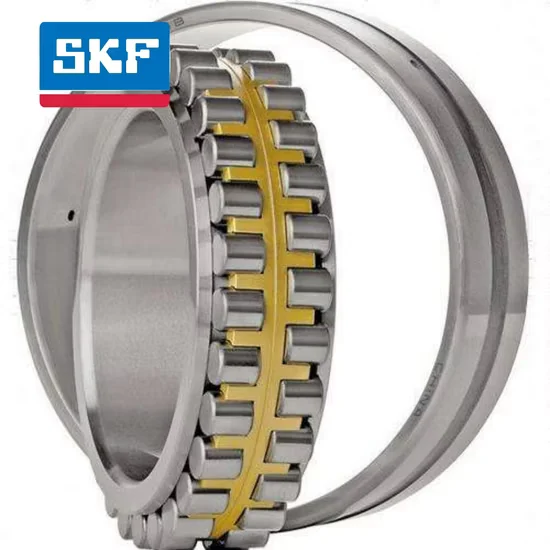 Роликоподшипники цилиндрические SKF Bc1b320811 цилиндрический роликоподшипник C3 Genuine Открыть карточку
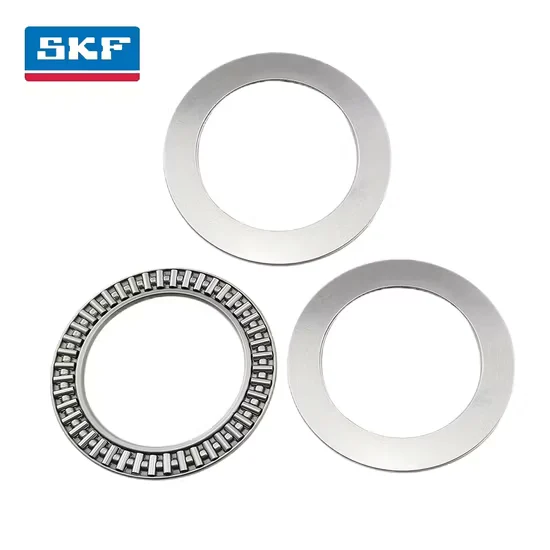 Роликоподшипники упорные SKF 29264 81148-M 29420 E/Vq096 упорковые роликоподшипники для смесителей Открыть карточку
Читайте также
Материалы об идентификации подшипников и закупке для капитального ремонта насосов и компрессоров.
 22 сентября, 2026 · Procurement & Trade FAQs Annual Supply Agreements for Global OEMs: Wholesale Supplier Optimize Annual Supply Agreements for Global OEMs by prioritizing document consistency and batch logistics over unit price. Prevent costly port delays from single character… Читать статью
 22 сентября, 2026 · Procurement & Trade FAQs Genuine Bearings Wholesale Supplier for Small Overseas Workshop Orders Overseas workshops can secure genuine bearings for small orders by leveraging flexible MOQ suppliers who offer mixed-brand consolidation. This approach bypasses OEM rejections and… Читать статью
 22 сентября, 2026 · Procurement & Trade FAQs Genuine SKF FAG NSK Bearings Wholesale Supplier for Global Industrial MRO Clients Master bearing export documentation to prevent customs seizures and costly delays for multi-brand shipments. Ensure smooth clearance with batch-isolated packing lists, original mill certificates,… Читать статью

Соберите подшипники для ремонта насоса и компрессора в один запрос
Process Equipment Company принимает одиночные позиции, полные ремонтные ведомости и подшипники вспомогательного оборудования. В ответ вы получаете письменное предложение по каждой позиции: обозначение, количество, цена и валюта, наличие, срок поставки.
- Модель насоса или компрессора, узел, комплектование, сепаратор и зазор
- Обозначение неполное — приложите чёткое фото маркировки
- Количество по позициям, страна и индекс доставки, требуемая дата поставки
Отправьте перечень на расчёт
Четыре поля — и запрос у менеджера.