
SKF Super-Precision Cylindrical Roller Bearings NN N 10 Wholesale Supplier
- Опубликовано:
- Рубрика: Buying Guide
- Автор: Process Equipment Company

Match SKF Super-Precision Cylindrical Roller Bearings to spindle load and speed by distinguishing NN rigidity from N10 high-speed capacity. Verify genuine PEEK cages and clearance to avoid counterfeit failures. Ensure reliable performance through rigorous technical verification rather than chasing maximum RPM ratings alone.
Most buyers assume the N10 series is universally superior for high-speed spindles, but this misconception leads to premature failure under heavy radial loads.
Selecting between SKF NN and N10 super-precision cylindrical roller bearings requires matching specific spindle load and speed requirements rather than chasing maximum RPM ratings alone. The critical differentiator lies in rigidity versus speed capacity: NN series bearings offer double-row stability for heavy cutting forces, while N10 single-row designs excel in high-speed, lower-load applications. Verifying genuine PEEK cages and correct clearance classes is essential to prevent catastrophic spindle damage from counterfeit units.
I still remember the sweat on my palms when the production manager at a furniture factory in Binh Duong walked into my office. He didn’t shout. He just placed a seized spindle housing on my desk. Two weeks earlier, I had sourced a batch of N10 bearings that looked perfect on paper and cheap in price. The machine tool ran hot, then locked up. The downtime cost far exceeded the savings on the bearing unit price. That incident shifted my focus from simple procurement to rigorous technical verification. Now, when advising clients on SKF Super-Precision Cylindrical Roller Bearings, I do not just check the part number. I verify the application context, the cage material, and the traceability documents.
What are the core differences between SKF NN and N10 series?
The choice between NN and N10 is not about quality tiers but about mechanical architecture designed for distinct load profiles.
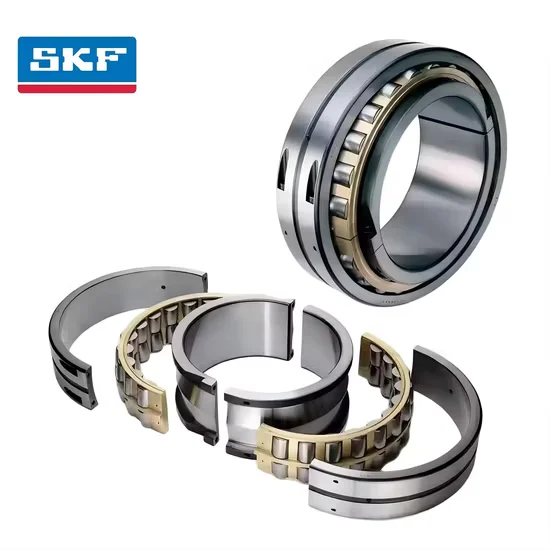
Many distributors treat these series as interchangeable upgrades, but their internal geometries serve different physical demands. The NN series features a double-row design with two inner rings and one outer ring, providing high radial rigidity. In contrast, the N10 series uses a single-row configuration with a thinner cross-section, allowing for higher speed limits but lower load capacity.
| Feature | SKF NN Series (Double-Row) | SKF N10 Series (Single-Row) |
|---|---|---|
| Radial Rigidity | High | Moderate |
| Speed Capacity | Standard | High |
| Load Distribution | Even distribution across two rows | Concentrated on single row |
| Space Requirement | Wider axial footprint | Compact axial footprint |
| Primary Application | Heavy milling, grinding spindles | High-speed drilling, light milling |
A European CNC manufacturer once switched from NN to N10 bearings to reduce friction heat. While the temperature dropped, the chatter marks on the workpiece increased significantly during heavy roughing passes. The single-row design lacked the stiffness to resist the radial deflection caused by the cutting tool. They reverted to the NN series, accepting a slight temperature rise in exchange for dimensional accuracy. This trade-off is fundamental. If your spindle faces variable, heavy radial loads, the NN series provides the necessary support. If your application prioritizes rapid acceleration and minimal heat generation at lower loads, the N10 is the correct path. Misapplying these types leads to either excessive heat or poor surface finish, both of which are costly in precision manufacturing.
How to select the right series for your machine tool spindle?
Selection must begin with a clear analysis of the spindle’s maximum RPM and expected radial load, not just the shaft diameter.
A common error in sourcing SKF Super-Precision Cylindrical Roller Bearings is matching only the bore size. A bearing that fits physically may fail mechanically if its dynamic load rating does not align with the operational stress. The decision matrix should weigh radial load capacity against speed limits.
For spindles operating in heavy-duty grinding or milling, where radial forces are dominant and speeds are moderate, the NN series is the standard. Its double-row arrangement distributes the load, reducing stress on individual rollers and extending service life. Conversely, for high-speed drilling centers or light finishing operations, the N10 series allows for higher rotational speeds due to its reduced mass and optimized internal geometry.
Consider a case from a textile machinery plant in Southeast Asia. They upgraded their spindle motors to increase throughput. The original NN bearings could not handle the new speed thresholds, leading to frequent lubrication breakdowns. Switching to N10 bearings resolved the speed issue, but only after we verified that the radial loads from the weaving process remained within the N10’s capacity. Had the loads been higher, the N10 would have failed prematurely. This balance is delicate.
When evaluating options, consult the manufacturer’s load rating charts. Do not rely on generic equivalents. Precision spindles operate near their physical limits, and even minor deviations in load capacity can cause significant performance drops. The goal is to match the bearing’s mechanical strengths to the spindle’s operational profile, ensuring stability and longevity.
Why is the PEEK cage critical in N10 bearings and how to verify it?
The cage material determines thermal stability at high speeds, and counterfeit PEEK cages often degrade under heat, causing sudden seizure.
In high-speed N10 applications, the cage guides the rollers and withstands significant centrifugal forces. Genuine SKF bearings use Polyetheretherketone (PEEK) for its high strength-to-weight ratio and thermal resistance. Counterfeiters often substitute cheaper polymers that look similar but lack the thermal stability required for precision spindles.
Verifying the cage material is not straightforward visually. However, genuine PEEK cages have a distinct matte finish and specific flexibility. Under thermal stress, inferior materials soften or deform, leading to roller misalignment and increased friction. This generates heat, which further degrades the cage, creating a vicious cycle that ends in spindle failure.
I once inspected a batch of bearings claimed to be genuine N10 units with PEEK cages. The packaging was convincing, but the cages had a slight glossy sheen inconsistent with authentic PEEK. We conducted a simple thermal test on a sample, and the cage material deformed at temperatures well below the specified operating range. This batch was rejected.
To verify authenticity, request material certificates from the supplier. Genuine products come with documentation tracing the material batch. Additionally, inspect the cage for molding consistency. Authentic PEEK cages exhibit precise, uniform molding without flash or irregularities. If the price seems too good to be true, the cage material is likely compromised. In precision machining, the cage is not just a spacer; it is a critical component that ensures smooth, high-speed operation.
How to verify authenticity and avoid counterfeit SKF bearings?
Authenticity verification requires a multi-layered approach involving documentation, packaging inspection, and clearance measurement, not just visual checks.
Counterfeit SKF Super-Precision Cylindrical Roller Bearings have become sophisticated. Fakes often replicate the outer ring markings and packaging colors accurately. However, they frequently fail in internal precision and material quality. Relying solely on external appearance is insufficient for protecting your spindle assets.
Start with traceability documentation. Genuine bearings come with unique identification codes that can be verified through official channels. Request these documents before shipment. A reputable supplier will provide full batch traceability, linking the bearing to its production origin. Without this, the risk of counterfeits increases significantly.
Next, inspect the packaging. Authentic SKF packaging uses high-quality materials with precise printing. Look for holographic labels and specific security features that are difficult to replicate. However, packaging can be faked, so internal inspection is crucial. Measure the radial clearance using precise gauges. Genuine super-precision bearings adhere to strict tolerance classes like P4 or P2. Counterfeits often fall outside these tight tolerances, leading to premature wear or vibration.
A distributor in the Middle East recently received a shipment that looked authentic. Upon measuring the clearance, we found variations exceeding acceptable limits for precision class. These bearings would have caused vibration issues in high-speed spindles. By catching this early, we prevented potential client losses. Always verify clearance and runout if possible, or trust suppliers who provide certified inspection reports.
Conclusion
Choosing the right super-precision bearing is a technical decision that impacts spindle life and machining quality.
Match the NN series to heavy-load applications and the N10 series to high-speed, lower-load scenarios. Verify PEEK cage authenticity and demand full traceability documentation to avoid counterfeits. Prioritize technical compatibility over initial cost savings to ensure reliable, long-term spindle performance.
Материал подготовлен Process Equipment Company — поставщиком подшипников SKF для насосов, компрессоров и технологического оборудования. Заказ определяется полным обозначением SKF по исходной спецификации оборудования.
Подшипники SKF, упомянутые в статье
Позиции каталога, о которых идёт речь в материале. Откройте карточку, чтобы проверить обозначение и запросить цену.
 Роликоподшипники цилиндрические Nnu4952 B-K/Sp W33 Double Row Cylindrical Roller Bearing с завода Открыть карточку
 Роликоподшипники цилиндрические Zhaoyun Nnu4944 B/Sp C3 W33 роликоподшипник C3 W33 Открыть карточку
 Роликоподшипники цилиндрические NNU4932 B/SP W33 двухрядный роликовый подшипник W33 Открыть карточку
 Подшипники шпинделей станков Zhaoyun Nn3012-K-Tn-Sp W33 Двухрядный цилиндрический роликовый подшипник Открыть карточку
Читайте также
Материалы об идентификации подшипников и закупке для капитального ремонта насосов и компрессоров.
 21 сентября, 2026 · Buying Guide SKF Specialty Bearings Quote: Global Wholesale Supplier for Bulk & MRO Request a quote for SKF specialty products by prioritizing authenticity and customs compliance over base price. Secure genuine bearings with ISPM 15 certified packaging,… Читать статью 21 сентября, 2026 · Buying Guide SKF Specialty Parts Replacement Supplier: Genuine Cross-Reference & Bulk Wholesale Secure genuine replacements for discontinued SKF specialty parts through rigorous dimensional cross-referencing and verified traceability. Move beyond brand labels to match internal clearance and… Читать статью
 21 сентября, 2026 · Buying Guide Genuine SKF Rod Ends & Plain Bearings Wholesale Supplier Protect heavy equipment from catastrophic failure caused by fake SKF rod ends by verifying PTFE liner quality and traceability documents. Counterfeit parts seize under… Читать статью

Соберите подшипники для ремонта насоса и компрессора в один запрос
Process Equipment Company принимает одиночные позиции, полные ремонтные ведомости и подшипники вспомогательного оборудования. В ответ вы получаете письменное предложение по каждой позиции: обозначение, количество, цена и валюта, наличие, срок поставки.
- Модель насоса или компрессора, узел, комплектование, сепаратор и зазор
- Обозначение неполное — приложите чёткое фото маркировки
- Количество по позициям, страна и индекс доставки, требуемая дата поставки
Отправьте перечень на расчёт
Четыре поля — и запрос у менеджера.