
SKF Spherical Plain Bearings: Wholesale Supplier & Buying Guide
- Опубликовано:
- Рубрика: Buying Guide
- Автор: Process Equipment Company

Selecting the right SKF spherical plain bearings requires matching sliding contact materials to your specific lubrication conditions, not just relying on the brand name. This guide compares steel-on-steel and maintenance-free options while explaining GE series specifications to help you prevent premature seizure and optimize procurement costs.
SKF branding alone does not prevent bearing seizure.
Selecting the correct sliding contact material pair and matching it to the specific lubrication conditions of your application is the single most critical factor in preventing premature failure, regardless of the brand name on the packaging.
I have stood on the docks of Qingdao watching containers of returned bearings being offloaded, the paperwork stamped with rejection notices from clients who assumed that buying a premium brand guaranteed immunity from operational errors. The reality of heavy industry is far less forgiving. A Middle East mining operator once purchased a full batch of standard steel-on-steel spherical plain bearings for their vibrating screens, expecting the SKF logo to carry the load. Within months, the units seized due to inadequate relubrication in a dusty, high-vibration environment. The failure was not a manufacturing defect; it was a selection error. The sliding surfaces required a maintenance-free solution, but the procurement team had focused solely on static load ratings while ignoring the maintenance constraints of the site. This guide dissects the technical nuances of selecting these components, moving beyond basic catalog numbers to address the real-world variables that determine service life.
Understanding these distinctions is essential for distributors and OEMs who need to provide reliable solutions rather than just moving boxes. The following analysis breaks down the material science, maintenance requirements, and series differences that define performance in the field.
How to Choose the Right Sliding Contact Material?
The sliding interface dictates the bearing’s survival, not just the outer ring strength.
The core of any spherical plain bearing is the interaction between the inner and outer rings. This sliding contact surface must be matched precisely to the load type, oscillation frequency, and available lubrication. Mismatching these parameters is the primary cause of early seizure and wear.
| Sliding Contact Pair | Lubrication Requirement | Load Capacity | Oscillation Frequency | Typical Application Environment |
|---|---|---|---|---|
| Steel / Steel | Continuous Relubrication | Very High | Low to Medium | Heavy shock loads, slow oscillation, accessible lubrication points |
| Steel / PTFE Composite | Maintenance-Free | High | Medium | Hard-to-reach locations, clean to moderately dirty environments |
| Steel / Bronze | Initial or Periodic Lubrication | High | Medium to High | High precision, moderate loads, where some lubrication is possible |
In the case of the mining vibrating screens mentioned earlier, the equipment subjected the bearings to high-frequency oscillation and constant contamination. A steel-on-steel design requires a consistent film of grease to separate the metal surfaces. When dust infiltrates the seal and mixes with the grease, it becomes an abrasive paste that accelerates wear rapidly. In contrast, a maintenance-free variant with a PTFE composite liner can operate without external lubrication for extended periods, as the liner itself provides the necessary low-friction interface.
For hydraulic cylinder rod ends, the choice often leans toward hardened steel pairs when extreme radial loads are present, provided that the oscillation angle is small and relubrication is feasible. However, if the cylinder operates in a sealed environment where adding grease is impractical, a PTFE-lined unit becomes the only viable option, even if it means accepting a slightly lower dynamic load rating. The key is to recognize that "higher load capacity" on a datasheet is irrelevant if the bearing seizes before reaching its fatigue limit due to poor lubrication management.
Distributors should advise clients to audit their maintenance schedules before finalizing the material selection. If the site lacks a rigorous greasing protocol, pushing a steel-on-steel unit is a liability, not a sale.
Maintenance-Free vs. Relubrication: Which Suits Your Site?
Maintenance-free does not always mean superior performance under extreme conditions.
There is a prevailing misconception that maintenance-free bearings are universally better because they eliminate the need for manual intervention. While this is true for many applications, it fails under extreme heavy loads and high-pressure scenarios where the thermal dissipation and film strength of a properly lubricated steel-on-steel interface outperform polymer liners.
Consider a heavy-duty excavator boom joint. Here, the loads are massive, and the oscillation is slow but powerful. A steel-on-steel bearing, regularly purged with fresh grease, can flush out contaminants and maintain a hydrodynamic film that protects the metal surfaces. The grease also acts as a coolant. A maintenance-free PTFE bearing in this same position might suffer from heat buildup and accelerated creep of the polymer layer, leading to increased clearance and eventual knock. Conversely, in a wind turbine pitch bearing, where access is difficult and expensive, the maintenance-free design is non-negotiable despite the lower absolute load ceiling, because the cost of manual maintenance outweighs the performance trade-off.
A European wind farm operator once reported extended service life by switching to sealed maintenance-free units for their blade pitch controls. The initial concern was whether the polymer could handle the variable loads, but the elimination of human error in greasing—such as over-greasing which can damage seals or under-greasing which causes wear—proved to be the decisive factor. The consistency of the factory-installed lubricant in the PTFE matrix provided a more reliable baseline than the variable quality of field maintenance.
When advising clients, evaluate the accessibility of the installation point and the competence of the maintenance crew. If the site is remote or the staff is untrained in proper lubrication techniques, a maintenance-free solution reduces risk. If the application involves extreme shock loads and regular professional maintenance is guaranteed, a relubricatable steel-on-steel design may offer greater longevity.
SKF Series Comparison: GE, GEG, and E Series Explained
Dimensional standards and internal clearance define interchangeability and performance.
Navigating the SKF series codes can be confusing for buyers unfamiliar with ISO standards. The GE, GEG, and E series represent different dimensional and structural configurations, each suited for specific mechanical interfaces. Understanding these differences is crucial for ensuring that replacements fit correctly and perform as intended.
The GE series is the most common, featuring a standard design with an outer ring that has a spherical outside diameter. These are typically used in applications where the outer ring is stationary or moves slightly. The GEG series, on the other hand, often features an extended inner ring or specific sealing arrangements designed for heavier duties or misalignment compensation. The E series usually denotes a specific design variant with optimized internal geometry for higher load capacities or specific clearance classes.
| Series | Key Feature | Typical Use Case | Interchangeability Note |
|---|---|---|---|
| GE Series | Standard spherical outer ring | General industrial machinery, linkages | Widely interchangeable with other ISO standard brands |
| GEG Series | Extended inner ring / Heavy duty | Construction equipment, high misalignment | Check specific dimensional drawings for fit |
| E Series | Optimized internal geometry | High load, precision applications | May require specific housing tolerances |
A critical aspect often overlooked is the internal clearance. Standard bearings come with normal clearance, but applications involving high temperatures or precise positioning may require reduced or increased clearance. Ordering the wrong clearance class can lead to premature failure due to binding or excessive play. For example, in a steel mill conveyor system, thermal expansion can significantly alter the effective clearance. A bearing with standard clearance might seize when the equipment heats up, whereas a unit with specified increased clearance would accommodate the expansion without issue.
For distributors handling mixed-brand inventories, verifying the exact dimensional specifications against the original equipment manufacturer’s drawings is essential. While many brands adhere to ISO standards, subtle differences in seal design or chamfer dimensions can affect installation ease and sealing effectiveness. Our technical team frequently assists clients in cross-referencing these details to ensure that alternative sources meet the precise geometric requirements of the original design.
When to Consider High-Quality Alternatives?
Brand prestige does not always correlate with return on investment in non-critical roles.
In many industrial applications, the operating conditions are mild enough that the premium price of a top-tier international brand does not yield a proportional increase in service life. For low-load, low-speed, or non-critical auxiliary machinery, high-quality domestic alternatives can offer a compelling value proposition. This is not about compromising on quality but about aligning the component specification with the actual operational demand.
An agricultural machinery manufacturer recently conducted a trial replacing imported branded spherical plain bearings with certified domestic equivalents in their harvester linkage systems. The operating loads were moderate, and the environment, while dusty, did not involve extreme shock or continuous high-speed oscillation. The result was a significant reduction in component costs without any noticeable decrease in machine uptime or service interval. The domestic units, manufactured to strict ISO tolerances and using comparable steel grades, performed adequately for the design life of the machine.
This approach requires careful vetting. Not all domestic bearings are created equal. The key is to source from manufacturers who provide full traceability, material certification, and consistent quality control. Look for suppliers who stock genuine products from reputable Chinese brands such as ZWZ, HRB, or LYC, which have established track records in global markets. These brands offer a balance of performance and cost that is ideal for high-volume, low-risk applications.
For MRO operators managing large fleets of equipment, adopting a tiered sourcing strategy can optimize spending. Reserve premium brands for critical, high-load, or hard-to-access components where failure costs are prohibitive. Use high-quality, cost-effective alternatives for easily accessible, low-stress points. This strategic mix ensures reliability where it matters most while controlling overall maintenance budgets. Our sourcing network allows for flexible mixed-container orders, enabling clients to consolidate both premium and value-tier bearings in a single shipment, simplifying logistics and reducing inventory complexity.
Conclusion
Correct material selection outweighs brand reputation in preventing bearing failure.
Choosing the right spherical plain bearing requires a deep understanding of sliding contact materials, maintenance capabilities, and specific application demands. By matching the bearing design to the operational reality, you ensure reliability and cost-effectiveness. Whether opting for maintenance-free PTFE liners or relubricatable steel pairs, the decision must be driven by technical suitability rather than marketing perception.
Материал подготовлен Process Equipment Company — поставщиком подшипников SKF для насосов, компрессоров и технологического оборудования. Заказ определяется полным обозначением SKF по исходной спецификации оборудования.
Подшипники SKF, упомянутые в статье
Позиции каталога, о которых идёт речь в материале. Откройте карточку, чтобы проверить обозначение и запросить цену.
 Роликоподшипники радиальные сферические двурядные SKF 23030-Cc- W33 spherical роликовый для дробилок Открыть карточку
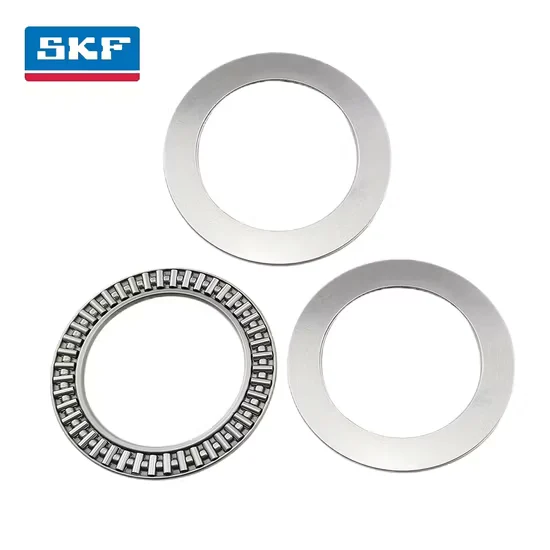 Роликоподшипники упорные SKF 29264 81148-M 29420 E/Vq096 упорковые роликоподшипники для смесителей Открыть карточку
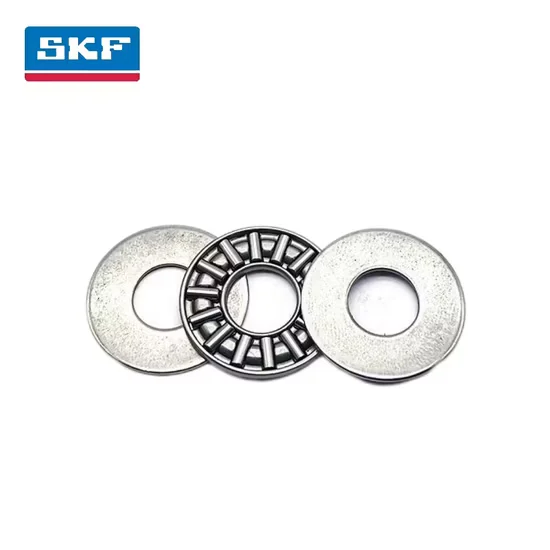 Подшипники шпинделей станков SKF 29330-E сферический роликовый упорный подшипник оригинал Открыть карточку
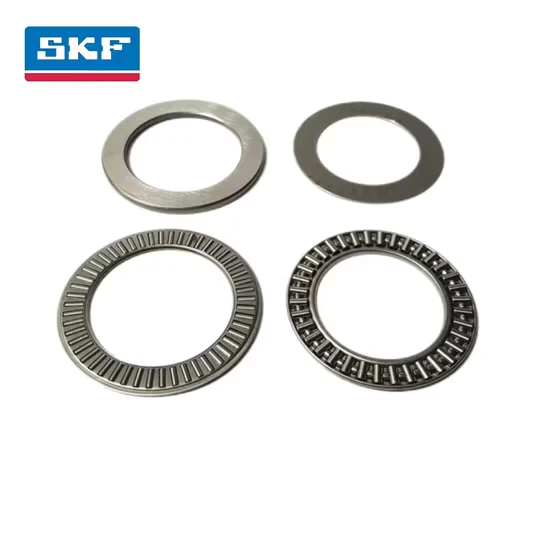 Роликоподшипники упорные SKF AXW 20 / 29348 E/VU029 / 81134 TN осевой подшипник оригинал Открыть карточку
Читайте также
Материалы об идентификации подшипников и закупке для капитального ремонта насосов и компрессоров.
 21 сентября, 2026 · Buying Guide SKF Specialty Bearings Quote: Global Wholesale Supplier for Bulk & MRO Request a quote for SKF specialty products by prioritizing authenticity and customs compliance over base price. Secure genuine bearings with ISPM 15 certified packaging,… Читать статью 21 сентября, 2026 · Buying Guide SKF Specialty Parts Replacement Supplier: Genuine Cross-Reference & Bulk Wholesale Secure genuine replacements for discontinued SKF specialty parts through rigorous dimensional cross-referencing and verified traceability. Move beyond brand labels to match internal clearance and… Читать статью
 21 сентября, 2026 · Buying Guide Genuine SKF Rod Ends & Plain Bearings Wholesale Supplier Protect heavy equipment from catastrophic failure caused by fake SKF rod ends by verifying PTFE liner quality and traceability documents. Counterfeit parts seize under… Читать статью

Соберите подшипники для ремонта насоса и компрессора в один запрос
Process Equipment Company принимает одиночные позиции, полные ремонтные ведомости и подшипники вспомогательного оборудования. В ответ вы получаете письменное предложение по каждой позиции: обозначение, количество, цена и валюта, наличие, срок поставки.
- Модель насоса или компрессора, узел, комплектование, сепаратор и зазор
- Обозначение неполное — приложите чёткое фото маркировки
- Количество по позициям, страна и индекс доставки, требуемая дата поставки
Отправьте перечень на расчёт
Четыре поля — и запрос у менеджера.