
SKF SA 20 ES-2RS Spherical Plain Bearing Wholesale Supplier
- Опубликовано:
- Рубрика: Product & Series Guides
- Автор: Process Equipment Company

Master the critical SKF SA 20 ES-2RS specs to prevent premature failure in heavy-duty mining and crushing applications. Learn why steel/steel designs with double-lip seals demand strict re-greasing despite their robust appearance. Verify exact dimensions like the 20 mm bore and ensure your site infrastructure supports necessary lubrication for maximum bearing longevity.
Sealed does not mean maintenance-free.
The SKF SA 20 ES-2RS is a steel/steel spherical plain bearing with double-lip seals, designed for heavy oscillating loads where regular re-greasing is physically possible. Its core specifications include a 20 mm bore, robust radial load capacity, and a design that relies on external lubrication to dissipate heat and flush contaminants. Assuming this model is maintenance-free due to its seals is the most common cause of premature failure in mining and crushing applications.

I still remember the silence in the warehouse when the claim arrived from a mine in West Africa. It was not just a few broken parts; it was an entire container of rod ends that had seized within months. The local team had installed what they thought were premium, durable components. They saw the thick rubber seals on the SKF SA 20 ES-2RS specs and assumed the bearings were sealed for life. They were wrong. The steel-on-steel sliding contact generated intense friction heat. Without fresh grease to carry that heat away and push out abrasive dust, the metal surfaces welded together microscopically before grinding themselves into scrap. That loss was not due to poor product quality, but a fundamental mismatch between the bearing’s design requirements and the site’s maintenance reality.
What are the core dimensions and load specs of SA 20 ES-2RS?
When sourcing replacements for heavy equipment, dimensional accuracy is non-negotiable. A millimeter off in the housing bore can lead to fretting corrosion or catastrophic spin-out. The SKF SA 20 ES-2RS dimensions follow strict ISO standards, ensuring interchangeability with other major brands while maintaining the specific tolerances required for high-load articulation.
| Parameter | Specification | Note |
|---|---|---|
| Bore Diameter (d) | 20 mm | Standard metric size |
| Outer Diameter (D) | 54 mm | Fits standard housing bores |
| Width (B) | 23 mm | Total bearing width |
| Inner Ring Width (C) | 16 mm | Critical for axial positioning |
| Material Combination | Steel/Steel | Hardened sliding surfaces |
| Seal Type | Double-lip RS | Enhanced contamination protection |
These figures are not just numbers on a datasheet; they define the mechanical envelope of your application. The 20 mm bore handles significant radial forces, but the static and dynamic load ratings depend entirely on the lubrication film thickness.
A procurement manager in Southeast Asia once ordered a batch of rod ends based solely on the outer diameter. When the SA 20 ES-2RS rod end bearing specifications were checked against their existing housings, the inner ring width discrepancy caused alignment issues in the hydraulic cylinder eyes. The bearing fit, but the misalignment led to edge loading. Within weeks, the seals tore, and dust invaded the sliding surface. This highlights why verifying the full set of SKF SA 20 ES-2RS specs is crucial before placing bulk orders. It is not enough to match the bore; you must match the kinematic requirements.
How does the steel/steel design and double-lip seal affect performance?
The choice of steel/steel over PTFE-lined alternatives is a deliberate trade-off. Steel/steel bearings offer higher load carrying capacity and better resistance to shock loads, making them ideal for crushers, excavators, and agricultural machinery. However, this durability comes with a condition: they require a continuous supply of clean lubricant. The double-lip seals on the SKF SA 20 ES-2RS are designed to keep dirt out and grease in, but they are not magic barriers.
In dusty environments, such as cement plants or open-pit mines, the seals face constant abrasion. If the bearing is greased regularly, the internal pressure helps push contaminated grease out through the seal lips, creating a self-cleaning effect. If greasing is neglected, the seals become rigid traps for heat and debris. I have seen field reports where the outer rubber lip remained intact, yet the internal sliding surface was completely scored. The seal did its job of keeping large particles out, but it could not prevent the microscopic wear caused by dry friction.
The SKF steel/steel rod end bearing lubrication requirements are strict because the material pairing lacks the self-lubricating properties of polymer composites. The hardened steel balls and races rely on a hydrodynamic film. When this film breaks down, metal-to-metal contact occurs, leading to rapid temperature rise. This is why the SKF SA 20 ES-2RS is often specified with grease nipples or channels in the parent component. Without these access points, the bearing is effectively unusable in its intended heavy-duty role.

Why is regular re-greasing non-negotiable for this specific model?
This is the counter-intuitive truth that causes the most downtime: the heavier the duty, the more frequent the maintenance. Many operators assume that a "heavy-duty" bearing implies "low maintenance." For the SKF SA 20 ES-2RS, the opposite is true. Its robust construction allows it to handle extreme loads, but those loads generate proportional amounts of heat and stress on the lubricant.
Consider a scenario in a quarry operation. Crushers operate with high-frequency oscillation and heavy impact. The grease inside the bearing degrades quickly due to shear stress and thermal cycling. If the re-greasing interval is extended beyond the manufacturer’s recommendation, the grease oxidizes and loses its viscosity. The result is not a gradual decline in performance, but a sudden seizure.
I recall a site audit where the maintenance team had blocked the grease lines to prevent dust ingre*he bearings. In reality, they were starving them. The SKF SA 20 ES-2RS specs indicate a need for periodic replenishment to flush out old, contaminated grease. By blocking the lines, they trapped abrasive particles inside the seal cavity. The bearings failed in a fraction of their expected service life. The cost of the unplanned downtime far exceeded the labor cost of routine greasing.
To avoid this, calculate the re-greasing interval based on the oscillation frequency and load magnitude. For continuous heavy oscillation, daily or weekly greasing may be required. For slower, intermittent motion, monthly intervals might suffice. The key is consistency. Using the right grade of lithium-complex or EP grease ensures that the SKF steel/steel rod end bearing lubrication requirements are met, extending the service life significantly.

How to verify if SA 20 ES-2RS fits your site’s lubrication infrastructure?
Before ordering, assess your site’s capability to maintain these bearings. Do your machines have accessible grease points? Is the grease type compatible with the operating temperature? If your equipment lacks grease nipples, installing the SKF SA 20 ES-2RS without modification is a risk. You may need to retrofit the housing or switch to a maintenance-free alternative if regular access is impossible.
Check the ambient conditions. In extremely cold environments, standard grease may harden, preventing proper flow into the bearing interface. In high-temperature zones, the grease may thin out too much. The SA 20 ES-2RS rod end bearing specifications assume a standard operating range. If your site deviates significantly, consult technical data sheets for specialized lubricants.
Also, verify the alignment. Misalignment increases the load on one side of the bearing, causing uneven wear and seal damage. Ensure that the mounting surfaces are parallel and that the pin or shaft is straight. Even the best SKF SA 20 ES-2RS specs cannot compensate for poor installation practices. A simple laser alignment check during installation can prevent months of premature wear.
Where to source genuine SKF SA 20 ES-2RS with full traceability?
Sourcing genuine components is critical for safety and performance. The market is flooded with counterfeit bearings that look identical but lack the precise heat treatment and material purity of the original. These fakes may pass initial dimensional checks but fail under load due to inferior steel quality.
As a global supplier, we prioritize traceability. Every batch of SKF SA 20 ES-2RS we ship comes with full documentation, allowing you to verify its origin. We understand that MRO managers need flexibility. Whether you require a single unit for an emergency repair or a full container for stock consolidation, we provide mixed-brand solutions that simplify logistics. Our inventory covers thousands of part numbers, ensuring that when you need a specific SKF SA 20 ES-2RS specs match, it is available for immediate dispatch.
We do not just sell boxes; we provide technical validation. If you are unsure about the lubrication setup or load conditions, our team can review your application details. This support helps prevent the kind of mismatches that lead to the failures I witnessed years ago. By choosing a partner who understands the technical nuances of SKF steel/steel rod end bearing lubrication requirements, you protect your operations from unnecessary risk.

Conclusion
Do not let seals fool you into complacency.
The SKF SA 20 ES-2RS is a powerful component for heavy-duty applications, but its longevity depends entirely on disciplined maintenance. Verify your site’s ability to re-grease regularly, ensure proper alignment during installation, and source only from suppliers who guarantee authenticity and traceability. Technical precision matters, but operational discipline keeps the machinery running.
Материал подготовлен Process Equipment Company — поставщиком подшипников SKF для насосов, компрессоров и технологического оборудования. Заказ определяется полным обозначением SKF по исходной спецификации оборудования.
Подшипники SKF, упомянутые в статье
Позиции каталога, о которых идёт речь в материале. Откройте карточку, чтобы проверить обозначение и запросить цену.
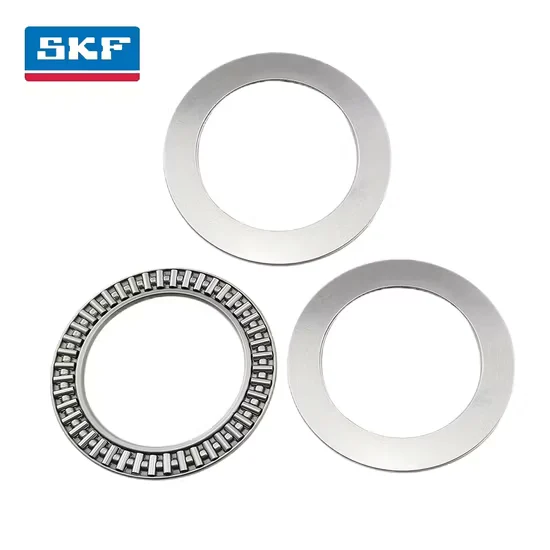 Роликоподшипники упорные SKF 29264 81148-M 29420 E/Vq096 упорковые роликоподшипники для смесителей Открыть карточку
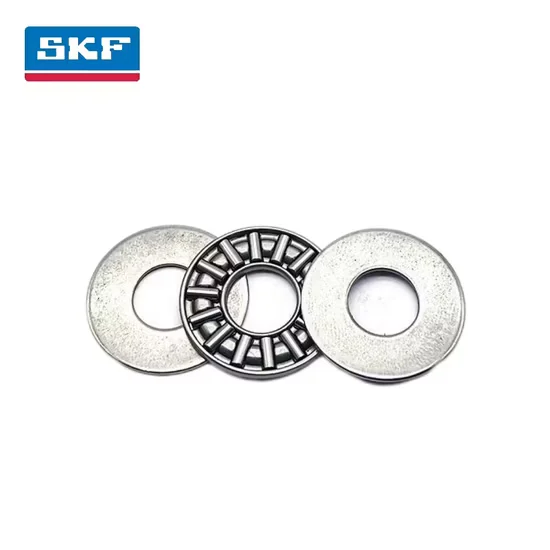 Подшипники шпинделей станков SKF 29330-E сферический роликовый упорный подшипник оригинал Открыть карточку
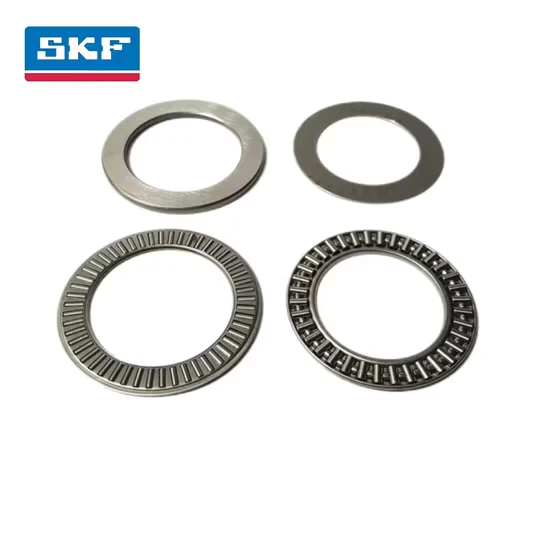 Роликоподшипники упорные SKF AXW 20 / 29348 E/VU029 / 81134 TN осевой подшипник оригинал Открыть карточку
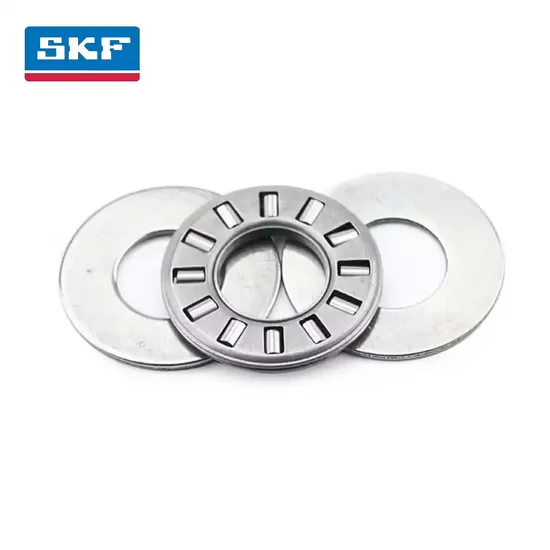 Роликоподшипники упорные SKF 29348 E оригинальный упорный сферический роликоподшипник Открыть карточку
Читайте также
Материалы об идентификации подшипников и закупке для капитального ремонта насосов и компрессоров.
 22 сентября, 2026 · Product & Series Guides SKF 71908 CE/HCP4A Angular Contact Ball Bearing Wholesale Supplier Verify SKF 71908 CE/HCP4A specs to prevent spindle thermal failure from unverified P4A clearance. This guide details 40x62x12mm dimensions, 9.23kN load ratings, and speed… Читать статью
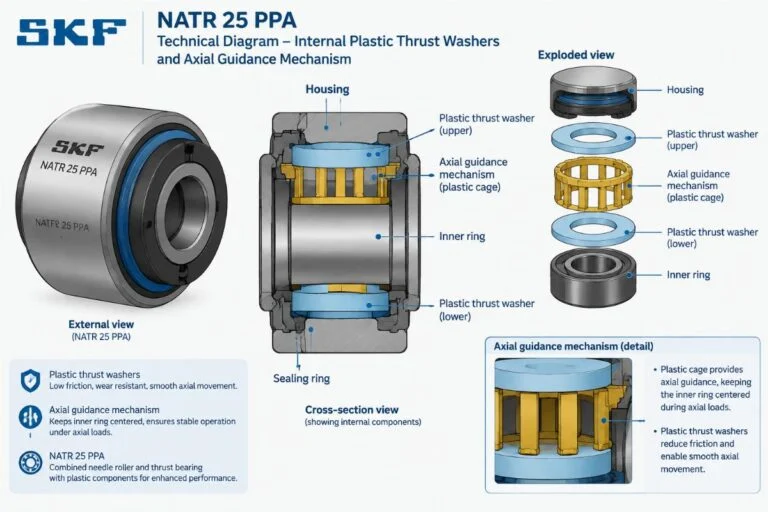 22 сентября, 2026 · Product & Series Guides SKF NATR 25 PPA Track Roller Bearing for Sale Wholesale Supplier Mastering SKF NATR 25 PPA specs requires more than matching the 25 mm bore and 52 mm outer diameter. The critical PPA suffix denotes… Читать статью
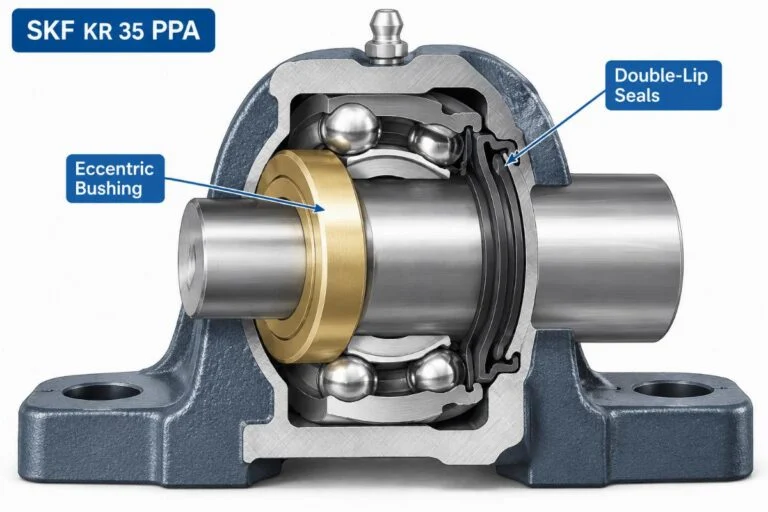 22 сентября, 2026 · Product & Series Guides SKF KR 35 PPA Cam Follower Wholesale Supplier Stop costly downtime by mastering the SKF KR 35 PPA cam follower specs and critical PPA suffix meaning. Verify exact 35mm dimensions, eccentric bushing… Читать статью

Соберите подшипники для ремонта насоса и компрессора в один запрос
Process Equipment Company принимает одиночные позиции, полные ремонтные ведомости и подшипники вспомогательного оборудования. В ответ вы получаете письменное предложение по каждой позиции: обозначение, количество, цена и валюта, наличие, срок поставки.
- Модель насоса или компрессора, узел, комплектование, сепаратор и зазор
- Обозначение неполное — приложите чёткое фото маркировки
- Количество по позициям, страна и индекс доставки, требуемая дата поставки
Отправьте перечень на расчёт
Четыре поля — и запрос у менеджера.