
SKF LBBR & LBCR Linear Ball Bearings Wholesale Supplier
- Опубликовано:
- Рубрика: Buying Guide
- Автор: Process Equipment Company

Selecting between SKF LBBR and LBCR linear bearings requires matching internal clearance grades to actual radial loads. Learn why identical outer dimensions do not guarantee interchangeable capacity and how verifying full traceability documentation prevents catastrophic failures from counterfeit units.
Identical outer dimensions do not guarantee interchangeable load capacity.
Selecting between the compact SKF LBBR and the heavy-duty SKF LBCR linear bearings requires matching internal clearance grades to actual radial loads, while verifying full traceability documentation prevents catastrophic failures from counterfeit units. The structural difference lies in raceway length and ball complement, making LBCR the superior choice for high-load applications despite similar footprints.
I still remember the silence in a Riyadh production hall when a conveyor line seized up. The maintenance team had installed what they believed were standard linear guides, but under continuous heavy load, the cages deformed within weeks. Opening the housing revealed the truth: the internal geometry was wrong for the application, and the steel quality was suspect. This was not just a parts failure; it was a selection error compounded by sourcing risks. In my experience across Middle Eastern industrial sites, confusing the LBBR series with the LBCR series is a common mistake that leads to disproportionate downtime.
Understanding these distinctions is critical for any procurement strategy. Let us break down why the "cheaper" compact option often costs more in the long run and how to secure genuine components.
What are the structural differences between LBBR and LBCR?
LBBR is a compact Series 1 design, while LBCR is a heavy-duty Series 3 bearing with significantly longer raceways.
At first glance, an LBBR and an LBCR of the same bore diameter may appear interchangeable because their outer dimensions often align with standard housing requirements. However, the internal architecture tells a different story. The LBBR series is designed for moderate loads and space-constrained applications. It features a shorter raceway and a lower ball complement. In contrast, the LBCR series is engineered for higher radial load capacities. Its extended raceway allows for more balls to share the load, distributing stress more evenly across the contact points.
| Feature | LBBR (Series 1) | LBCR (Series 3) |
|---|---|---|
| Design Focus | Compact, moderate load | Heavy-duty, high load |
| Raceway Length | Standard/Short | Extended/Long |
| Ball Complement | Lower | Higher |
| Radial Load Capacity | Moderate | High |
| Typical Application | Light automation, packaging | Mining, heavy machinery, presses |
This structural disparity means that substituting an LBBR for an LBCR in a high-load scenario is not a viable workaround. The reduced number of load-bearing elements in the LBBR leads to higher contact stress per ball. Over time, this accelerates fatigue and can cause premature spalling or cage failure.
I once consulted for a European machine tool builder who attempted to reduce costs by switching to LBBR units in a heavy-cutting application. The initial performance seemed acceptable, but vibration levels rose noticeably after a few months. The root cause was not lubrication or alignment, but the inherent load limit of the compact series. Switching back to LBCR resolved the issue, extending the service life meaningfully. For distributors and OEMs, recognizing this physical difference is essential to avoid warranty claims and reputational damage.
How do clearance grades affect heavy-load performance?
Mismatched clearances cause rapid deformation, whereas correct grading ensures stability under radial stress.
Internal clearance is the silent determinant of bearing life. Many buyers focus solely on the series type but overlook the clearance class. Linear bearings operate with specific preload or clearance settings that dictate how they react to load. In heavy-load environments, a bearing with excessive clearance will allow micro-movements that lead to impact loading on the balls and raceways. Conversely, too little clearance can cause binding and heat generation.
The LBCR series is particularly sensitive to clearance selection because of its higher load capacity. It is often available in different clearance classes to suit varying precision and load requirements. Selecting the wrong class can negate the benefits of the heavy-duty design. For instance, a standard clearance might be sufficient for general industrial use, but a preloaded option may be necessary for high-precision machining where rigidity is paramount.
In a recent project involving a cement plant in North Africa, the operator experienced frequent guide failures. Upon inspection, we found that the bearings had been selected based on bore size alone, ignoring the clearance specification required for the heavy vibratory loads. The resulting play allowed the balls to skid rather than roll, causing flat spots on the raceways. By recalculating the load profile and selecting the appropriate clearance grade for the LBCR units, the facility saw a substantial extension in component lifespan. This highlights that technical selection support is as valuable as the product itself.
Why do "discount" SKF bearings fail prematurely?
Counterfeits use substandard steel and incorrect internal geometries that mimic genuine parts visually but fail structurally.
The market is flooded with bearings that carry the SKF logo but lack the metallurgical integrity of the original. These counterfeits often look identical to the untrained eye, featuring similar packaging and markings. However, the internal differences are stark. Genuine SKF bearings are manufactured from high-purity steel with controlled inclusion levels, ensuring consistent hardness and fatigue resistance. Counterfeit units frequently use lower-grade steel with inconsistent heat treatment, leading to premature cracking and deformation.
One of the most telling signs of a fake is the cage material and design. Genuine linear bearings use cages engineered to withstand specific speeds and loads, with precise window spacing to guide the balls smoothly. Fakes often have poorly molded cages with irregular windows, causing friction and uneven ball movement. Additionally, the surface finish of the raceways in counterfeit products is often rougher, increasing wear and noise.
I recall a case where a distributor in Southeast Asia purchased a batch of "discounted" linear bearings. Within weeks, multiple end-users reported noisy operation and early seizure. Laboratory analysis revealed that the steel hardness was below the required threshold, and the internal clearance was out of spec. The financial loss from replacing the failed units and compensating for downtime far exceeded the initial savings from the discounted price. This underscores the importance of sourcing from verified channels rather than chasing the lowest bid.
How to verify genuine SKF linear bearings?
Demand complete traceability documents and authorized supplier certificates to reject fakes.
Verification starts before the box is opened. Genuine SKF products come with a chain of custody that can be traced back to the manufacturer. This includes batch numbers, manufacturing dates, and quality inspection records. When procuring SKF LBBR or LBCR units, especially for critical applications, requesting these documents is non-negotiable. A reputable supplier will provide full traceability, ensuring that every unit can be linked to its production origin.
Physical inspection also plays a role. Check the clarity and precision of the laser etching on the bearing ring. Genuine markings are sharp, evenly spaced, and resistant to rubbing off. Counterfeit markings often appear fuzzy, uneven, or easily smudged. Additionally, examine the packaging for security features such as holograms or unique QR codes that link to the brand’s verification portal. However, rely primarily on documentation from the supplier, as packaging can also be replicated.
For global distributors and MRO operators, establishing a relationship with a supplier who prioritizes transparency is key. This means working with partners who stock genuine inventory and can provide mixed-batch consolidation without compromising on authenticity. In my work, I insist on seeing the paperwork before approving any large order. This diligence has prevented countless potential failures, ensuring that the bearings performing in the field are exactly what was specified in the design.
Conclusion
Correct selection and verified authenticity are the foundations of reliable linear motion systems.
Choosing between SKF LBBR and LBCR linear bearings demands a clear understanding of load requirements and structural differences. While the LBBR offers compactness, the LBCR provides the robustness needed for heavy-duty tasks. Equally important is securing genuine products through rigorous verification and traceability. By focusing on these technical and sourcing fundamentals, operators can avoid costly failures and ensure long-term equipment reliability.
Материал подготовлен Process Equipment Company — поставщиком подшипников SKF для насосов, компрессоров и технологического оборудования. Заказ определяется полным обозначением SKF по исходной спецификации оборудования.
Подшипники SKF, упомянутые в статье
Позиции каталога, о которых идёт речь в материале. Откройте карточку, чтобы проверить обозначение и запросить цену.
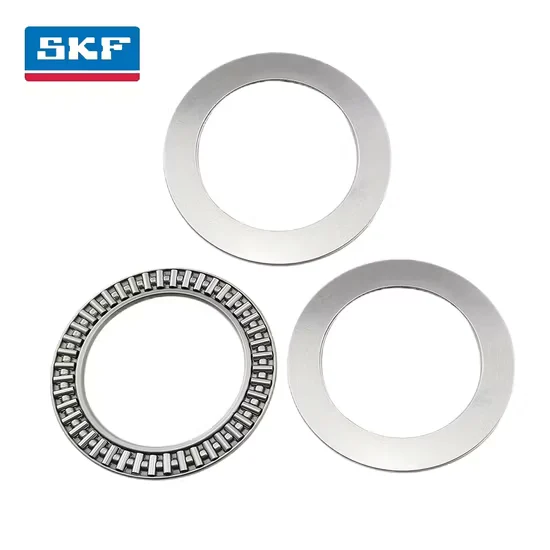 Роликоподшипники упорные SKF 29264 81148-M 29420 E/Vq096 упорковые роликоподшипники для смесителей Открыть карточку
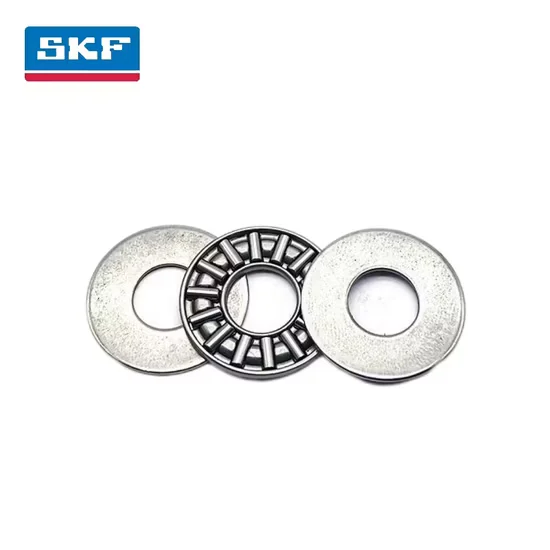 Подшипники шпинделей станков SKF 29330-E сферический роликовый упорный подшипник оригинал Открыть карточку
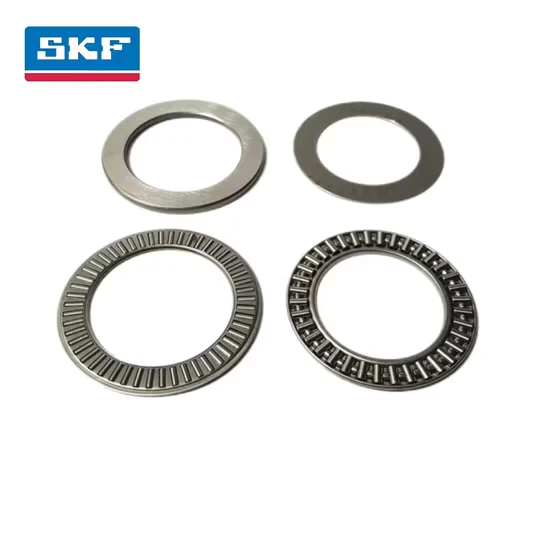 Роликоподшипники упорные SKF AXW 20 / 29348 E/VU029 / 81134 TN осевой подшипник оригинал Открыть карточку
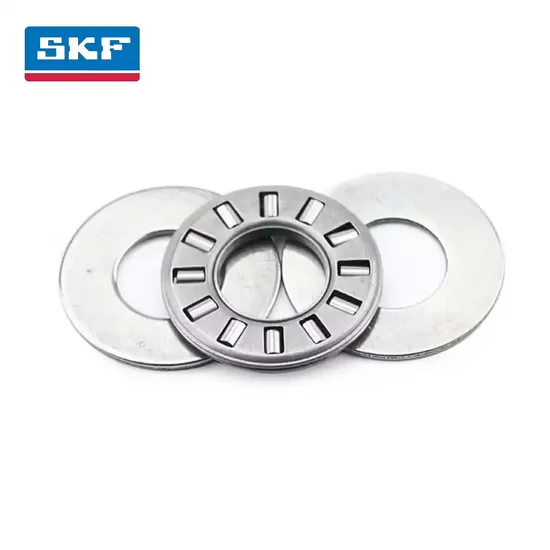 Роликоподшипники упорные SKF 29348 E оригинальный упорный сферический роликоподшипник Открыть карточку
Читайте также
Материалы об идентификации подшипников и закупке для капитального ремонта насосов и компрессоров.
 21 сентября, 2026 · Buying Guide SKF Specialty Bearings Quote: Global Wholesale Supplier for Bulk & MRO Request a quote for SKF specialty products by prioritizing authenticity and customs compliance over base price. Secure genuine bearings with ISPM 15 certified packaging,… Читать статью 21 сентября, 2026 · Buying Guide SKF Specialty Parts Replacement Supplier: Genuine Cross-Reference & Bulk Wholesale Secure genuine replacements for discontinued SKF specialty parts through rigorous dimensional cross-referencing and verified traceability. Move beyond brand labels to match internal clearance and… Читать статью
 21 сентября, 2026 · Buying Guide Genuine SKF Rod Ends & Plain Bearings Wholesale Supplier Protect heavy equipment from catastrophic failure caused by fake SKF rod ends by verifying PTFE liner quality and traceability documents. Counterfeit parts seize under… Читать статью

Соберите подшипники для ремонта насоса и компрессора в один запрос
Process Equipment Company принимает одиночные позиции, полные ремонтные ведомости и подшипники вспомогательного оборудования. В ответ вы получаете письменное предложение по каждой позиции: обозначение, количество, цена и валюта, наличие, срок поставки.
- Модель насоса или компрессора, узел, комплектование, сепаратор и зазор
- Обозначение неполное — приложите чёткое фото маркировки
- Количество по позициям, страна и индекс доставки, требуемая дата поставки
Отправьте перечень на расчёт
Четыре поля — и запрос у менеджера.