
SKF GE 30 ES-2RS Spherical Plain Bearing Wholesale Supplier
- Опубликовано:
- Рубрика: Product & Series Guides
- Автор: Process Equipment Company

Master SKF GE 30 ES-2RS specs to prevent premature failure in dusty environments. Verify the critical 30x47x22mm dimensions and understand why the double-sided rubber seals outperform standard ES variants for heavy equipment reliability and reduced downtime.
Most joint bearing failures in dusty environments are not caused by overload, but by the omission of two letters in the part number.
The core specifications for the SKF GE 30 ES-2RS are an inner diameter of 30mm, an outer diameter of 47mm, and a width of 22mm. The critical differentiator is the "-2RS" suffix, which denotes double-sided rubber seals essential for excluding contaminants in heavy equipment applications. Without these seals, the standard ES variant relies solely on grease retention, leading to rapid abrasive wear in mining or construction settings.
I still recall the humidity and red dust of a quarry in West Africa. A client had ordered what he thought were standard replacement bearings for an excavator boom. The paperwork listed "GE 30 ES." On site, the machines seized within days. The issue was not the load capacity or the steel quality. It was the absence of the sealing system. The open design allowed fine particulate matter to mix with the lubricant, creating an abrasive paste that destroyed the sliding contact surface. Replacing those units required emergency air freight, costing several times the value of the bearings themselves. This incident reshaped how I verify every single suffix on a packing list.
Understanding the precise difference between sealed and unsealed variants is fundamental for any procurement specialist dealing with heavy machinery. Let us break down the technical realities behind this specific model.
What Are the Core Dimensions of SKF GE 30 ES-2RS?
Accurate dimensional verification is the first line of defense against assembly errors and premature failure.
When sourcing the SKF GE 30 ES-2RS, the basic dimensions are non-negotiable. The bearing features a 30mm bore, a 47mm outside diameter, and a 22mm width. These metrics align with international standards for metric spherical plain bearings. However, relying solely on nominal sizes is insufficient for high-precision applications. The tolerance classes for both the bore and the outside diameter must be verified against the manufacturer’s engineering data.
In my experience, discrepancies often arise not from the bearing itself, but from the housing fit. The outer ring of the GE 30 series requires a specific housing tolerance to ensure proper seating without inducing excessive stress. If the housing is too tight, the outer ring may distort, leading to uneven load distribution across the sliding contact surface. Conversely, a loose fit can cause creeping, where the bearing rotates within the housing, damaging both components.
| Dimension Parameter | Specification | Tolerance Class Note |
|---|---|---|
| Inner Diameter (d) | 30 mm | Standard h11/h12 depending on series |
| Outer Diameter (D) | 47 mm | Requires matching housing tolerance |
| Width (B) | 22 mm | Standard tolerance |
| Weight | Approx. 0.1 kg | Useful for shipping calculations |
A European OEM once faced production delays because their automated assembly line rejected a batch of bearings. The investigation revealed that while the inner diameter was within spec, the chamfer dimensions on the inner ring edge differed slightly from the previous supplier. This minor geometric variation prevented the robotic gripper from seating the bearing correctly. Such details highlight why sourcing from a supplier who provides full traceability and consistent manufacturing origins is crucial.
Why Does the "-2RS" Suffix Matter in Harsh Environments?
The "-2RS" suffix is not merely a labeling convention; it represents a critical barrier against environmental contaminants.
The designation "ES" indicates a maintenance-free steel-on-steel sliding contact surface with a phosphate manganese treatment. This treatment enhances run-in behavior and corrosion resistance. However, the "2RS" suffix adds double-sided contact seals made of nitrile rubber. These seals are vulcanized to the inner ring and maintain contact with the outer ring, creating a physical barrier against dust, water, and other debris.
In contrast, the standard GE 30 ES lacks these seals. It relies on external sealing arrangements or frequent relubrication to maintain integrity. In clean, indoor applications, the unsealed version may suffice. But in mining, agriculture, or construction, the environment is hostile. Fine dust particles are smaller than the clearance gaps in an unsealed bearing. Once inside, they act as grinding agents.
I witnessed this firsthand at a port facility in Southeast Asia. A maintenance team mixed sealed and unsealed bearings in a single order due to a clerical error. The unsealed units installed on outdoor cranes failed prematurely. Salt spray and airborne sand penetrated the sliding interface. The result was not just wear, but complete seizure of the joint. The cost of downtime far exceeded the price difference between the two variants. This reinforces the need to strictly adhere to the original equipment manufacturer’s specification regarding sealing.
| Feature | GE 30 ES | GE 30 ES-2RS |
|---|---|---|
| Sealing | None (Open) | Double-sided rubber seals |
| Contaminant Protection | Low | High |
| Maintenance Requirement | Frequent relubrication | Maintenance-free in many cases |
| Suitable Environment | Clean, indoor | Dusty, wet, outdoor |
| Friction | Slightly lower initially | Slightly higher due to seal drag |
Choosing the correct variant requires understanding the operational environment. If the application involves exposure to rain, mud, or abrasive dust, the SKF GE 30 ES-2RS is the only viable option. The slight increase in initial friction from the seals is a negligible trade-off for the extended service life and reliability they provide.
How to Verify Load Capacities and Material Specs?
Load ratings are theoretical maximums; real-world performance depends on material integrity and surface treatment.
The SKF GE 30 ES-2RS features a steel/steel sliding contact combination. The inner ring is typically made of hardened bearing steel, while the outer ring and sliding surface undergo a phosphate manganese treatment. This chemical conversion coating reduces friction during the run-in period and provides a degree of corrosion protection.
Dynamic and static load capacities are key parameters. The dynamic load rating indicates the bearing’s ability to withstand loads while in motion, whereas the static load rating applies to stationary or slow-moving conditions. Exceeding these limits can cause permanent deformation of the sliding surfaces. It is essential to calculate the equivalent dynamic bearing load based on the actual application forces, including shock loads common in heavy equipment.
A Middle Eastern mining operation experienced repeated failures in their crusher vibratory screens. Initial analysis suggested overloading. However, further inspection revealed that the bearings were genuine, but the load direction was misaligned. Spherical plain bearings can accommodate misalignment, but only within specific angular limits. Excessive misalignment combined with high load led to edge loading, causing rapid wear. This case underscores the importance of verifying not just the load capacity, but also the alignment conditions during installation.
When evaluating suppliers, request material certificates that confirm the steel grade and heat treatment processes. Authentic products will have traceable batch numbers linking back to the manufacturer’s production facilities. Beware of counterfeit goods that may use inferior steel or skip the phosphate treatment, leading to premature galling and failure.
What Trade Documents Prevent Customs Delays?
Precise documentation is as critical as the physical product for smooth international logistics.
Customs authorities rely on accurate descriptions to classify goods and assess duties. For bearings, the Harmonized System (HS) code is standard, but the description must match the commercial invoice and packing list exactly. Omitting the "-2RS" suffix or describing the item generically as "joint bearing" can trigger inspections and delays.
I once handled a shipment where the bill of lading listed "GE 30 ES" instead of "GE 30 ES-2RS." The customs officer, noting the discrepancy with the import permit which specified sealed bearings, held the cargo for verification. This delay lasted weeks, disrupting the client’s maintenance schedule. The lesson was clear: every character in the part number matters. The description should explicitly state "Spherical Plain Bearing, Steel/Steel, Double Sealed" to avoid ambiguity.
Furthermore, providing a certificate of origin and authenticity helps expedite clearance in many jurisdictions. Buyers should ensure that their supplier can provide these documents promptly. In regions with strict anti-dumping measures, proof of origin is mandatory. A reputable supplier will have established protocols for generating these documents, ensuring they align with the physical goods shipped.
For distributors, maintaining a library of technical datasheets and declaration of conformity documents is essential. These resources not only aid in customs clearance but also serve as valuable tools for end-users who require proof of specification compliance for their own quality audits.
Conclusion
Precision in specification and documentation defines reliability in heavy industry supply chains.
The SKF GE 30 ES-2RS is a robust solution for demanding applications, provided its sealed design is correctly specified and verified. Understanding the dimensional tolerances, the protective role of the 2RS suffix, and the material properties ensures optimal performance. Equally important is the accuracy of trade documentation to prevent logistical bottlenecks. By focusing on these technical and procedural details, buyers can secure genuine components that deliver consistent value and minimize unplanned downtime.
Материал подготовлен Process Equipment Company — поставщиком подшипников SKF для насосов, компрессоров и технологического оборудования. Заказ определяется полным обозначением SKF по исходной спецификации оборудования.
Подшипники SKF, упомянутые в статье
Позиции каталога, о которых идёт речь в материале. Откройте карточку, чтобы проверить обозначение и запросить цену.
 Шарикоподшипники радиально-упорные SKF 3204-a-C3 Двухрядный радиально-упорный шарикоподшипник C3 Genuine Открыть карточку
 Роликоподшипники цилиндрические SKF N318 Ec M/C3 роликоподшипник C3 Genuine Открыть карточку
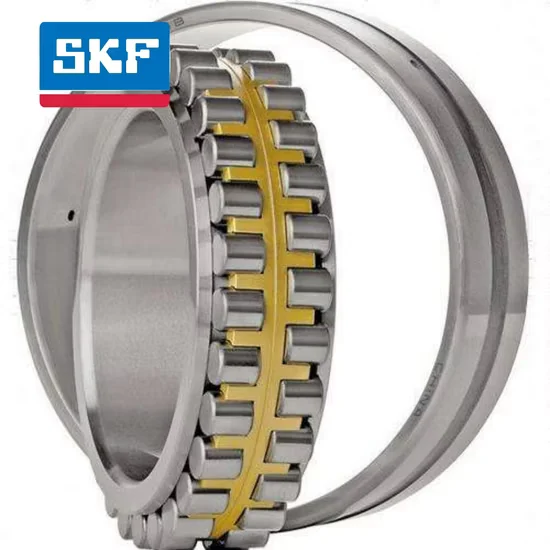 Роликоподшипники цилиндрические SKF Bc1b320811 цилиндрический роликоподшипник C3 Genuine Открыть карточку
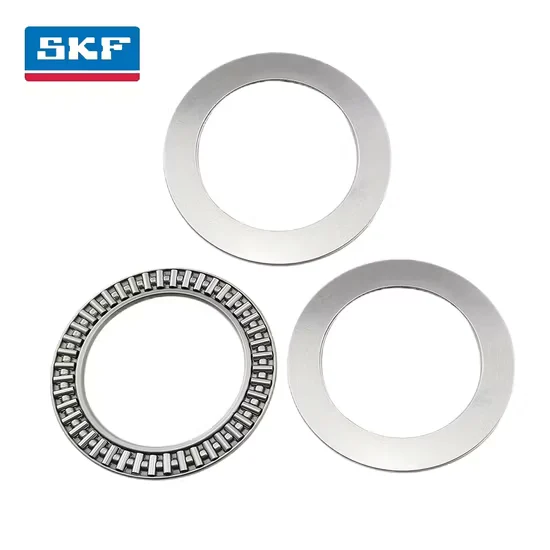 Роликоподшипники упорные SKF 29264 81148-M 29420 E/Vq096 упорковые роликоподшипники для смесителей Открыть карточку
Читайте также
Материалы об идентификации подшипников и закупке для капитального ремонта насосов и компрессоров.
 22 сентября, 2026 · Product & Series Guides SKF 71908 CE/HCP4A Angular Contact Ball Bearing Wholesale Supplier Verify SKF 71908 CE/HCP4A specs to prevent spindle thermal failure from unverified P4A clearance. This guide details 40x62x12mm dimensions, 9.23kN load ratings, and speed… Читать статью
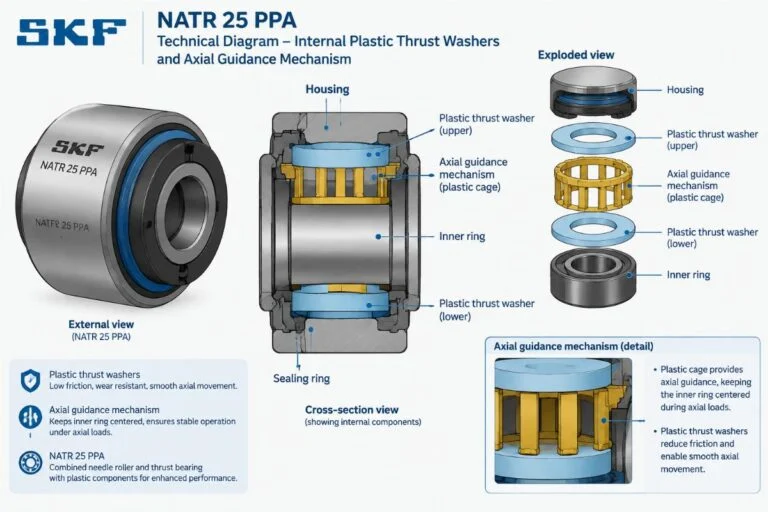 22 сентября, 2026 · Product & Series Guides SKF NATR 25 PPA Track Roller Bearing for Sale Wholesale Supplier Mastering SKF NATR 25 PPA specs requires more than matching the 25 mm bore and 52 mm outer diameter. The critical PPA suffix denotes… Читать статью
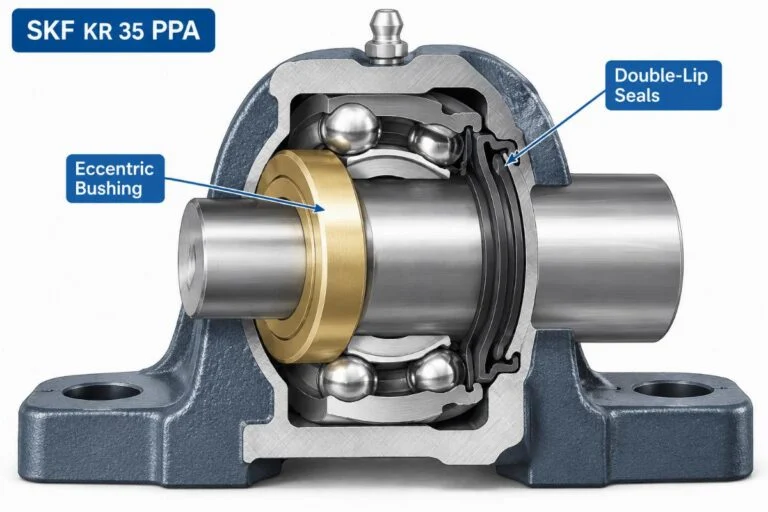 22 сентября, 2026 · Product & Series Guides SKF KR 35 PPA Cam Follower Wholesale Supplier Stop costly downtime by mastering the SKF KR 35 PPA cam follower specs and critical PPA suffix meaning. Verify exact 35mm dimensions, eccentric bushing… Читать статью

Соберите подшипники для ремонта насоса и компрессора в один запрос
Process Equipment Company принимает одиночные позиции, полные ремонтные ведомости и подшипники вспомогательного оборудования. В ответ вы получаете письменное предложение по каждой позиции: обозначение, количество, цена и валюта, наличие, срок поставки.
- Модель насоса или компрессора, узел, комплектование, сепаратор и зазор
- Обозначение неполное — приложите чёткое фото маркировки
- Количество по позициям, страна и индекс доставки, требуемая дата поставки
Отправьте перечень на расчёт
Четыре поля — и запрос у менеджера.