
SKF 71912 ACD/HCP4A Angular Contact Ball Bearing Wholesale Supplier
- Опубликовано:
- Рубрика: Product & Series Guides
- Автор: Process Equipment Company
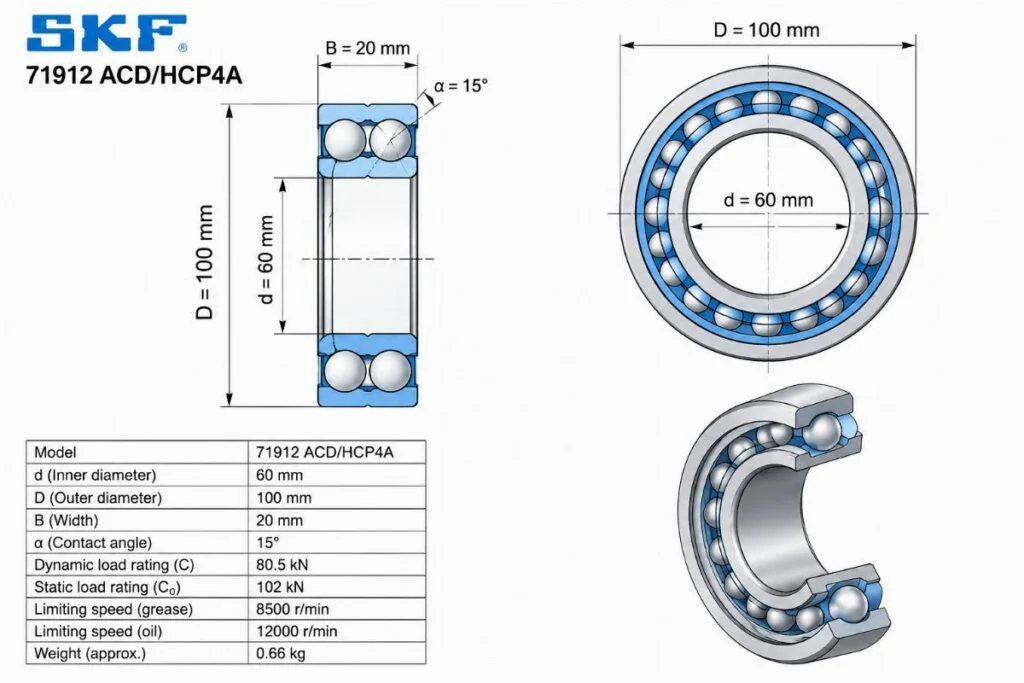
Mastering SKF 71912 ACD/HCP4A specs prevents spindle failure by matching lubrication and preload to operational demands. With a 60 mm bore and 85 mm outer diameter, this guide details load ratings and speed limits for reliable machine tool integration.
Matching dimensions alone will not save your spindle from catastrophic failure.
The core specifications for the SKF 71912 ACD/HCP4A specs include an inner diameter of 60 mm, an outer diameter of 85 mm, and a width of 13 mm. However, relying solely on these physical dimensions ignores the critical interplay between lubrication limits, preload settings, and contact angle geometry that defines the operational lifespan of this super-precision angular contact ball bearing. Successful integration requires matching the bearing’s thermal and mechanical characteristics to the specific rigidity and speed demands of the machine tool spindle.

I learned this lesson the hard way during a rush order for a cement plant in Nigeria. The client needed a replacement for a high-speed grinder spindle. I focused entirely on securing the SKF 71912 ACD/HCP4A specs and meeting the tight delivery window. The bearings arrived, the dimensions were perfect, and the installation proceeded without issue. Yet, within weeks, the主轴 seized completely. The root cause was not a manufacturing defect or a dimensional error. It was a fundamental mismatch between the grease lubrication used and the high rotational speeds required, compounded by an incorrect preload setting that generated excessive heat. That incident cost me a mid-six-figure loss in replacements and reputation damage. It shifted my approach from simply supplying parts to verifying the operational context before any shipment leaves the warehouse. Today, when clients inquire about SKF 71912 ACD/HCP4A specs, the first questions I ask are about their lubrication system and intended load conditions, not just the part number.
What Are the Core Dimensions and Load Ratings for 71912 ACD/HCP4A?
Precise physical dimensions establish the installation baseline, but load ratings determine the operational safety margin.
Understanding the SKF 71912 ACD/HCP4A specs begins with the basic boundary dimensions. The bearing features a 60 mm bore, an 85 mm outside diameter, and a slender 13 mm width. This slim profile is characteristic of the 719 series, designed specifically for applications where space is limited and high-speed performance is critical. However, the static and dynamic load ratings provide the real insight into what the bearing can withstand before deformation or fatigue occurs.
| Parameter | Specification Detail | Operational Significance |
|---|---|---|
| Bore Diameter | 60 mm | Standard shaft fit for medium-sized spindles |
| Outside Diameter | 85 mm | Compact housing design requirement |
| Width | 13 mm | Low friction and high-speed capability |
| Dynamic Load Rating | High capacity relative to size | Determines fatigue life under rotating loads |
| Static Load Rating | Substantial resistance | Prevents permanent deformation during standstill or shock loads |
A European machine tool builder once faced premature failures in their grinding units. They had selected the bearing based purely on the SKF 71912 ACD/HCP4A specs for fitment. However, they underestimated the axial loads generated during deep-cut operations. The dynamic load rating was sufficient for light finishing passes but inadequate for the heavier roughing cycles they introduced later. By reviewing the load ratings against their actual cutting forces, we helped them adjust the preload configuration rather than changing the bearing model, extending the service life noticeably.
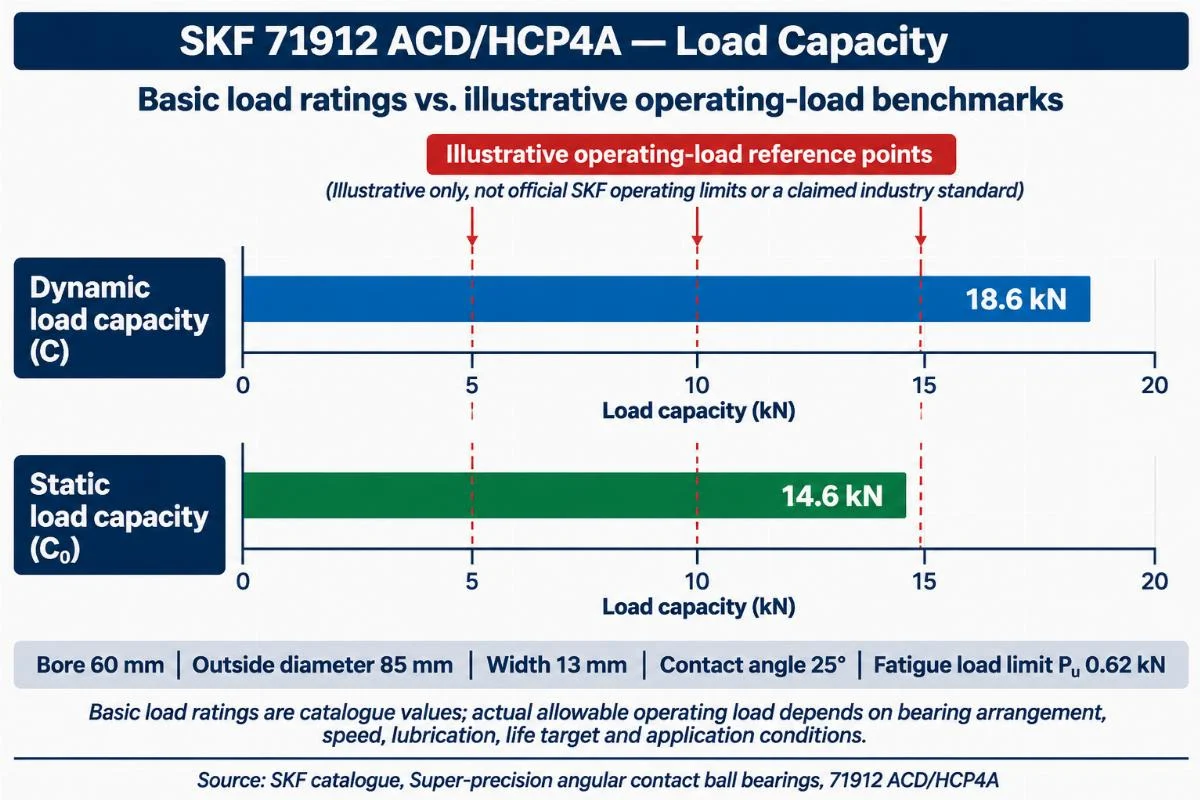
When evaluating SKF 71912 ACD/HCP4A specs, it is essential to cross-reference the load ratings with the expected application forces. Ignoring this step often leads to early fatigue spalling, even if the bearing fits perfectly on the shaft.
How Do Grease and Oil-Air Lubrication Limits Differ?
Exceeding the lubrication speed limit accelerates grease degradation and causes thermal runaway, regardless of the bearing’s mechanical rating.
One of the most critical aspects of the SKF 71912 ACD/HCP4A specs is the limiting speed, which varies significantly depending on the lubrication method. Grease lubrication is common for its simplicity and sealing capabilities, but it generates more heat at high speeds due to churning. Oil-air (oil mist) lubrication, on the other hand, provides superior cooling and allows for higher rotational speeds by continuously removing heat and introducing fresh lubricant.
| Lubrication Type | Speed Capability | Thermal Management | Maintenance Requirement |
|---|---|---|---|
| Grease | Moderate | Limited heat dissipation | Periodic regreasing or sealed-for-life |
| Oil-Air Mist | High | Active cooling effect | Continuous supply system required |
A textile machinery manufacturer in Southeast Asia experienced repeated bearing seizures in their high-speed winders. They were using grease-lubricated SKF 71912 ACD/HCP4A specs bearings at speeds that approached the upper limit of grease stability. The grease broke down, lost its viscosity, and failed to protect the rolling elements. Switching to an oil-air lubrication system allowed them to utilize the full speed potential of the HCP4A hybrid ceramic design without overheating. The difference was not in the bearing itself, but in how the lubrication method matched the speed demand.

When reviewing SKF 71912 ACD/HCP4A specs, always verify the limiting speed for your specific lubrication setup. Assuming that a higher mechanical speed rating permits unrestricted operation with grease is a common and costly mistake.
How Do Contact Angle and Preload Affect Spindle Rigidity?
The 25-degree contact angle optimizes axial stiffness, but improper preload can negate this benefit and induce premature wear.
The SKF 71912 ACD/HCP4A specs feature a 25-degree contact angle, which is a standard for universal angular contact bearings. This angle provides a balanced combination of radial and axial load carrying capabilities. However, the actual rigidity of the spindle assembly is heavily influenced by the preload applied during installation. Preload eliminates internal clearance, increasing stiffness and improving running accuracy, but excessive preload generates heat and reduces bearing life.
Calculating the correct preload requires understanding the interaction between the bearing’s elastic deformation and the applied loads. For high-precision applications, light to medium preload is often preferred to maintain accuracy without generating excessive heat. The HCP4A designation indicates the use of hybrid ceramic balls, which are lighter than steel balls. This reduction in mass lowers centrifugal forces at high speeds, allowing for more stable operation and potentially different preload requirements compared to all-steel counterparts.

In a case involving a precision mold maker, vibration issues persisted despite using bearings with correct SKF 71912 ACD/HCP4A specs. The investigation revealed that the preload was set too high, causing the bearing rings to distort slightly under thermal expansion. Adjusting the preload to a lighter setting reduced the operating temperature and eliminated the vibration, restoring the surface finish quality of the molded parts. Understanding the nuance of preload in relation to the contact angle is vital for extracting the full performance from these precision components.
What Are the Critical Installation Details Often Overlooked?
Ignoring fit tolerances and lubricant fill volume turns a premium bearing into a point of failure before it even rotates.
The final piece of the puzzle in applying SKF 71912 ACD/HCP4A specs correctly lies in the installation process. Even with perfect selection, poor handling or incorrect fitting can damage the precision surfaces. The shaft and housing fits must adhere to strict tolerance classes to ensure proper load distribution. Too loose a fit leads to creep and fretting corrosion, while too tight a fit can crush the bearing rings, altering the internal geometry and preload.
Furthermore, the amount of grease filled into the bearing is critical. Over-greasing creates churning resistance and heat, while under-greasing leads to metal-to-metal contact. For sealed or shielded versions, the factory fill is optimized, but for open bearings used in oil-air systems, the initial lubrication protocol must be precise.
| Installation Factor | Risk of Error | Recommended Practice |
|---|---|---|
| Shaft Fit Tolerance | Creep or Ring Crushing | Adhere to ISO tolerance classes for precision bearings |
| Housing Fit Tolerance | Outer Ring Distortion | Ensure roundness and surface finish meet specifications |
| Grease Fill Volume | Overheating or Starvation | Follow manufacturer guidelines for percentage fill |
| Handling | Brinelling or Contamination | Use proper tools and clean environment during installation |
A maintenance team at a steel processing facility once reported immediate noise from newly installed spindles. Upon inspection, it was found that the bearings had been hammered onto the shaft during installation, causing microscopic brinelling on the raceways. This damage was not visible externally but caused significant vibration and noise. Proper induction heating or hydraulic mounting tools are essential to preserve the integrity of the SKF 71912 ACD/HCP4A specs during assembly.
Attention to these details ensures that the theoretical performance outlined in the SKF 71912 ACD/HCP4A specs is realized in actual operation. Neglecting them undermines the investment in high-precision components.
Conclusion
Precision bearing performance is defined by the synergy of dimensions, lubrication, and installation practice.
Successfully deploying the SKF 71912 ACD/HCP4A specs requires looking beyond the part number to understand the operational environment. Matching the lubrication method to speed demands, setting the correct preload for rigidity, and adhering to strict installation tolerances are non-negotiable for reliability. These steps transform a high-quality component into a durable solution for demanding industrial applications.
Материал подготовлен Process Equipment Company — поставщиком подшипников SKF для насосов, компрессоров и технологического оборудования. Заказ определяется полным обозначением SKF по исходной спецификации оборудования.
Подшипники SKF, упомянутые в статье
Позиции каталога, о которых идёт речь в материале. Откройте карточку, чтобы проверить обозначение и запросить цену.
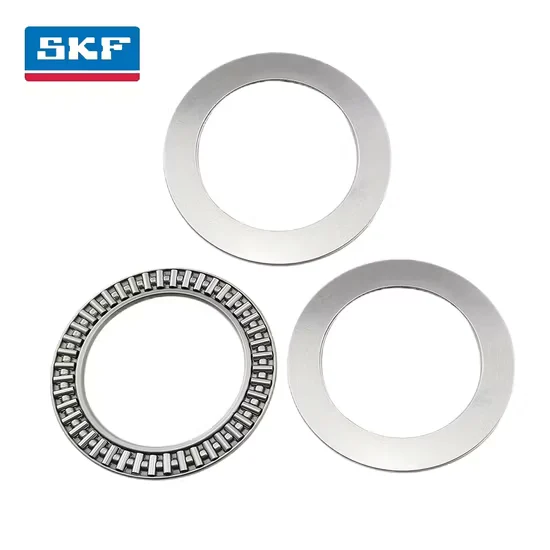 Роликоподшипники упорные SKF 29264 81148-M 29420 E/Vq096 упорковые роликоподшипники для смесителей Открыть карточку
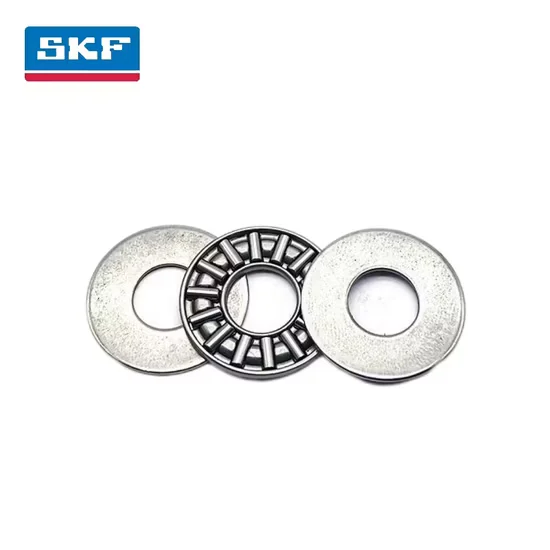 Подшипники шпинделей станков SKF 29330-E сферический роликовый упорный подшипник оригинал Открыть карточку
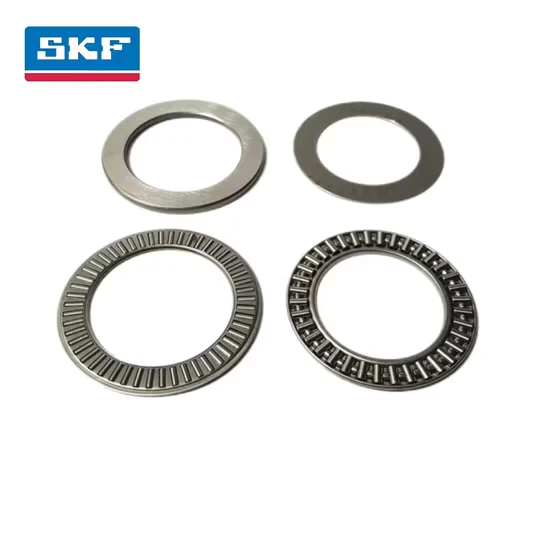 Роликоподшипники упорные SKF AXW 20 / 29348 E/VU029 / 81134 TN осевой подшипник оригинал Открыть карточку
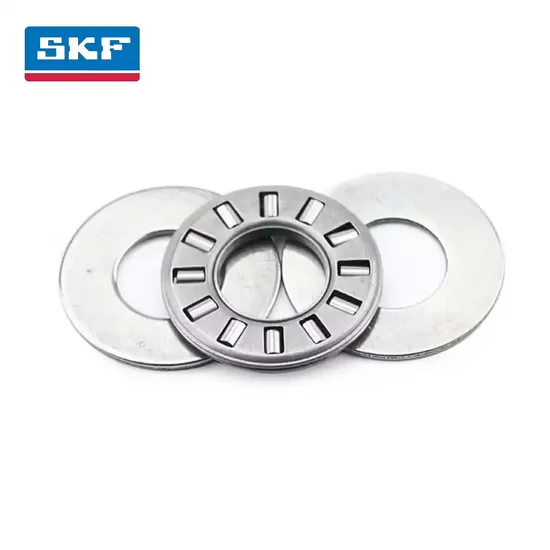 Роликоподшипники упорные SKF 29348 E оригинальный упорный сферический роликоподшипник Открыть карточку
Читайте также
Материалы об идентификации подшипников и закупке для капитального ремонта насосов и компрессоров.
 22 сентября, 2026 · Product & Series Guides SKF 71908 CE/HCP4A Angular Contact Ball Bearing Wholesale Supplier Verify SKF 71908 CE/HCP4A specs to prevent spindle thermal failure from unverified P4A clearance. This guide details 40x62x12mm dimensions, 9.23kN load ratings, and speed… Читать статью
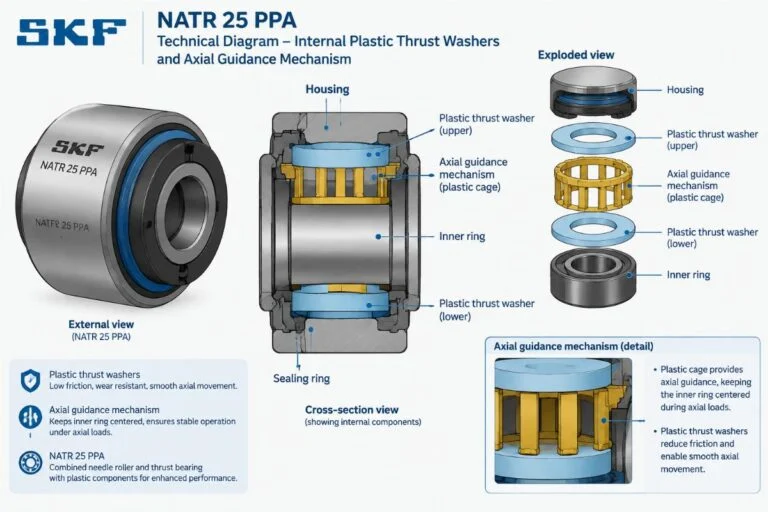 22 сентября, 2026 · Product & Series Guides SKF NATR 25 PPA Track Roller Bearing for Sale Wholesale Supplier Mastering SKF NATR 25 PPA specs requires more than matching the 25 mm bore and 52 mm outer diameter. The critical PPA suffix denotes… Читать статью
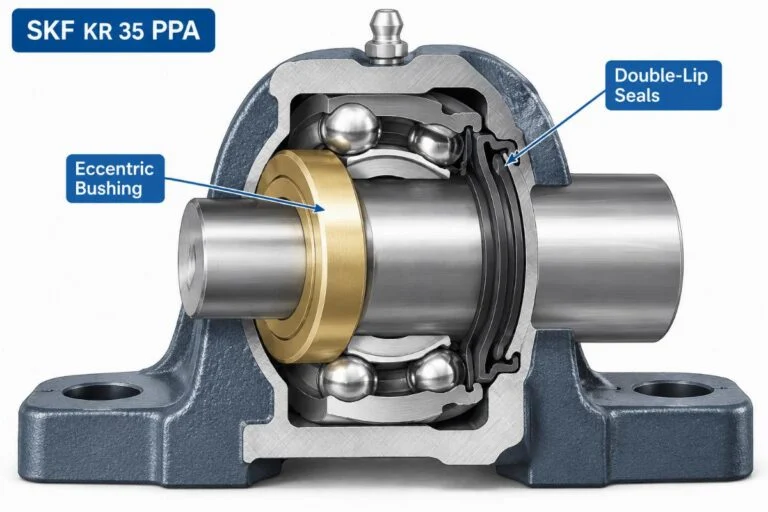 22 сентября, 2026 · Product & Series Guides SKF KR 35 PPA Cam Follower Wholesale Supplier Stop costly downtime by mastering the SKF KR 35 PPA cam follower specs and critical PPA suffix meaning. Verify exact 35mm dimensions, eccentric bushing… Читать статью

Соберите подшипники для ремонта насоса и компрессора в один запрос
Process Equipment Company принимает одиночные позиции, полные ремонтные ведомости и подшипники вспомогательного оборудования. В ответ вы получаете письменное предложение по каждой позиции: обозначение, количество, цена и валюта, наличие, срок поставки.
- Модель насоса или компрессора, узел, комплектование, сепаратор и зазор
- Обозначение неполное — приложите чёткое фото маркировки
- Количество по позициям, страна и индекс доставки, требуемая дата поставки
Отправьте перечень на расчёт
Четыре поля — и запрос у менеджера.